
Artist Features
Slovenian Jazz Guitarist Matjaz Dajcar

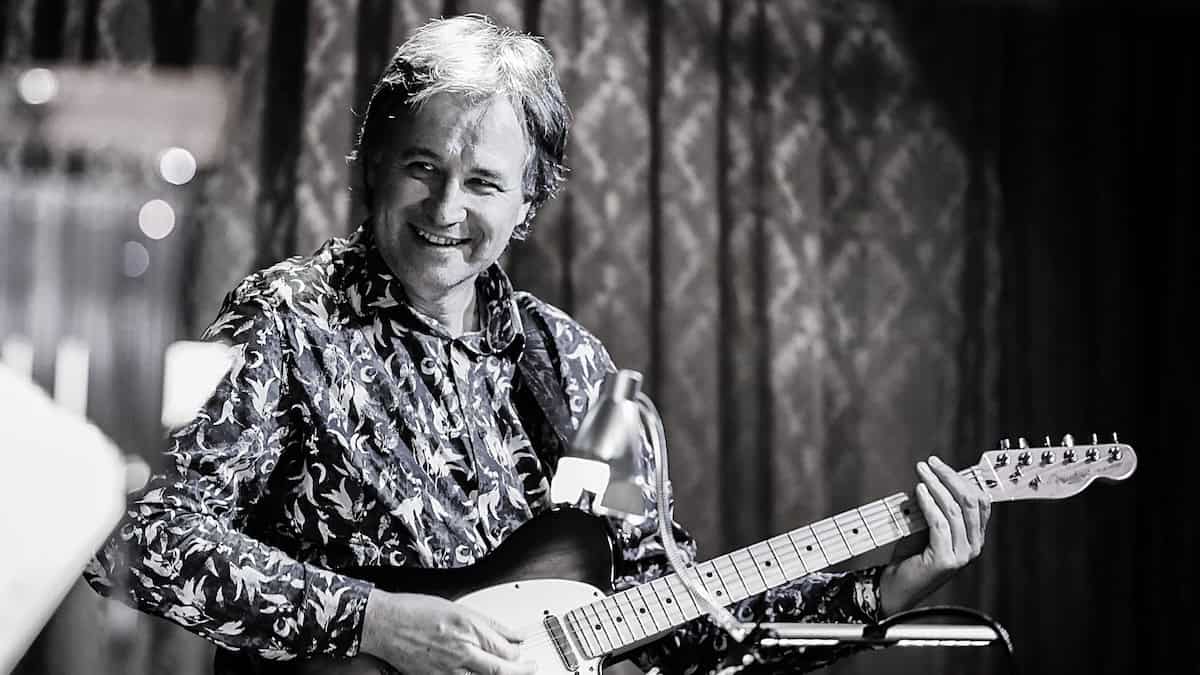
JGT contributor Joe Barth talks to Slovenian jazz guitarist Matjaz Dajcar.
Above photo by Lml.shots design photography
Slovenia is a country bordered by Italy, Austria, Hungary, and Croatia. It is known for its mountains and ski resorts, but it also has a vibrant jazz scene. Matjaz Dajcar is an active guitarist in that scene.
JB: Growing up in Slovenia, what inspired you to play jazz guitar?
MD: My first instrument was the violin, but I played it only for 3 years. Then, I switched to guitar and took classical guitar lessons at the local music school for eight years. Some years later I wanted to become more involved with the guitar, especially improvised music. So, learning jazz was the obvious choice.
JB: What did you appreciate most about your musical studies at Bruckner Conservatory in Linz, Austria?
MD: I really enjoyed my guitar teacher, Peter O’Mara. He was great at teaching improvisation and also a very kind human being. His approach to teaching was to first learn the melody of a tune, then the chords, then improvise over it which was very inspiring. He always played duets with me and taught mainly by being an example of “how to do it”.
JB: You also studied physics at the University of Graz. Were there any benefits to this for you as a musician?
MD: Maybe the training and habit of analytical thinking? This is helpful when you study jazz theory, harmony… isn’t it!?
JB: To you, what are three of the most influential jazz guitar albums in your personal development and why?
MD: Que Alegria by John McLaughlin, with Dominque De Piazza on bass and Trilok Gurtu on percussion. Nice vibes and sounds on the entire album. McLaughlin was playing a nylon string guitar with a Photon MIDI converter.
Next, Kurt Ronsenwinkel’s The Next Step I listened to a lot! His use of delay was new to me, and I really enjoyed the tunes and the playing of the whole band!
The third would be Harvie Swartz In a Different Light with a bunch of different guitarists. During my studies in Linz, I learned Scofield’s solo on “Nardis.” But actually, I mostly listened to non-Guitar players. My favorite musicians are John Coltrane, Herbie Hancock, Jack DeJohnette, Kenny Kirkland, Chick Corea, Miles Davis, and Dave Holland. Lately, I have been listening to Nelson Veras Solo Sessions Vol. 1 a lot! He is an amazing musician!
JB: You have worked with John Stowell. Talk about the musical relationship you have with John.
MD: Well, I discovered his music on the internet and was inspired. Looking up when he will be on tour, I found out that he will be playing in two weeks in Maribor, Slovenia – the town where I live. I went to his gig and ended up playing a tune with him and talking to him. His musicianship, sound, vibe, and approach to playing was very unique!
Then five years later the Konservatorij Maribor – the school I teach at invited him to give a 2-day workshop and concert. That gave me more time to get to know him better. Many students and faculty members came to listen and learn.
In the following year (2024) he came to Slovenia again to give a workshop and concert at a nearby town called Ptuj. I hope to work with him in the future.
JB: Talk about your album MatJazz II.
MD: I always wanted to make an album with vibes, I really like the sound of it. Luckily Vid Jamnik, who is a monster vibes player, agreed to join me. After that, it was an easy decision to add Jean John on drums and Miha Koren on double bass. I wrote new tunes and rearranged some old ones. One being “Mr. D.H.” is dedicated to Dave Holland. We recorded at my little studio – all four of us in the same room, without headphones. Of course, there was a lot of instrument bleed, so it was tricky to mix. There is also a guest appearance of my wife Lucie Dajčar, on violin.
JB: Talk about your group “4 Swing.”
MD: This is a newly formed group, and I like how we sound. Piano and guitar can sound really good together and here they do! One half of the band are “seasoned guys”- Jože J.Z. Zadravec on drums and myself on guitar. The other half are “young lions” (Arsenje Krstić on piano and Tjan Šoštarič on double bass. We just recorded our first album last August 2024. The album is coming out in January 2025.
JB: What do you appreciate most about the guitar that you use most frequently?
MD: When I teach I use my Steinberger Spirit – it is lightweight, super comfortable, versatile, and… small! I even had a microphone installed in it which gives me a hint of an “acoustic” note attack sound.
Live I very often play my Cordoba GK Studio, a nylon string guitar with a nice sound – acoustically as well as electrically and very playable. Its only drawback is when playing it with a loud band then it often starts to give feedback. But it’s manageable.
JB: Talk about the jazz scene where you live and how you are able to make a living playing music there.
MD: I don’t know of anybody here in Slovenia playing “only jazz” and not having another job on top. I think most of us teach. In my case, I teach at the Konservatorij Maribor. I teach jazz guitar, ensemble, and improvisation. The teaching provides me a financial safety net. For most of my gigs, I play at a restaurant. I’ve played there for six months straight, regularly three times a week. We play in different trios – most often piano/voice, trumpet/percussion, and guitar. The music spans jazz standards, Brazilian and Cuban music. We keep the soloing short. Other than that, I play swing music for dancers, play blues in pubs, accompany jazz singers and singer-songwriters, play in a gypsy swing band, I record children’s songs, play duets with jazz singers, and last but not least sometimes I get the chance to play my own music with some amazing musicians much better than me.
I like to compose and record my own music, I just completed a big band arrangement for one of my tunes, and the premiere will be in April 2025… So, my musical activity is quite widespread.
JB: What advice would you give young American musicians who want to play gigs in Northern Europe?
MD: Connect with the local musicians – they often know the circumstances in their country pretty well. Also, try connecting the US embassy. Sometimes they will financially support special projects that promote American music.
Thank you for reading this post, don't forget to subscribe!


Australian–Canadian Quartet Open Thread Return with Waiting Music

British Smooth-Jazz Guitar Master, Chris Standring

Jazz Guitar Today Lesson: “Pensative”

Saying Goodbye To An Atlanta Jazz Musician, Sal Gentile

Julian Coryell Brings New Flavors of Flamenco, Gypsy, Latin and Jazz to the Tonalic Library

Australian Guitarist Zak Scerri Debuts London Trio Album

Jazz Guitar in Tasmania… and New York City

Greek Bouzouki Virtuoso and Jazz Guitarist, Michael Paouris
Jazz Guitar Today Lesson: “Pensative”
Jazz Guitar Today Lesson: “Central Park West”
Jazz Guitar Today Lesson: “All or Nothing at All”

New Vince Lewis Guitar Arrangement, “Secret Love”

Jazz Guitarist Eleonora Strino Talks To JGT

First Time In The US! Eleonora Strino

More About Just Jazz Guitar Founder, Ed Benson


