
Artist Features
Spanish and Canary Island Jazz Guitarist Eliseo Lloreda

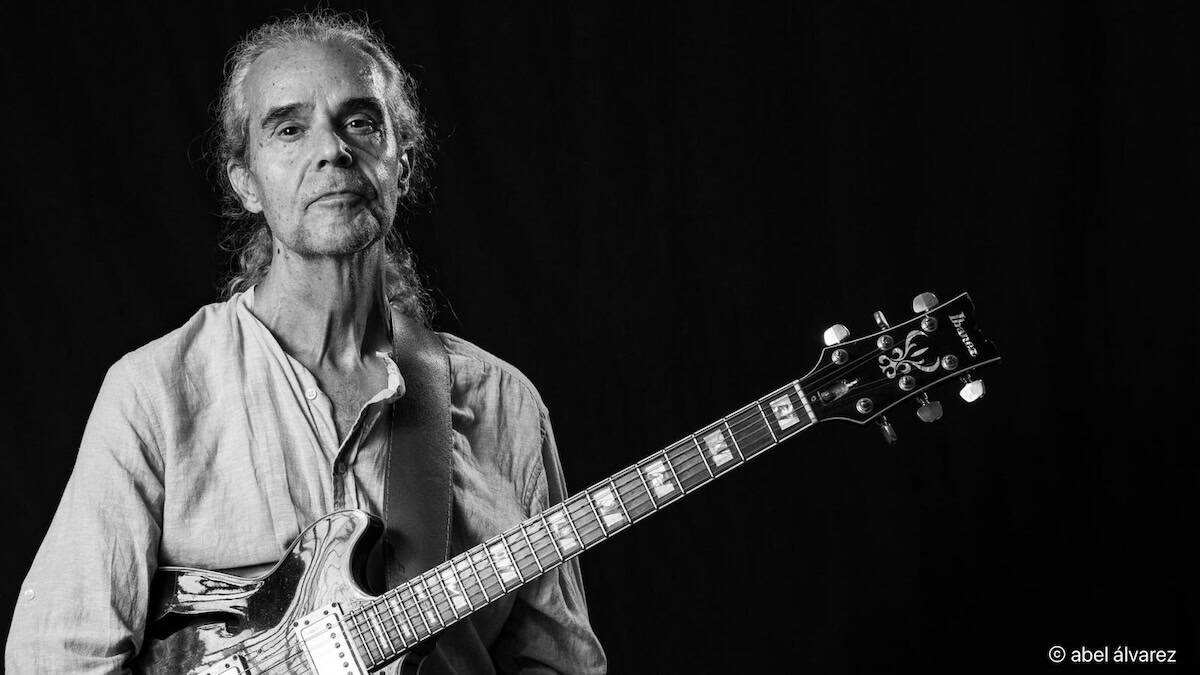
JGT contributor Joe Barth talks to Spanish guitarist Eliseo Lloreda.
The Canary Islands off the coast of Africa are noted for their majestic mountains (highest peak in Spain) and breathtaking beaches. On a visit there, you will find some great pop-rock cover music, but if you look hard enough, you can find some world-class jazz music by such artists as guitarist Eliseo Lloreda. Eliseo was born in Cuba but grew up in Spain and makes his home on the islands.
JB: You were born in Cuba, what inspired you to play jazz guitar?
EL: I was born in Cuba, but when I was 9 months old, my parents decided to leave the island for Spain due to the revolution. We lived there for a year, and then, due to my father’s work, we moved to Puerto Rico, where we lived for 5 more years. It was there that I had my first contact with the guitar. I was already attracted to the instrument, and they bought me a plastic guitar that I took everywhere with me. When I was 7 years old, we returned to Spain. My interest for jazz as a genre will sprout years later as I discovered the instrument.
JB: What did you appreciate most about your musical studies in Spain?
EL: My first job as a guitarist at age seventeen was playing pop music as a self-taught musician in hotels, parties, etc. Then at age thirty-three, I saved enough money to study at the “Taller de Músicos in Madrid”, where I structured all my musical knowledge with the help of my teacher, Antonio Sainz. He introduced me to the world of jazz, its rules, and how to navigate through chords.
JB: To you, what are three of the most influential jazz guitar albums in your personal development and why?
EL: The first album that impacted me the most was Give Me the Night by the great George Benson, which my father gave me. Shortly after, I got my hands on Smokin’ at the Half Note by the great Wes Montgomery with the Wynton Kelly Trio. Listening to Wes was a trip because of how much swing he had and how he surfed through the chords with melodic lines that were both strong and elegant, something I hadn’t heard before.
Thirdly, there’s Undercurrent by Bill Evans and Jim Hall, which has extreme delicacy and an exquisite way of bringing harmony to the guitar. Playing in a duo with two harmonic instruments at the same time is challenging. Jim Hall was the guitarist who impacted me the most at that time, with his way of playing chords and approaching melodies without trying to show off, with incredible elegance. Listening to this album changed my vision of jazz guitar.
JB: You have worked with John Stowell. Talk about the musical relationship you have with John.
EL: What can I say about John Stowell that people don’t already know? He is a master with a great human and musical heart. I have learned a lot from him. The first gift I received from John was the great energy he exudes when you make music with him. Besides his total dedication to accompanying me in my solos and making me believe that I was the one playing fantastic melodic lines (thanks to the harmony he played, of course, ha ha), everything fell into place. It was an incredible experience for me. In my opinion, John is a musician with enormous experience and great harmonic, rhythmic, and melodic control. We connected very quickly, and the music started flowing smoothly. His energy is inexhaustible, and he always wants to share music with everyone. I hope to see him again soon and continue making music together.
JB: Talk about your album Via Brazil.
EL: Via Brazil was a Brazilian music band where I learned the guitar’s role in Bossa Nova and Samba, along with some incredible musicians and friends, in a sextet format, founded by my dear friend of many years, Vyky Dorta. The band included amazing musicians who taught me a lot: Alejandro Scalco on keyboards, Pedro Neto on percussion, Giorgio Catavorello on electric bass, Che Trujillo on drums, and me on guitars, both nylon and electric. Apart from being a wonderful time, it was a band with a great trajectory and very important in my career.
JB: Talk about your work with Fernando Barrios and the concert you did with Joe Zawinul’s group.
EL: My collaboration with Fernando Barrios has been ongoing. Years ago, we talked about forming a Hard Bop Band, where he moves like a fish in water. With time and much effort, we formed a very stable quintet in every sense, both musically and personally, which is not a very common thing. We have been playing together for 20 years. The contact with Joe Zawinul’s Group was at the “Canarias Jazz & Más Festival”, where we were chosen as the opening act for Joe. It was an unforgettable experience as we toured the Canary Islands with them. Joe was already in poor health, and shortly after continuing his tour in Spain, he passed away. The energy he exuded while playing was spectacular, both he and his musicians. It was an incredible experience to live with those musicians during the small island tour and a great fortune for me.
JB: It looks like you play a custom-made guitar.
EL: I have always played with Gibson 175, or a 335, and an Ibanez 205AS. For duo formats and when I play solo, I use a headless Klein-type guitar custom-made by a great friend of mine. Regarding the Gibson 175, I appreciate its great sound and depth. For many years, it was my little piano. With this type of guitar, where you can hear absolutely everything you play, it forces you to play clearly and continuously. That guitar keeps me in check. The 335 is something else entirely, very versatile with a beautiful timbre. I have a lot of fun with it. The Klein-type guitar, with a graphite neck, allows me to express myself best and flow through the music. I think it’s due to its scale and neck measurements, its construction, and its sound, which I love, with a lot of dynamics as well.
JB: Talk about the jazz scene where you live and how you are able to make a living playing music there.
EL: Musicians of my generation were lucky in the 1990s because the jazz movement on the island was big. There were venues to play this type of music and entrepreneurs who believed in it and in us. But over time, that wave has sadly been replaced by cover bands, folklore, etc. Now, there is work for cover bands, hotel music, etc. The jazz scene in the Canary Islands is practically non-existent today, with 2 or 3 places to play if you’re lucky. Most jazz musicians teach to have a modest income to live and then prepare personal projects to go play in mainland Spain, the rest of Europe, or wherever the gig comes up. There is also session work in TV studios, etc., but it is not nearly enough.
JB: What advice would you give young American musicians who want to play gigs in Spain and Southern Europe?
EL: I recommend recording videos of their product and getting heard on European social networks. There are several guides to clubs in Europe with very good programming, in Berlin, Paris, and Northern Europe. Send material regularly. I don’t know any other way until they can connect directly with the people who create and promote events. But the most important thing is to believe in their projects and never lose the excitement of making music.
Thank you for reading this post, don't forget to subscribe!


Saying Goodbye To An Atlanta Jazz Musician, Sal Gentile

Julian Coryell Brings New Flavors of Flamenco, Gypsy, Latin and Jazz to the Tonalic Library

Australian Guitarist Zak Scerri Debuts London Trio Album

Jazz Guitar in Tasmania… and New York City

Greek Bouzouki Virtuoso and Jazz Guitarist, Michael Paouris

Jazz Guitar Today Lesson: “Central Park West”

New Album From Eleonora Strino

Jazz Guitarist Eleonora Strino Talks To JGT
Jazz Guitar Today Lesson: “Central Park West”
Jazz Guitar Today Lesson: “All or Nothing at All”

New Vince Lewis Guitar Arrangement, “Secret Love”
Jazz Guitarist Eleonora Strino Talks To JGT

First Time In The US! Eleonora Strino

More About Just Jazz Guitar Founder, Ed Benson

The Inaugural Downtown NYC JazzFest

Talking with Just Jazz Guitar Founder, Ed Benson
-
 Jazz Guitar Lessons2 weeks ago
Jazz Guitar Today Lesson: “Central Park West”
-
 Jazz Guitar Lessons3 weeks ago
New Vince Lewis Guitar Arrangement, “Secret Love”
-
 Artist News2 weeks ago
Jazz Guitarist Eleonora Strino Talks To JGT
-
 Artist News4 days ago
Saying Goodbye To An Atlanta Jazz Musician, Sal Gentile