
Features
5 Things To Improve Your Playing

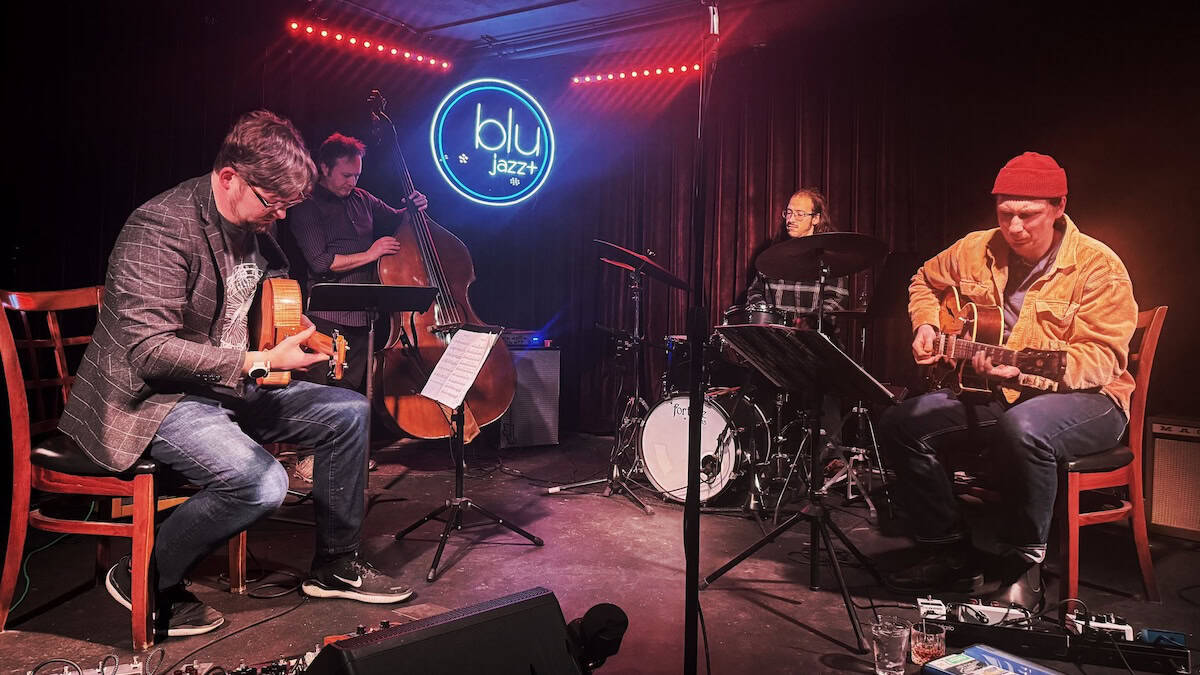
Guitarist Tim Mirth provides the ultimate list of the most effective tasks to improve your playing and help you get to the next level.
These 5 things will alleviate the majority of your issues – here we go…
Listen to More Jazz
One thing I’ve seen come up more times than not is someone will be new to jazz, or been working on it awhile and they ask about getting better at jazz, and you find they never really even listen or “like” jazz. It’s such a peculiar thing how people get to studying jazz music. I think for some, it’s a new Mount Everest. Perhaps they came from shred or prog music, or classical and think.. “Hey, I heard jazz was even harder, so I’m going to learn that”. It’s not coming from love.
If this sounds familiar to you at all, here’s what I want you to do.
Find some jazz from various eras, different instrumentations and for practice this week, if nothing else, you need to listen to some jazz music. Perhaps your avenue in will be Louis Armstrong, maybe it’s Pat Metheny, perhaps it’s not even guitar at all, maybe it’s Bill Evans or Charles Mingus or Ambrose Akinmusire. These are all acceptable. You don’t have to love every kind of jazz you’ve heard, it’s not even reasonable to. We all have our preferences, however to really get better at jazz, you must listen to it. Lots and lots of jazz. Start thinking 1000s of hours, not 10s. I’m serious.
And that is true for nearly everyone. So many people seem to practice jazz, but then listen to a bunch of other stuff. While I’m a fan of listening to all kinds of music, to really understand jazz, it will take a lot of exposure to it. It’s much like acquiring any other language.
One of the most popular methods for learning languages now is something called “Comprehensive Immersion”. The idea here is to learn the language by listening to a lot of it, particularly stuff that you can follow and understand. The theory behind it is your mind starts to make all these connections, much like you did when you learned your native language, and over time you naturally start understanding and eventually be able to speak the language. There is no memorization involved even. It’s just your brain getting used to the language.
This is completely true of Jazz. You want to have it be so natural to you that you can sing it, hum it, pat out the drum beats and more. Not because you memorized some beat or shape or any of that, but because you have it within you.
Have you ever had this experience? You’re improvising some stuff, and all of the sudden you’re playing some line from one of your favorite songs as a kid? It just sort of happens, because back when you were younger you listened to that song 800 million times. It’s part of you. Make jazz part of you.
Practice your weaknesses more
Of course, to get better at music means more practice. It needs to be quality practice though. The good thing is just time with your instrument will mostly improve your playing over time, but to really ramp things up, tackle the stuff you don’t know well.
Whatever that thing is. I know it’s painful. I don’t like doing it either, but it’s the only method of practice to really get over hurdles. You know what those pain points are. Maybe it’s time, technique, chords, feel etc. You have to work on it.
The good thing is almost every single time you really slow something down and take it apart, you can get it up to speed quickly. The trick is, don’t try to tackle too much all at once. For instance let’s say you were working on soloing at 300BPM for Giant Steps or something. Can you even do it between the Bmaj7 and D7 chords alone, ignoring all the rest of the changes? If not, slow it down till you can make these kinds of moves very naturally and easily. Who cares how slow it is? The first step is to slow it down, attack it from many angles till it’s natural.
Another thing I think nearly everyone needs to work on is sound. I’m not talking about gear or any of that, but how you produce notes on the instrument. Some element of your practice should always be working on how to get a better sound. On wind instruments a daily practice is to play long notes. It makes a massive difference in the overall sound production. Guitarists tend to be more button pushing, but you should be testing how your pick hits the strings, what volume, how does the note bloom or not, etc… get some control over all the nuances of the instrument.
Metronome
I know there are some famous bass players who disagree, but the metronome has shown to be an extremely important asset for guitarists. I’ll extend the idea of a metronome also to a drum machine, but the main idea is that you want to know what good time is and how to make it happen for you.
There are some traps though to be careful about.
People can become very reliant on the metronome if there are too many clicks (quarters/8th notes etc…) so be careful to change where you put the click. This is also good for different feels. Try 2 and 4, and only 3 and only 4, etc.. or even 1 click on 2 every 2 measures.
Also, it’s not just for soloing. Be sure to use the metronome for comping practice. Try this out for size.
- Put metronome on 2 and 4
- Play melody of song
- Play 1 chorus of solo
- Play 1 chorus of comping
- Rinse and repeat.
There are a lot of good reasons to do this. One, you might get tired of playing the melody one way after a while, and it inspires creativity. You only have 1 chorus to solo, so it helps you think about building a solo that makes sense for that space. You just played a solo and now you’re comping and can think about how you would have liked to be comped for.
Practice your strengths more
Yeah, I know I just said you should practice your weaknesses and that’s the most effective way to get better, but frankly, we aren’t all created equally and most of us have some things we are better at than others. This is a good thing. It helps create individuals.
This is the practice where you lean into your strengths and develop your voice. A beautiful thing about guitar is that it is very difficult to become fluent on, and this leads to some compromises or missteps which actually lead to unique approaches to the instrument. We should dig in here.
A good example I like to talk about is when people first heard Van Halen. Imagine when this came out, there really wasn’t videos or youtube or anything like this, so people heard this crazy guitar playing and they had no idea the guy was tapping (or maybe even what tapping was), however those obsessed with getting that thing down developed ways to play the Van Halen stuff without tapping. Then some time later they see “all he was doing was tapping???” Yet, what did they get out of it? They got their own way of playing it, which likely relied on their strengths.
While not a jazz musician, Steve Vai also mentions at some point he realized he would never be John McLaughlin or Al Di Meola with alternate picking so instead of trying to beat it out of himself, he pivoted and started working on his strengths instead, and ultimately created a very identifiable sound.
So there ya go, double down on your strengths. It’s ok, and even more it’s actually better. Why is it better? Jack of all trades aren’t the ones that move us. It’s the ones who really went somewhere others haven’t that maybe forgo something but developed some other thing really shines and leaves a mark. Yeah, Beethoven didn’t have Mozart’s counterpoint chops, but I don’t think anyone thinks Beethoven isn’t as important of a musician. His strength was expressing emotions and moods greater than anyone before him. We are all better for it.
Take responsibility for your own learnings
While it’s important to seek out advice from those more experienced than yourself, you need to rely on numero uno a bit more. Instead of asking “How do you voice a dominant 7b13 chord?” map it out on your own. And if you don’t know what that is, then look it up and then map it out on your own. Try different variations, try different grips, string combos etc… till you find what you like. Then develop your own methods for testing it out.
So many times you hear people ask for instructions on how to do things, but ultimately you need to be responsible for your own learnings. If you can’t find a chord chart for something, then figure it out. If you don’t see a lead sheet for something, slow down the record and write out the changes.
The nice thing about jazz is that it’s all on the records (see step 1 above). You can learn everything you need to learn from the records. Oh, but this is hard, especially at first. However, it’s a vital step in your transformation. Don’t rely on printed material for your instruction (present article excluded, lol).
There was a great Patrick Bartley video recently (an avid transcriber and absolute master jazz musician) ranting about how every time a solo of his gets put up (and others) you see people in the comments going, “Yo, who’s transcribing this?” or “Hey, make sure you put it in Eb please!”. Needless to say, he wasn’t amused. Do the work yourself, don’t wait for someone to do it for you.
The greatest musicians in the world have notebooks filled with ideas and selfmade lessons. Heck you can see a glimpse into Michael Brecker’s world with his notebook that was released a few years back. In my opinion, while it’s a great book of ideas well worth investigating the real lesson here is that Michael made himself lots and lots and lots of notebooks filled with licks, ideas, lessons, etudes and more that he made for himself to get where he wanted to go.
Why wouldn’t you do the same?
Thank you for reading this post, don't forget to subscribe!


Saying Goodbye To An Atlanta Jazz Musician, Sal Gentile

Julian Coryell Brings New Flavors of Flamenco, Gypsy, Latin and Jazz to the Tonalic Library

Australian Guitarist Zak Scerri Debuts London Trio Album

Jazz Guitar in Tasmania… and New York City

Greek Bouzouki Virtuoso and Jazz Guitarist, Michael Paouris

Jazz Guitar Today Lesson: “Central Park West”

New Album From Eleonora Strino

Jazz Guitarist Eleonora Strino Talks To JGT
Jazz Guitar Today Lesson: “Central Park West”
Jazz Guitar Today Lesson: “All or Nothing at All”

New Vince Lewis Guitar Arrangement, “Secret Love”
Jazz Guitarist Eleonora Strino Talks To JGT

First Time In The US! Eleonora Strino

More About Just Jazz Guitar Founder, Ed Benson

The Inaugural Downtown NYC JazzFest

Talking with Just Jazz Guitar Founder, Ed Benson
-
 Jazz Guitar Lessons2 weeks ago
Jazz Guitar Today Lesson: “Central Park West”
-
 Jazz Guitar Lessons3 weeks ago
New Vince Lewis Guitar Arrangement, “Secret Love”
-
 Artist News2 weeks ago
Jazz Guitarist Eleonora Strino Talks To JGT
-
 Artist News4 days ago
Saying Goodbye To An Atlanta Jazz Musician, Sal Gentile