
Artist Features
New From Ethan Margolis, The Blues Around Us

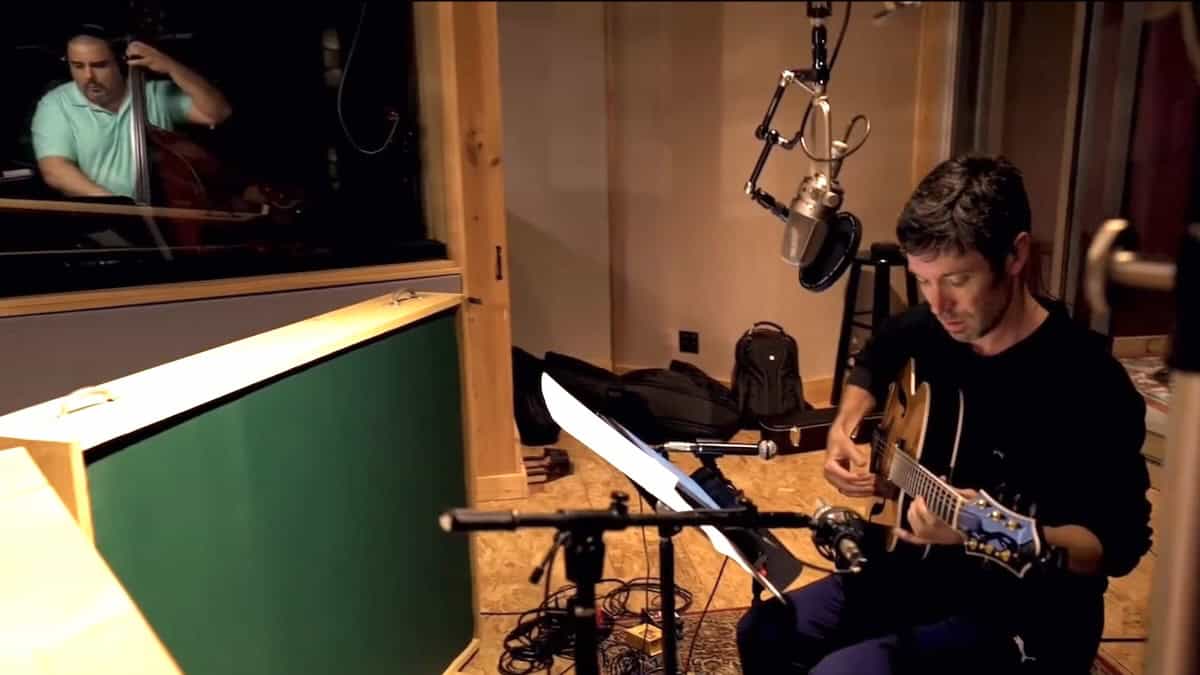
Southern California guitarist Ethan Margolis has released a new album with New York post-bop and flamenco pianist Chano Dominguez.
Together with bassist Carlos Henriquez and drummer Obed Calvaire, they perform eleven original compositions by Ethan. I talk with Ethan about recording The Blues Around Us.
JB: The album opens with “Chano Says.” Why open with a song that features solo piano?
EM: This album was arranged and composed to showcase Chano’s playing differently from many of his past recordings that relied heavily on flamenco music. He can really play the blues, and I thought it seemed like an effective idea to make that statement as a type of prologue right from the top.
JB: Tell us about the song “Rumbop Swing.”
EM: Sure, the title kind of says it all: RUMBA meets BEBOP + SWING — In its composition, I wanted to celebrate jazz composers like Dizzy Gillespie and Duke Ellington. It begins with an opening vamp reminiscent of standards like “Caravan” and “A Night In Tunisia.” It then moves into a fast-moving head with a tutti orchestral line written around the Romany musical tradition. After that and in the style of an Ellington composition, Parts B and C return to the swing genre. Part B is based on the Country Blues tradition of the Mississippi Delta, where the guitar is featured in a slide-like style. Part C features Chano in the solo section, and drummer Obed Calvaire builds dynamically in the song’s ending climax over the tutti line. I think that the stark cultural contrast between musical sections A and B work together in an interesting fashion, resembling some of the early bebop tradition that juxtaposed a ‘world’ feel in the song’s introduction against a straight-ahead swing sound in the following sections.
JB: I can’t ask about every song, but tell us about “Sweet Street Blues.”
EM: This song sums up the album’s general concept. Everyone is featured in it, and it is an arrangement with different movements that all speak to the roots of Jazz and the Blues. It begins with major 6th piano voicings over the Spanish rhythm of the Soleá in 12/8. It then moves into section B, which is a straightforward dominant blues progression that is placed over Flamenco accentuation on the bass. Part C functions as a musical bridge, a departure from the previous rhythm. It changes time signatures into 4/4 and speaks to the city culture of the Blues as it moved from the Delta region to Chicago or New York City. The name seemed to fit the song’s essence.
JB: What makes “Caribbean Blues” Caribbean?
EM: Hah, everything about it is Caribbean! The African rhythms from the Caribbean have given us so much of what we hear in Jazz…and so much of what we have always heard. They have also given us the energetic shuffle of the Blues. Because of that, I couldn’t design a Blues album for Chano without including a song dedicated specifically to those contributions. Finally, and after years of dedication by the Marsalis family to teach the roots of Jazz, it seems that a broader audience is understanding the island connection. New Orleans was the Caribbean port into the USA, and the music came from there. New Orleans is Caribbean! This song is meant as a truthful reflection of a 3 over 2 rhythmic pattern pulsing underneath a Blues progression. The patterns played by Calvaire and Henriquez were meant to be played as ‘heard rhythms’, not just ‘felt’ — like standing on the front line shouting “Check me out! I’ve been here the whole time! What did you think anyhow….hah!”
JB: Then you follow it with the solo guitar of “Ethan’s Notes.”
EM: Yes, it’s just a small improvisational interlude on guitar that acts as a breather in the album’s sequence. Sometimes a little moment like that says a lot about who we are as musicians, and I’ve always been a fan of interludes on albums.
JB: The album is all originals, even the solo piano ones. Were these songs all composed for this project? Talk about that process.
EM: Sure, however, there is nothing original about us playing the blues of course! But yes, the compositions and arrangements were mostly written by me to feature Chano as the lead performer on piano. Chano and I had been speaking for eight years about recording a blues album together, and after various conceptual changes, we went with the standard quartet format. After a concert we played together in Los Angeles back in 2016, he asked me to put a bunch of blues styles together to record later over flamenco rhythms. I had to come up with new material because I had already put out a blues-flamenco hybrid album called Sonikete Blues, and he already had many recordings of Flamenco-influenced jazz/blues. Many of the songs have different movements and are meant to showcase the beauty and the universality of the blues — even when they are played over flamenco rhythms.
JB: Bassist Carlos Henriquez and drummer Obed Calvaire play superbly. What do you appreciate most about these two musicians as your rhythm section?
EM: Everything that Carlos and Obed contributed to the process was golden. Their personalities, their performances, their professionalism, and their authentic desire to connect with the conceptual design of the project were wonderful. I can’t say enough good things about what they did on this album. They are special musicians who understand the blues, swing, Caribbean rhythms, innovation, and the need we had on this record to ride a fine line between ‘the Old’ and ‘the New’
JB: Have you had a long musical relationship with pianist Chano Dominguez?
EM: We have known each other for some ten years since we first played together. Strangely enough, we did not connect originally while I lived in Spain, but I suppose it was destined to be in the USA, as we are like kindred spirits on a path for cultural unity through deep musical explorations. We did record and previously release an electronic-based EP together called ARSA 100, which featured Chano on synths, pianos, and other FX. That little EP is wild! I still get quite a kick out of it. Chano lays down some crazy midi stuff along with some other Gitano singers that are featured as well.

JB: You feature Chano in solo piano on the closing song “Bidding Farewell.”
EM: Correct, that piano improvisation by Chano was the last thing to be recorded on April 14, 2024, at the session’s end at Oktaven Audio (Mount Vernon, NY). Before leaving the studio, he delivered this pensive and delicate statement on the Hamburg Steinway that became one of the more magical moments of the recording day. As engineer James Farber and I listened from the control room, Chano provided this sentimental statement that seemed to flow directly from his heart into the piano. It was completely his idea – the final prayer of the day, and so we named it accordingly.
JB: You don’t use your stage name “Emaginario” on this project. Why?
EM: I actually do use the name Emaginario on the album, however, it doesn’t matter to me if people use my real name or not. Emaginario is a name that I use to depart from the everyday normality of life. I like to think of the name as the purely ‘creative’ existence of my spiritual self. Although my nicknames have changed through the years, the use of an ‘alias’ or artistic name has long since been part of my career. As a flamenco performer, I had various nicknames given to me by the community, which is characteristic of that culture. I also have some funny nicknames given to me by Caribbean artists, because once again…it’s part of the whole thing. Sometimes it’s good to get out of the grind – don’t take yourself so seriously – allow yourself to laugh ….and to fly….see what happens….I mean, you could fall flat on your face, I guess too….hah!
Thank you for reading this post, don't forget to subscribe!


Saying Goodbye To An Atlanta Jazz Musician, Sal Gentile

Julian Coryell Brings New Flavors of Flamenco, Gypsy, Latin and Jazz to the Tonalic Library

Australian Guitarist Zak Scerri Debuts London Trio Album

Jazz Guitar in Tasmania… and New York City

Greek Bouzouki Virtuoso and Jazz Guitarist, Michael Paouris

Jazz Guitar Today Lesson: “Central Park West”

New Album From Eleonora Strino

Jazz Guitarist Eleonora Strino Talks To JGT
Jazz Guitar Today Lesson: “Central Park West”
Jazz Guitar Today Lesson: “All or Nothing at All”

New Vince Lewis Guitar Arrangement, “Secret Love”
Jazz Guitarist Eleonora Strino Talks To JGT

First Time In The US! Eleonora Strino

More About Just Jazz Guitar Founder, Ed Benson

The Inaugural Downtown NYC JazzFest

Talking with Just Jazz Guitar Founder, Ed Benson
-
 Jazz Guitar Lessons2 weeks ago
Jazz Guitar Today Lesson: “Central Park West”
-
 Jazz Guitar Lessons3 weeks ago
New Vince Lewis Guitar Arrangement, “Secret Love”
-
 Artist News2 weeks ago
Jazz Guitarist Eleonora Strino Talks To JGT
-
 Artist News4 days ago
Saying Goodbye To An Atlanta Jazz Musician, Sal Gentile