
Artist Features
John Shannon New Album, A Day in Tarifa

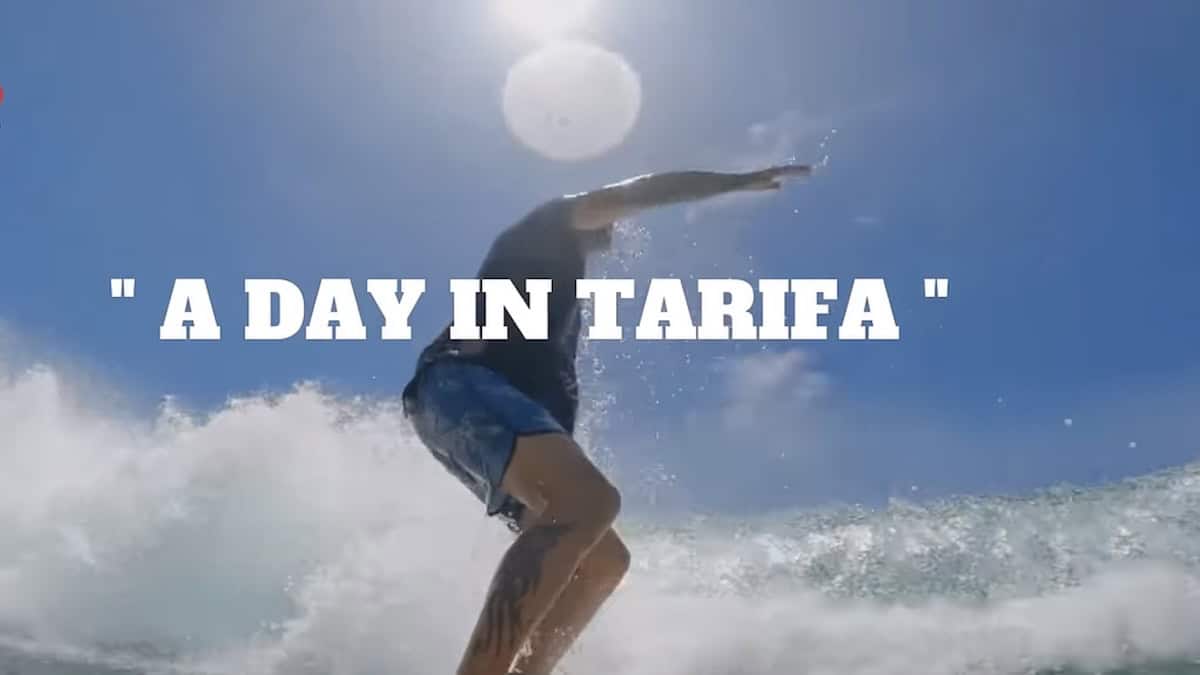
Jazz Guitar Today contributor Joe Barth talks to guitarist John Shannon about his new album, A Day in Tarifa.
John Shannon grew up in Pittsburgh’s underground music scene and was shaped by both folk and jazz-favored music. He’s a graduate of Boston’s Berklee College of Music, and his lyrical and jazz-favored sounds have been compared to Tim Buckley and Nick Drake. John has just released a new album, A Day in Tarifa.
JB: So, before I ask about the new album, tell me about yourself. When did you start to play jazz guitar in Pittsburgh, and in those early years, what was most helpful in your personal development as a guitarist?
JS: I started learning the jazz language and harmony on the guitar when I was around ten years old. I had a local guitar teacher who thought I was excelling, so he sent me to Duquesne University in Pittsburgh, which had a very strong guitar faculty at the time. My teacher there introduced me to Wes Montgomery and Pat Martino. It was really good for my young ears to hear that kind of harmony and those melodic runs on the guitar. Later in high school, I went further into studying the music and seeking my own voice within it after being inspired by the uniqueness of musicians such as John Scofield, Keith Jarrett, and John Coltrane.
JB: Being from Pittsburgh, did you ever study with Joe Negri, Jimmy Ponder, or someone up at Duquesne University?
JS: I did study at Duquesne when I was pretty young around ten years old, and later in high school with Bill Purse and Ken Karsh. They had a summer guitar workshop as well which was always a blast and put a lot on the table to learn from.
Joe Negri was a good friend of my grandfather’s as he played on his famous Pittsburgh kids show “Paul Shannon’s Adventure Time” back in the 1960s, which pre-dated Mr. Rogers. I was around Joe when I was young, especially through Duquesne, which was important for me just to witness his incredibly beautiful and expressive playing. I studied a little bit with Jimmy Ponder when I was a teenager as well – someone we all deeply revere in Pittsburgh. A handful of my friends in the scene now played a lot with Jimmy in the last 20 years of his life. I was in NYC all those years. It’s hard to overstate the power and harmonic genius of Ponder! It remains a part of my regular practice to deep dive into the live solo guitar recording “Live at the Other End” of his.
JB: To you, what are three of the most influential jazz guitar albums and your personal development as a guitarist, and why?
JS: For me, looking back now, I’d have to name these three as critical in developing my ear and concept of the guitar in jazz.
- I Can See Your House From Here – John Scofield and Pat Metheny. I learned a lot from this record in terms of guitar-led songwriting and comping. Of course, when Pat and Sco solo, they take flight (perhaps hence the comical album name), but to hear these masters comp for each other always fascinated me. The songwriting is stellar as well. I’m a big believer that the better the song is, the better the player can sound on it, and these guys, over time, have proven what master songwriters they are.
- The Cookbook – George Benson – I love all Benson records! The Cookbook is just a phenomenal jazz guitar record. His inventive runs, along with the unshakeable sense of swing at any tempo or even style, are just remarkable to me on this album. The playing is just on fire, and the tunes are very cool throughout. It also has quite a vibe.
- The Next Step – Kurt Rosenwinkel – When this album came out, it changed the whole trajectory of the guitar in jazz, at least for my generation. Kurt’s inventiveness while staying in the idiom of the music has always been inspiring. Everything about this album was kind of ceiling-shattering. The writing, the comping, the songs in different guitar tunings (and still playing over changes!), and just Kurt’s epic sound. He’s always been an explorer of sound through the guitar, which I really relate to and appreciate.
JB: Talk about the impact of studying with Mick Goodrick and Wayne Krantz in Boston.
JS: Mick was very cool to me. Our lessons were a lot about talking concepts, such as what to do with your energy when you are on the road and a gig is cancelled, or about accessing the “x factor” that happens those nights when the band and audience are like one. Before I went on my first European tour at 19, Mick lent me one of his distortion pedals, kind of pushing me into a more sonic exploratory direction than where I was at the time. One of his compliments about my playing was that he always wanted me to turn up, which from him was definitely a compliment.
Wayne was also very cool because he treated me like an equal. We would talk about trio concepts a lot. He was currently at the 55 Bar in New York every Monday, and I was playing a lot with my group, Waking Vision Trio. I was struck by the power and simplicity of his time and phrasing concept when, on the outside, it never sounded that way. He revealed how the structure of his approach allowed for more complexity in his playing.
JB: How long did you work with the pianist Hiromi, and what did you appreciate about that experience?
JS: Hiromi and I were at Berklee together, which was where we started playing. Later on, when I was in NYC I worked in her SonicBloom group, subbing for Fuze for around 2 years. That experience took me deeper into finding the natural spaces playing odd time signatures, as well as developing the ability to jump from a right-brain to left-brain perspective fast. In other words, from complex unison written lines into free improvising in 9/8. I also experienced my first tour of Japan with her, which was incredible musically and culturally.
JB: On your new album, A Day in Tarifa, the opening song is of the same title. Tell us about Tarifa.
JS: The song “A Day in Tarifa” came to me as I was reflecting on a trip to Tarifa, a coastal town located on the southern tip of Andalusia, Spain that has a real mystique to me. Across the Strait of Gibraltar there you can actually see North Africa, and these two cultures seem to mix in this wonderful vibe, capitalized by the wind-swept ocean in the town itself. Tarifa is also the windsurfing capital of the world, and I’ve always equated playing music to riding waves. The two main parts of this song are written to tie together in a way that evokes this mix of cultures and, of course, hopping on a wave! The third part on the way out of the song is a uses the main melody from the second part, but over the harmony, the first part of the tune symbolizes this overall merging of cultures and nature.
JB: “Liberty Bridge” and “Allegheny Current” allude to Pittsburgh. Tell us about those songs.
JS: Pittsburgh is a city of bridges. I drive the Liberty Bridge most days into downtown to go to Con Alma, the jazz club I co-own. In one way, the song is a reflective honoring of the journey of these recent years of being in service to this great music through Con Alma. In another way, the song is a lament for the division in the U.S. right now, yet also offering a hope that, like the bridge itself connects the South to the North in Pittsburgh, there can be a bridge to connect the people more, again.
Pittsburgh is also a river city. In fact, that’s one of the reasons for its rich jazz history. The rivers were the highways back in the day and connected us to New Orleans in a strong way. The Allegheny River is on the north side of the city, and I wanted to honor and connect that river flow to music with this song. Also, Pittsburgh, being a city of jazz musicians, that are known to naturally swing hard (the Pittsburgh quarter note!), I wanted to explore the idea that yes, perhaps there is something in the water, as they say.
JB: Briefly reflect upon some of the other material for the recording.
JS: “ Marseille” is a song I chose to include by the great Ahmad Jamal, having a lot to do with my Pittsburgh roots, as Ahmad was also born and raised in Pittsburgh. I spoke to Ahmad on the phone once, and he said to me, “Oh you’re from Pittsburgh? You’re gonna be alright then.” I chose this more recent song of his because of its enchanting nature and also because it references another place on the Earth that I know he and I both share a love for, Marseille, France.
“Sunrise” is an honoring of the earth and a reflection of the deep melody that exists within any given sunrise. There is a rising feeling intended with this song, a song I wrote a long time ago and which I have carried with me through the experience of many sunrises. The song is meant to stand as a testament to the power and musical inspiration that Nature can give us as human beings.
“Four One Two” is the area code in Pittsburgh. This song is an honoring of all the Pittsburgh musicians who have gone before me and the Pittsburgh jazz fans who continue to support the scene happening now. Growing up as a musician in Pittsburgh, a main focus in the music was to always be “swinging hard,” which is a big part of the motivation for this composition.
JB: What do you appreciate most about your rhythm section on the album, organist Cliff Barnes and drummer James Johnson III?
JS: Cliff and James have such a unified sound and groove together. I developed this material largely by playing with them at Con Alma and working the material out on the bandstand. They just have the ability to naturally and easily support my compositions, and there is a good live chemistry between us. They always know what to play that’s just right for the song, and they each have their own deeply creative approach to their instruments. Cliff’s harmonic concept really can help lead the music in the right direction, and James is always inventing on the kit.
JB: It looks like you play either a Heritage 575 or a 335 style guitar. What do you appreciate about those guitars?
JS: I really dig Heritage because I dig the Gibson-style of axe. I always want some kind of hollowness in the actually guitar, whether full or semi, to get the right tone for the music. The 575 is what I used for recording A Day in Tarifa. It just gives the right tone for me to work with, and this one has only a neck pickup, which keeps things simple. I also have an Eastman T64/VT that I’ll play. It’s a completely hollow thin line like an Epiphone Casino, but I took out the P90s and put on Humbuckers.
JB: Talk about the gigs you do in Pittsburgh and how you make a career in music work for you.
JS: In Pittsburgh, I mainly play at Con Alma, which is my spot and the only jazz club in town. You make a career in music work the same anywhere, I feel, which is through a combination of efforts, including gigging, teaching, recording, and selling your records. My current situation is that I co-own and musically curate Con Alma. So, add booking to that list for me!
Thank you for reading this post, don't forget to subscribe!


Saying Goodbye To An Atlanta Jazz Musician, Sal Gentile

Julian Coryell Brings New Flavors of Flamenco, Gypsy, Latin and Jazz to the Tonalic Library

Australian Guitarist Zak Scerri Debuts London Trio Album

Jazz Guitar in Tasmania… and New York City

Greek Bouzouki Virtuoso and Jazz Guitarist, Michael Paouris

Jazz Guitar Today Lesson: “Central Park West”

New Album From Eleonora Strino

Jazz Guitarist Eleonora Strino Talks To JGT
Jazz Guitar Today Lesson: “Central Park West”
Jazz Guitar Today Lesson: “All or Nothing at All”

New Vince Lewis Guitar Arrangement, “Secret Love”
Jazz Guitarist Eleonora Strino Talks To JGT

First Time In The US! Eleonora Strino

More About Just Jazz Guitar Founder, Ed Benson

The Inaugural Downtown NYC JazzFest

Talking with Just Jazz Guitar Founder, Ed Benson
-
 Jazz Guitar Lessons2 weeks ago
Jazz Guitar Today Lesson: “Central Park West”
-
 Jazz Guitar Lessons3 weeks ago
New Vince Lewis Guitar Arrangement, “Secret Love”
-
 Artist News2 weeks ago
Jazz Guitarist Eleonora Strino Talks To JGT
-
 Artist News4 days ago
Saying Goodbye To An Atlanta Jazz Musician, Sal Gentile