
Artist Features
Molly Miller And “The Ballad of Hotspur”

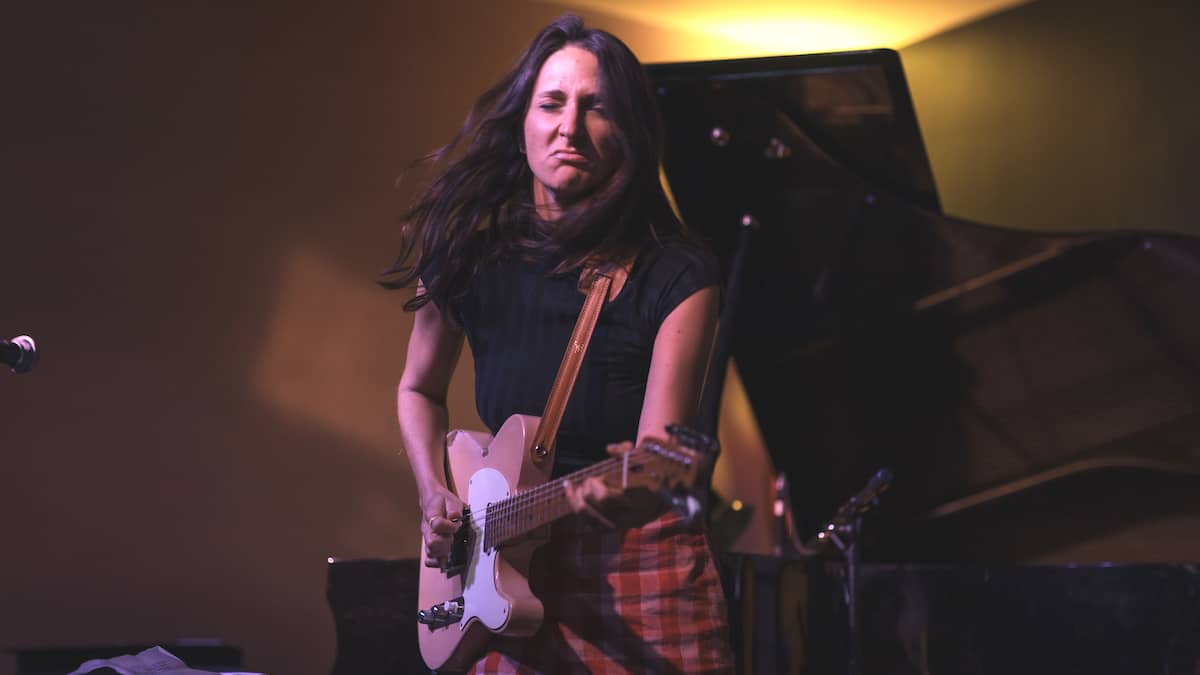
JGT contributor Joe Barth talks to guitarist Molly Miller about her new album, The Ballad of Hotspur, as well as albums that influenced her.
Molly Miller is one of the busiest guitar players in the Los Angeles scene. Whether gigging at the concert venue at the famous McCabe’s Guitar Shop in Santa Monica, or touring someplace in South America, or coordinating the studio guitar department at USC, Molly is contributing to the art form of jazz guitar. As a child, Molly’s parents wanted her and her four siblings to play in a family rock band in their living room. Molly chose the guitar. This Californian has been pursuing the art of playing the guitar at the highest level since age seven. She did her undergraduate, master’s, and doctoral studies majoring in music at USC. After teaching at Los Angeles College of Music (LACM) for a few years, and then was invited to join the faculty at USC. Her most recent album, The Ballad of Hotspur, explores the great Southwestern United States through music in the idiom of the guitar trio. I caught up with Molly to talk about her approach to playing and this record.

JB: Before I ask about the album The Ballad of Hotspur, I know you have talked with Bob Bakert. But I want to ask about the albums that shaped you as a jazz guitarist. What are three of the most influential jazz guitar albums to you and your personal development as a guitarist, and why?
MM: Grant Green – Idle Moments
I say Grant Green was my gateway drug into jazz guitar. He was the first one who made sense to me – he is so conversational. I felt like he was telling me a story. Grant’s playing is groovy, lyrical, and clear. My high school guitar teacher, Steve Cotter, used to burn me CDs to check out, and Grant Green was the one who did me in. From there, Steve introduced me to so many great players, but Grant Green was the one who opened my ears to the beauty of jazz guitar.
Joe Pass – Virtuoso
Like so many others, this is the record that got me into chord melody playing, a style that is fundamental to my sound and development. Joe Pass is an absolute beast with the style. He lit a flame for me with what is possible on the instrument.
George Benson- The George Benson Cookbook
In Benson fashion, this album starts out with a fast blues and a burning solo. He is virtuosic, yet deeply groovy and melodic. His phrasing is insane – and it rocked my high school world. George Benson is still one of my favorite jazz guitarists. He always inspires me as someone who is simultaneously virtuosic, yet he also makes choices based on what serves the music.
Runner Up:
- The George Barnes Octet Recordings – Talk about arranging! This record opened my mind to ways to utilize the guitar. And he burns!
- Johnny Smith – Moonlight in Vermont – Oof. He is one of the most beautiful players.
- Julian Lage – A World’s Fair- One of my absolute favorite solo guitar records. It melts me.
- Wes Montgomery – The Incredible Jazz Guitar – This is a perfect jazz guitar record. Flawlessly constructed solos. Great mix of tunes.
JB: Talk about the emphasis on musical time and tone, and melody and its role in performing jazz.
MM: Well, you’ve just hit the three most important elements of music. I often say to my students, the essentials in the hierarchy of music: time and tone (no one wants to hear someone who has bad tone or time, regardless of how hip the notes are). Then comes melody. Melody is what draws you in and keeps you there. If you have good time, tone, and a strong sense of melody – oof. You’re in a really good place.
While grasping time, tone, and melody can feel abstract or challenging, I think if you listen to a ton of music, play with all sorts of players (you’re time will never be that good if you only play alone in your room – learning how to play with other people gives you such a stronger sense of groove and time), and listen back to yourself in a critical and constructive way, you’ll get there. So many people never listen back to themselves, so they don’t really know what they sound like. It’s like going out in the world and never looking in the mirror.
JB: On your most recent album, The Ballad of Hotspur, talk about the track “Cine” that opens the album. What connections are there between the historic 8 mm films and the films with the same name?
MM: I want to give you a really cool answer about an old historic film, but I’d be lying if I said it was inspired by a specific film – our record came from a broader concept. “Cine” was just a shorthand for “cinematic”. “Cine” was the first of the western-inspired tunes we wrote for the album.
JB: The album consists entirely of your original songs. Did you compose this music for this particular project?
MM: I wrote some of the tunes on my own and some with my bassist, Jennifer Condos. We were inspired by the idea of writing tunes with that western flair, but my writing always comes from an emotional place. Writing music is like a diary for me – I can be hyperbolic and emotional. I have a safe space to release all the “big feelings” and crazy in me. When I write, there are typically lyrics that go along with the melodies. There’ll be little mantras of phrases that lead me.
JB: You are an excellent tunesmith. Talk briefly about how you go through the compositional process.
MM: Every record is a snapshot of a period of my life. For this record, it was mostly COVID woes, a breakup, and falling in love. I don’t normally sit down and think, “I am going to write a song”. I go to my guitar pretty much daily. It is my work, but also my therapy and my happy place. I start playing, and I can do two things that make me a more sane human: push aside the noise of my world or put the noise into music and release it. The latter is how I write songs.
Whenever I pick up my instrument, even if it is to learn music for a project or something specific, I always like to warm up with free play – no goal in mind, but just to give myself a few moments to connect with my instrument. This is when I start writing music most often. I let myself feel whatever is taking over my mind in that specific time – a romantic relationship, a woe, a conflict, a dream – and get hooked on little melodies. This is such a release for me. I write a lot of songs that are for momentary relief, but some of those pieces end up on my records. This process helps me process whatever I am going through.
JB: In your live shows, you do some tasteful renditions of Beach Boys, Jimmy Webb, Cat Stevens, and other songs from the ‘60s and ‘70s. I hope you are planning to record these types of songs.
MM: Yes! There are a bunch of live versions of these out in the world (on YouTube and digital streaming), but I think I will make a proper record of these covers soon. I just recorded my newest record of the trio – we are probably a year away from release, but that is at the forefront of my mind. I will get that record together, but I will still be releasing some covers and other live things in the meantime. I love reimagining tunes and giving them a different expression.
JB: I can’t ask about every song on the album. But tell me about the connection between “66 West” and the historic Route 66.
MM: We called it “66 West” for two reasons. The song is in 6, and Route 66 ends in California. As mentioned, this record is very Western-inspired.
JB: What special musical satisfaction do you find in working with your trio?
MM: The trio is essential for my well-being and growth. It is such an amazing outlet and driver for me, but I also learn so much from it. Jennifer Condos and Jay Bellerose were my main trio for a decade, and they are so much wiser and more mature than I am. They help me soften my ego and think about music in a more macro way. It’s been amazing getting to build a sound as a unit – we get those incredible shows where we are breathing together. There is nothing like it.
JB: As I have seen you play, you seem to gravitate toward Telecasters and your Gibson 335-style guitar. What do you appreciate most about the guitars you play the most?
MM: They are versatile, and I know them. The most important thing about gear is to know how to use it. I know those two styles of guitars intimately- especially the specific guitars I own. I play a lot of genres. I like to slide between jazz, country, r’n’b, pop, funk, and so forth, while feeling like I can get the range of sounds with my guitar. I often play just one guitar at gigs, so it needs to be one I know well and can deliver a variety of tones.
JB: With both songs, “In the End” and “Means to an End” are wonderful, softer songs. With the use of the word “End” in both of the titles, did you have a particular situation in mind in composing these songs?
MM: Each has a separate meaning in its title; they are not related. “In the End” came from a guitar songwriting club I was in, led by Adam Levy. The assignment was to write a sequel to a song you loved. Daniel Johnston, the great songwriter, had just passed – his most famous song is a tune I adore called “True Love Will Find You In The End”. I wrote a sequel to it, “In the End”.
“Means to an End” was written by Jennifer Condos and me – it’s actually our first collaboration ever. She discovered it from our first jam years before. We added a couple of sections and revised it for our record, The Ballad of Hotspur.
JB: “In the Evening” is a beautiful ballad. Tell me about composing this song.
MM: This song was written late one night when I was in it with some romantic woes. I felt really alone, sad, and frustrated. For the harmony nerds- I also love a minor 5 chord, and you hear that harmony a few times throughout, I to Vminor, which feels sad to me. I love playing with repeating a melody as harmony moves around (Jobim does this a ton too- and oh lord does he write some gorgeous songs). That’s another musical theme in the song – similar melodies with moving harmony.
JB: Talk about the song “2 West” that closes the album. There are some interesting, almost Western-movie textures in that song. Is there any relation to the highway U.S. Route 2 that crosses the northern United States?
MM: I wish I could say yes, but no. It was the second Western tune that Jen and I wrote together, so we called it 2 West. Some things are really specific, and others are just for simplicity.
JB: We don’t have the Jazz radio stations like we used to. What are some of your greatest challenges in getting your music “out there?”
MM: Not to be too on the nose, but the industry feels a bit like the wild west. There is no clear path for getting your music out there. This is simultaneously exciting and overwhelming. I try to do things that are both enjoyable and make sense to me – making records, putting live videos out on YouTube, playing live. I am sure there are more things I could be doing, but I only have so much bandwidth. I want to have time to do the thing that makes me happy – play guitar. I would like more support in helping get my music out there, but I also have to believe in the process.
Thank you for reading this post, don't forget to subscribe!


Australian–Canadian Quartet Open Thread Return with Waiting Music

British Smooth-Jazz Guitar Master, Chris Standring

Jazz Guitar Today Lesson: “Pensative”

Saying Goodbye To An Atlanta Jazz Musician, Sal Gentile

Julian Coryell Brings New Flavors of Flamenco, Gypsy, Latin and Jazz to the Tonalic Library

Australian Guitarist Zak Scerri Debuts London Trio Album

Jazz Guitar in Tasmania… and New York City

Greek Bouzouki Virtuoso and Jazz Guitarist, Michael Paouris
Jazz Guitar Today Lesson: “Pensative”
Jazz Guitar Today Lesson: “Central Park West”
Jazz Guitar Today Lesson: “All or Nothing at All”

New Vince Lewis Guitar Arrangement, “Secret Love”

Jazz Guitarist Eleonora Strino Talks To JGT

First Time In The US! Eleonora Strino

More About Just Jazz Guitar Founder, Ed Benson


