
Artist Features
Guitarist Russ Spiegel Releases New Album: TimePieces

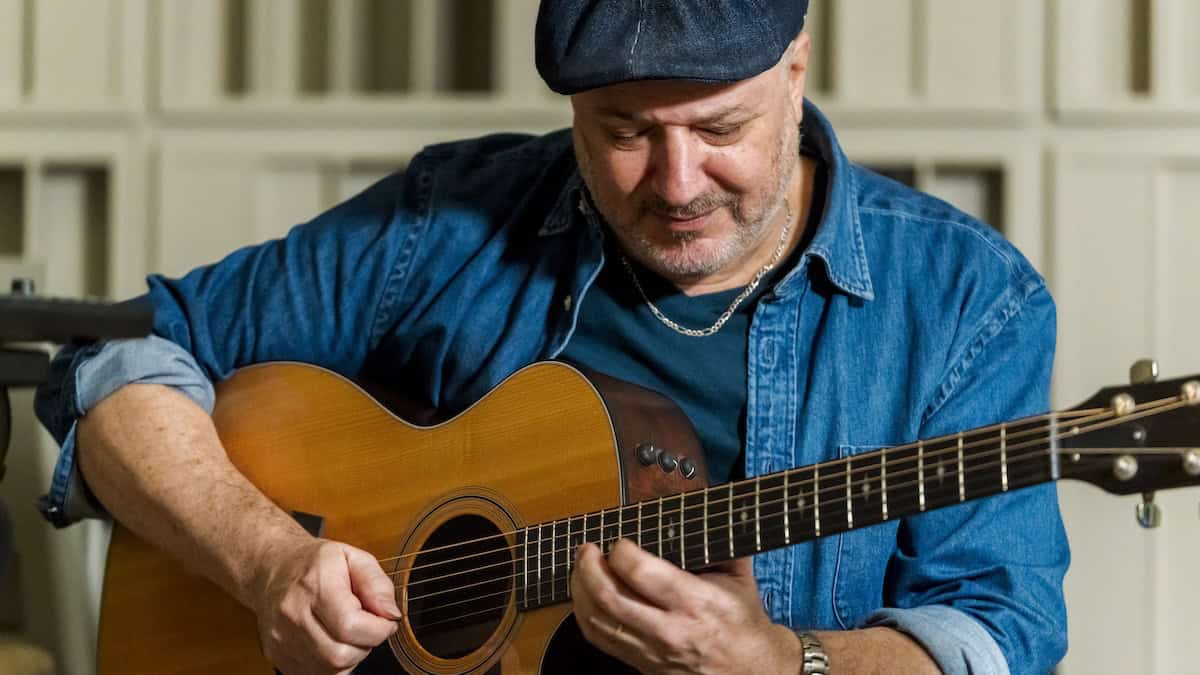
Florida’s Russ Spiegel has recently been touring Europe promoting his newest album, Timepieces. Joe Barth caught up with him enough to ask about this new record.
JB: The album opens with “Greener Pastures.” It’s a great tune with a very relaxed vibe. Why open the album with it?
RS: I take my sequencing on my albums very seriously. I feel that good pacing makes the whole recording more enjoyable to listen to. For the first tune, I try to find a piece that will draw the listener and make them want to hear more. “Greener Pastures” has a Metheny-esque vibe to it that I feel is friendly but has some little twists that make it interesting and help set up the direction of the album. It’s also the earliest song out of my collection of compositions to appear on this album, so it seemed the ideal tune to start with.
JB: Except for one song, the album is entirely composed of your original works. Are they songs written specifically for this project?
RS: Joe, as you know from our previous discussions, I love wordplay. Really, only one song was written specifically for this recording. The idea for this album was to use the many layers of the concept of what constitutes time and a timepiece. In terms of pieces of music in time, this album is an amalgamation of a number of various compositions from throughout my musical career – beginning with “Greener Pastures” from the late-1980s until the present – that hadn’t yet been documented on any of my previous recordings – except for “Lydian Dream” which was on my debut album Monky way back in 1997. Following on this concept, I had the idea of having compositions on this album in different time signatures, thus pieces involving time. Further, I very recently became interested in watches and the beautiful intricacy of both their form and function. Much like a composition, one doesn’t need to know how a watch works to appreciate it; however, the creation and precision of both a watch mechanism and of a composition requires much thoughtful and exacting work. Finally, I had recently composed the song “Timepiece,” and this just seemed to tie all these ideas together.
JB: I like the rhythmic elements in “Timepieces.” Why did you make this the title track?
RS: As mentioned above, it just seemed to encapsulate what I was trying to achieve on this album. It’s a composition all about time, and since I wrote it in the last year, it’s my most recent composition. As to the piece itself, because it is built in sections – with a kind of fanfare intro that returns as an interlude and again at the end, and a very dynamic 11/4 middle section – “Timepiece” offers a lot of room to build. Of course, having an incredibly adept and sensitive rhythm section in Tal Cohen on piano, Vince Dupont on bass, and Brandon Lee Lewis on the drums means the song can breathe dynamically.
JB: Hendrik Meurkens does tasteful harmonica work on “Cadence” and “Sidewalk Detour.” Did you compose these two songs with him in mind?
RS: I’ve been working with Hendrik for a number of years now, mostly in big band settings where I would arrange his tunes and feature both him and his songs with my big band in New York and for his own projects, including with the WDR Jazz Orchestra in Cologne and the CCCN Orchestra based in Costa Rica. Since I decided to have both songs on the album, I called Hendrik, as they fit really well with his way of playing the chromatic harmonica. “Sidewalk Detour” was a tune I wrote while living in Brooklyn in the early 2010s. It began more as a writing exercise I gave myself, which was to compose a very simple melody and develop it. I wrote “Cadence” around 2015, when I was finishing up my studies at the University of Miami, as I was really influenced by Kenny Wheeler’s writing, and this piece began as a big band vehicle to feature Hendrik. You can actually see and hear that version here:
JB: Talk about how you came up with the twangy “Tennessee Free Jazz.”
RS: Haha! Yep, getting some “twang” in there! I came up around a lot of free music, especially when I was living in Germany, and wanted to use this idea as a vehicle for group improvisation. It’s basically a tongue-in-cheek play on what would happen if you were to take a country music-based theme and give it to a bunch of jazz musicians, as it can literally go anywhere! There’s a simple melody with an AABA form, but then what happens in the solo section totally depends on the musicians. I think we just played the song once in the studio – I really love the interplay!
JB: “Quiet Time” is a beautiful ballad. Tell me about it.
RS: It’s another song from back in the early 1990s that I never got around to recording before. As I was preparing the songs for the album, I thought it would be nice to have a duet of just Tal and me playing this tune. It has a sad, melancholic beauty and the way the piano and acoustic guitar sound together really for me is a poignant moment on the album.
JB: Nice touch with the horns on “You Stepped Out of a Dream” as well as the wistful “Lydian Dream.” Why the horns on only those two songs?
RS: Although my idea was to make this mostly an acoustic quartet album – by that I mean my electric guitar with piano, acoustic bass and drums – these two pieces felt to me that they needed horns to fill out the sound, and, as an arranger, I love being able to write for more instruments. “You Stepped Out of a Dream” grew out of a four-chord vamp in 5/4, and I wanted one song that was more of a blowing tune, so I was able to feature Jean Caze on trumpet and Tim Armacost on tenor sax, along with Vince on bass, on this tune. I was also especially inspired to rework “Lydian Dream” with horns to add to the dreamy quality of the song.
JB: Bassist Vince Dupont and drummer Brandon Lee Lewis play superbly. What do you appreciate most about these two musicians as your rhythm section?
RS: I think you already said it – they play superbly together, haha! These are two musicians with tons of experience – Vince was Russell Malone’s bassist for many years, and both of them can handle absolutely anything that is thrown at them at the highest musical level, Tal as well, of course. They are all based in the Miami area, though Vince is moving back to the New York area soon.
JB: Talk about your musical relationship with pianist Tal Cohen.
RS: I’ve known Tal for years since we were both studying at the University of Miami. I think he is one of the most creative and innovative musicians around, and I had been wanting to record with him for a while, but I was more concentrated on my organ group on my previous recordings. I actually composed “Timepiece” with him in mind, so it just made sense to make this album with Tal.
JB: Why do you close with the dialogue of the brief “Last Words”?
RS: I thought it made a fitting ending – there’s some very serious music here, but the session itself was pretty relaxed, and I just love our little repartee there. I think it adds a little more fun, and I wanted to share this so the listener can get some insight into our feelings about how we communicated in the studio on this recording.
Overall, I’m intensely proud of this album, as it represents the culmination of my many years as a jazz composer and guitarist.
Thank you for reading this post, don't forget to subscribe!


Guitarist Russ Spiegel Releases New Album: TimePieces

A Rare One-Time Coming Together of Guitarist Mick Goodrick and Pianist Fred Hersch

Jack West, Bay Area Explorer of New Guitar Sounds

Vocalist Elina Duni and Guitarist Rob Luft Continue Their Musical Journey

“Along The Low Road” Featuring Guitarist Gustaf Ljunggren

New Vince Lewis Guitar Arrangement, “Anything Goes”

Guitarist Paul Ricci Releases “The Path”

Australian–Canadian Quartet Open Thread Return with Waiting Music

Jazz Guitar Today Lesson: “Pensative”
Jazz Guitar Today Lesson: “Central Park West”
New Vince Lewis Guitar Arrangement, “Anything Goes”
New Vince Lewis Guitar Arrangement, “Secret Love”

Jazz Guitarist Eleonora Strino Talks To JGT

More About Just Jazz Guitar Founder, Ed Benson

The Inaugural Downtown NYC JazzFest


