Artist Features
Jazz Guitar Is Alive And Well In The Czech Republic

JGT contributor Joe Barth talks with a very busy Czech jazz guitarist, Libor Smoldas.
Above photo copyright: Libor Makrlik
Libor Smoldas has also played many of the leading jazz festivals with artists like George Mraz, Jeff Ballad, Bobby Watson, Jon Faddis, and others. He’s done twelve albums as a leader with his newest, Sorry Miles! released this year.
JB: Growing up in Prague, what inspired you to play jazz guitar?
LS: Correct! I went from listening to Nirvana to their MTV Unplugged record, which led me to blues, and that eventually led me to jazz. A big influence was my late uncle, a jazz fan who gave me a lot of jazz vinyl he had collected, even during communism. Some were Czech re-releases of American jazz, while others he somehow managed to have sent from abroad. My favorites were compilations of Charlie Parker and Dizzy Gillespie, though there were many more. Those records no longer play well, as I wore them out over the years.
JB: Did you study jazz guitar in college? If so, what did you appreciate most about what you learned during those years?
LS: The only jazz education in the Czech Republic was at the high school level. As new schools began to open, I was always in the first batch of students to attend them. In the end, I earned three degrees from different university jazz departments in the country. I have to admit I didn’t learn that much formally, but it was invaluable to meet people and study with teachers who were hugely influential. I’ve always been fortunate to play a lot of jazz gigs, and I feel that’s where I learned the most, along with opportunities to play with musicians more experienced than me.
JB: To you, in your personal development, what are three of the most influential jazz guitar albums and why?
LS: That’s a tough one—choosing only three from so much amazing music. Blue Lights by Kenny Burrell, because the bonus track “I Never Knew” was the first solo I ever transcribed, memorized, analyzed, and truly understood what he was doing.
Wes’ Smokin’ at the Half Note—an obvious choice, but I really think it’s the best jazz guitar record ever made; everything he does is gold.
And Jim Hall Live!—Jim opened the doors for modern jazz guitar, and I love everything about his playing. Those concerts, as you probably know, were not meant to be recorded and released, but were captured on a portable recorder by bassist Don Thompson and only later released as a record. They’re incredibly relaxed and creative. I even got to play with Terry Clarke, who confirmed that there’s much more music recorded from those gigs—I have to track it down!
JB: Tell us what it was like working with guitarist John Stowell and bassist David Friesen.
LS: David and I met through John, and we did a duo gig at U Staré Paní club in Prague. David loved it (so did I) and kindly booked me for a European tour. It’s a very fun band—an unusual lineup with two guitars and bass. David’s music is open, fragile, original, modern, and beautiful. He and John have a way of playing together that comes from years of collaboration, so my role is simply to tune into their frequency. I also love working with other guitarists, and John has amazing voicings and a unique style. Overall, he’s an incredible player with a wealth of experience. We’re planning another tour next year; I am looking forward to it.
JB: Tell us about your CD, Sorry Miles!
LS: It’s a bit cheeky but well-intentioned. We play Miles’s tunes that he credited but didn’t really write—”Tune Up”, “Solar”, “Donna Lee”, “Smooch”, “Dig”… You might have heard rumors about that. I did some research and discovered many fascinating stories about how these and other tunes credited to Miles came about. I first turned it into a concert program so I could share those stories with audiences, and the album came from that. I want to stress that I love Miles and his music; those tunes wouldn’t be what they are today if he hadn’t approached them the way he did and recorded them. The album also contains some of my originals inspired by Miles’s paintings and the stories behind the authorship of those standards.
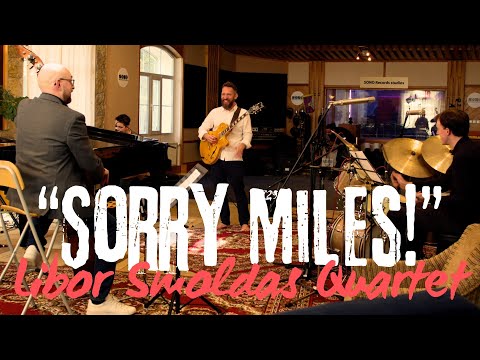
JB: Your rhythm section on the album is very good. What do you appreciate about working with bassist Tomas Baros, and drummer Jesse Simpson?
LS: Tomas is one of the best double bass players in Europe. Jesse is an amazing drummer from California who lived and studied in NYC for a long time and now resides in the Czech Republic. I feel lucky they both live in Prague, so we can play regularly. Plus, Mukiláš Pokorný is on piano. What I appreciate most is their combination of skill and simplicity—they can play straight-ahead or modern jazz without it feeling forced. They read music flawlessly while staying creative and intuitive in the moment. On top of that, they sound amazing and are just great people to be around.
JB: You play with the Organic Quartet. Talk about what you appreciated most about performing with them.
LS: That’s a band led by organist Ondřej Pivec, now also known as Ondre J. We came up together years ago when we were students. Ondřej then moved to NYC and became well established in the contemporary gospel scene; he’s now touring with Gregory Porter and plays on his Grammy-awarded album. Our music is soulful, anchored by Ondřej’s and drummer Tomáš Hobzek’s groovy time feel, and complemented by Jakub Doležal’s original saxophone playing. We’ve been playing together for over 20 years, so it always feels like coming home whenever we get together for gigs.

JB: Tell us about your American trio with Adam Nussbaum on drums and bassist Jay Anderson.
LS: Another long-standing band. I met Adam in person when he played with Abercrombie and Gary Versace in Europe around 2010. I gave Adam my records; he introduced me to Jay, and we made our first record, Dreamtime, which came out in 2014. We’ve since made two more studio albums, the last of which is called Dusk, and now we’re working on a live album. Playing with Adam and Jay is essentially my apprenticeship project—it’s a chance to learn, have fun, and connect with musicians I previously only knew from records. I’m very grateful to work with them regularly; I consider them close friends, as well. It’s in a way similar to other legends that I worked with like Bobby Watson, James Morrison, George Mraz… You are amazed to be playing with people who played with your idols, and you learn with every note.

JB: What do you appreciate most about the Stromberg guitar you use?
LS: Stromberg guitars are now made in the Czech Republic by NBE Guitars. The factory produces multiple brands, mainly Jolana, a traditional Czech brand. The instruments and parts are of very high quality, comparable to US or Japanese-made guitars. I love working with them because they are always happy to adjust the instruments to my needs and suggestions. Plus, the factory is less than an hour’s drive from my house, which makes it easier to discuss things in detail. Talking about gear, I also use Thomastik-Infeld strings and another Czech-made product—JAAZ Acoustic amplifiers (it’s not a typo), incredible little amps that will soon shake the jazz and acoustic guitar gear world.
JB: Talk about the jazz scene in Prague and how you are able to make a living playing music there.
LS: We already touched on Tomas and Jesse—they, along with other top musicians in Prague, can compete with the best anywhere in the world. Prague is small compared to global metropolises, but it has an unprecedented number of jazz clubs per capita—I can think of seven clubs offering live jazz or blues nightly, plus some bars, hotels, and restaurants with background jazz. The pay isn’t great, but there’s ample opportunity to play, which keeps the scene alive. Playing Prague clubs has always been my bread and butter, though I tend to travel quite a bit as well. All things combined, clubs and festivals in the country, touring internationally, some teaching, somehow bring enough money for my big family and me; it’s a mystery, really.
JB: What advice would you give young American musicians who want to play gigs in Europe?
LS: Unless you are an international jazz star, you need to build your connections in each country separately. Europe isn’t one market; it’s a patchwork of distinct scenes. It’s all about coming here in person and getting to know people. Even if you have big ambitions, which is good, stay humble and create opportunities for the musicians you meet along the way. Invite them to play in your scene and think long-term—build collaborations with people you like, both as musicians and as people. You’ll be surprised to find amazing musicians at places you wouldn’t expect.
Thank you for reading this post, don't forget to subscribe!