
Features
JGT Talks To Jazz Guitarist Steve Kovalcheck

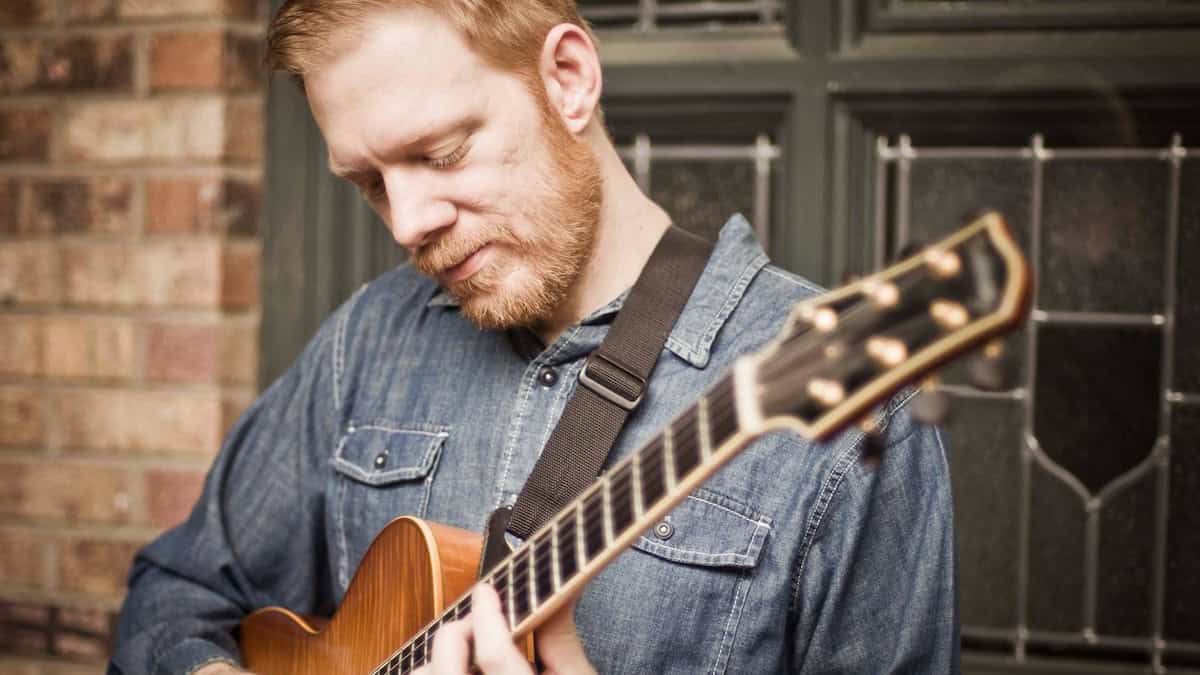
Jazz Guitar Today contributor Joe Barth interviews Denver jazz guitarist Steve Kovalcheck.
The sold-out house at Boxley’s, a jazz club twenty miles east of Seattle, was eagerly awaiting the organ trio they had come to see. Legendary drummer Jeff Hamilton had brought organist Akiko Tsuruga from New York and a guitarist from Colorado for the evening. As they opened with a bluesy shuffle, guitarist Steve Kovalcheck was swinging hard and shining!
JB: Growing up in Nashville, Tennessee did you start with country music, and what inspired you to play jazz guitar?
SK: Even though I am from Nashville, I did not start with country music. Like many young people in the 90s, I started with rock and heavy metal before discovering country, blues, funk, and, ultimately, jazz. I had a very special teacher in high school named Stan Lassiter who inspired me to explore jazz and other styles. While Nashville is often associated with country music, it has a rich tradition of all of these styles, and amazing guitar players to go with them.
JB: Talk about the things you appreciated most about your guitar studies in Knoxville and the University of Northern Colorado.
SK: At the University of Tennessee in Knoxville, more than just guitar, I really learned how to teach myself, and was encouraged to explore by my teachers. I was very fortunate to study with Mark Boling on guitar. I appreciated the emphasis Mark placed on learning music by ear, the study of harmony and accompaniment, and the social aspect of learning through doing. I learned the most through playing with him, as he is a superb musician. I should also say that at UTK, I studied with the pianist composer, Donald Brown, who had a massive influence on my musical growth. He cultivated my interest in all styles of jazz and supported me in my learning. The combined faculty at UTK actually inspired me to pursue teaching in my own career.
At the University of Northern Colorado, I didn’t study guitar. I studied jazz composition with David Caffey. He helped me expand my knowledge of the idiom. I had the opportunity to write for big-band and different-sized ensembles. This changed the way I thought about orchestrating on the guitar, especially in a trio or quartet. David has been an outstanding mentor and friend over the last 17 years.
JB: To you, what are three of the most influential jazz guitar albums and why?
SK: I will give some that I found particularly influential. One of the first jazz guitar records that I owned was Grant Green’s Solid. Coming from a rock background, Green’s style seemed too simple technically at first, but on repeated listenings, I discovered why he is such an unsung hero of jazz guitar. Even though he didn’t have the expansive vocabulary of a Wes Montgomery, Green said so much with less. In terms of playing blues, and swinging, he demonstrates a perfect model on this record. The rhythmic connection between him and Elvin Jones on drums, McCoy Tyner on piano, and Bob Cranshaw on bass, still serves as a great example for all jazz students.
Wes Montgomery’s Smokin’at the Half Note is always in our top records for jazz guitar. Wes demonstrates a complete approach to jazz improvisation in this recording. He has a flow of ideas that engages the rhythm section in a very creative way. He develops melodic ideas over choruses, creating a narrative that non-musicians can follow. The swing and articulation of his playing are particularly engaging.
Even though it is not a jazz guitar record per se, Jimmy Smith’s Off the Top featuring George Benson on guitar was a particularly influential album for me. The way that George articulated and executed on the guitar is extremely exciting.
JB: Is Ghost Orchid your newest CD? Tell us about it.
SK: Ghost Orchid is not my newest CD, but it was released in 2022. This record features some of my favorite musicians who happened to live in the Denver area, including Paul Romaine on drums, Ken Walker on bass, and Peter Sommer on tenor saxophone. When I made this record, I had played with these musicians over the ten years previous and I wanted to document those relationships. In terms of basic conception, this album is influenced by Sonny Rollins record, The Bridge, which featured Jim Hall on guitar. The tunes on this record offer an opportunity for me to orchestrate and accompany. I was also able to celebrate the mastery of each of these musicians.
JB: You have performed with drummer Jeff Hamilton and organist Akiko Tsuruga. Talk about what you appreciate most about working with them.
SK: At this point, I have worked with Jeff and Akiko for the last two years, and I most appreciate the humor and the hang of our experience. I have so enjoyed the social aspect of our time together: hearing stories, learning about the music, and learning about their backgrounds. They are both master musicians and between the two of them, they have played with all of the great guitarists. Musically, I am continually learning about swing and the sonic blending that happens in an organ trio. Playing with Jeff and Akiko is much more it is like a chamber ensemble dynamically. I am learning to explore the musicality of what can happen in a band because of their influence.
JB: What do you appreciate most about the Sadowsky guitar you use?
SK: While I play many different instruments, the Sadowsky has a clarity that I appreciate, especially with the Charlie Christian replacement pickup. Jazz guitar can be relatively dark and muddy, but the Sadowsky allows me to be clear and articulate.
JB: What amp do you use and why?
SK: I use all kinds of Fender, black panel amps, a few custom amps, including a Tweed Deluxe clone and a Gibson 185 clone, and solid state, Henriksen and Polytone amps. I like all of them for different reasons and I choose them depending on the venue and band that I am playing with. My sonic choice is related to who I am playing with and what I think will best support the music. There are times when a Fender Twin is perfect, and then other times when the Henriksen Bud Six does a great job.
JB: As an educator, what traps do your jazz guitar students easily find themselves in?
SK: I have taught at the University of Northern Colorado for the last 15 years, and I think it is easy to make things too complicated as both a teacher and a student. When things are complicated, we think too much, and it isn’t as enjoyable to play. Focusing on the social aspect of learning and playing is important. Learn tunes from other musicians in the moment. Go to jam sessions. Learn from recordings instead of reading out of fake books. Try to treat this music like folk music where we come together and share the music with each other regardless of level.
JB: Talk about the jazz scene in Denver and the gigs that you do.
SK: Recently, I haven’t been doing as many gigs in Denver, as I have been traveling with Jeff Hamilton and Akiko Tsuruga, The Clayton-Hamilton Jazz Orchestra, or playing back in Tennessee. When I am in town, I am fortunate to play with so many superb musicians who just happen to live in Denver. The venues that I most often perform at include Nocturne, Dazzle, and the Muse performance space. The jazz scene in Denver feels very healthy to me. There are many young musicians that play so well, and at the same time veteran musicians who have been here for 40 years and are still active. There is also a great jazz audience that has been cultivated by KUVO. I’m glad to call the front range home.
Subscribe to Jazz Guitar Today – it’s FREE!
Thank you for reading this post, don't forget to subscribe!


Nexus From Guitarist Jordi Farres

New Vince Lewis Guitar Arrangement, “What The World Needs Now”

Veda & The String Machine’s New Album, Rise And Shine

New Recording From Guitarist Doug MacDonald, Tribute To South Central

Joe Negri Dies Just 10 Days before His 100th Birthday

Jazz Guitar Today Lesson: Variations On Standard Jazz Blues Chord Changes – Part 2

Guitar Great Ron Eschete’ Dies at age 77

One of Chile’s Finest Fingerstyle Guitarists, German Herlein
Jazz Guitar Today Lesson: Variations On Standard Jazz Blues Chord Changes – Part 2
Jazz Guitar Today Lesson: Variations On Standard Jazz Blues Chord Changes – Part 1
Jazz Guitar Today Lesson: “Pensative”
Jazz Guitar Today Lesson: “Central Park West”
New Vince Lewis Guitar Arrangement, “What The World Needs Now”
New Vince Lewis Guitar Arrangement, “Anything Goes”

Saying Goodbye To An Atlanta Jazz Musician, Sal Gentile

Jazz Guitarist Eleonora Strino Talks To JGT
-

 Jazz Guitar Lessons16 hours ago
Jazz Guitar Today Lesson: Variations On Standard Jazz Blues Chord Changes – Part 2
-
Jazz Guitar Lessons2 weeks ago
Jazz Guitar Today Lesson: Variations On Standard Jazz Blues Chord Changes – Part 1
-
 Jazz Guitar Lessons14 hours ago
New Vince Lewis Guitar Arrangement, “What The World Needs Now”
-
Artist News2 weeks ago
Guitar Great Ron Eschete’ Dies at age 77

