Artist Features
What Does A Pianist Look For In A Guitarist?

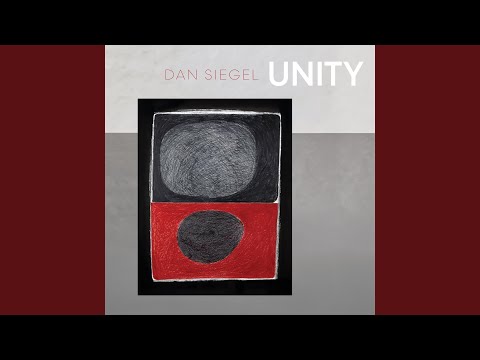
On Dan Siegel’s new album, Unity, he uses five of L.A.’s finest guitarists. Joe Barth chatted with Dan about the guitarists he chose for this record.
Above photo by Mark Maryanovich
Pianist Dan Siegel has recorded over 23 albums and played on countless record, TV, and movie soundtracks. In doing this, he has recorded with the “Who’s Who” of studio musicians, and especially the guitarists in the Los Angeles area. He is a master at contemporary rhythms and smooth jazz approaches. On his new album, Unity, he uses five of L.A.’s finest guitarists. I chatted with Dan about the guitarists he chose for this record.
JB: Over the years you have worked with numerous guitarists. In this article, I want to ask you about the guitarists you invited to play on your new Unity album. Dean Parks is one of the most recorded guitarists in the world. On Unity you have him play on the ballad “Before I Go” and funkier “Simple Things.”
DS: I have been lucky to have recorded with some of the most revered guitarists alive today. On my first album, released in 1980, the label allowed me to go down to L.A. and record Lee Ritenour to play on a couple of tunes. It was a fundamental learning experience in how a great player can bring something to a song beyond your expectations. It is something that I stress with my music production students. Hiring the right player will take a song to a higher level. Dean Parks obviously needs no introduction. One of the two songs that Dean plays on had a Joe Sample vibe, which I knew he would be great on. Percussionist Lenny Castro – who played with Joe for many years – told me that Joe told him that Dean was the only guitarist who played his chord voicings correctly. That really stuck with me. Dean has a knack for coming up with a part that not only fits the tune but adds something musical as well. As a producer, that’s what you’re always looking for.

JB: Michael Thompson has played guitar for “everybody.” You use him on “Defining Moment,” where he has those lead lines in the intro and various other guitar textures throughout the song.
DS: I first worked with Michael in 1986. The owner of the studio I was working in at the time recommended him after the guys I was playing with, didn’t work out. “Defining Moment” had a different vibe than everything else on the album, and I wasn’t sure where it needed to go, because of that, it ended up being the last tune on the record that I added guitar to. I was going through my list of guitarists and thought, I haven’t called Michael in a long time. I thought he would bring a cool thing to the track, but not sure what that would be. He took a while with the tune and then sent me what I think were ten different tracks. Initially, I thought that I wasn’t going to use everything he sent me, but every time I muted something, I missed it. We ended up using everything he sent. It was a difficult track that needed a different approach, and he nailed it.

JB: Rob Bacon has worked with singer Chaka Khan. Here you have him on “Streetwise” and later on “Free Spirit”. Both songs have what I call a deep groove, but the grooves are different in each song.
DS: Rob’s groove is indeed deep, but his rhythm parts are more than just funky picking. He gets inside of a track and adds a melodic element that is exceptionally cool. He’s also a master at incorporating effects into a performance, so they blend seamlessly. Even before we cut tracks, I knew I was going to use him on some tunes, I just wasn’t sure which ones. His playing is the perfect complement to those two tunes.

JB: On “Best Foot Forward,” Allen Hinds plays that melodic line with a distorted tone, and then on “Line of Sight” is wonderful with his modern comping. Allen, of course, has worked with Steely Dan’s Jon Herrington.
DS: Allen is an exceptional musician. He never plays the same thing twice. On “Best Foot Forward,” he can’t stray too far from the written melody, but he does just enough to keep it interesting. On “Line of Sight,” I wanted him to play a bossa nova rhythm in the B section, against these weirdo changes that constantly modulate. I think his comping holds that section together, so it doesn’t fly off the rails.

JB: Michael Miller plays on the title track “Unity” where there is such a deep pocket in the groove, as well as on “Roadside Attraction.”
DS: Most people will approach a tune from the front door. That is, what comes to mind first. Michael is a backdoor guy. He never plays the obvious. Both “Unity” and “Roadside Attraction” required a unique approach. Many years ago, I was working on a tune that I thought was a straightforward track. I went through three different guitarists who kept stepping on what was already there. I had never worked with Mike before, and when he arrived, I let him listen to the track while I went to use the bathroom, which was located just above the studio. It was a small place, and we used to monitor pretty loud in those days. So, I was sitting on the can and listening to what he was playing downstairs, and he landed on something that was incredibly cool. I cut my bathroom experience short, ran downstairs, and exclaimed, that’s it, that’s what I’ve been looking for. That’s a true story.
Subscribe to Jazz Guitar Today – it’s FREE!
Thank you for reading this post, don't forget to subscribe!