
Artist Features
Chris Bergson Talks To JGT About His Approach To Playing

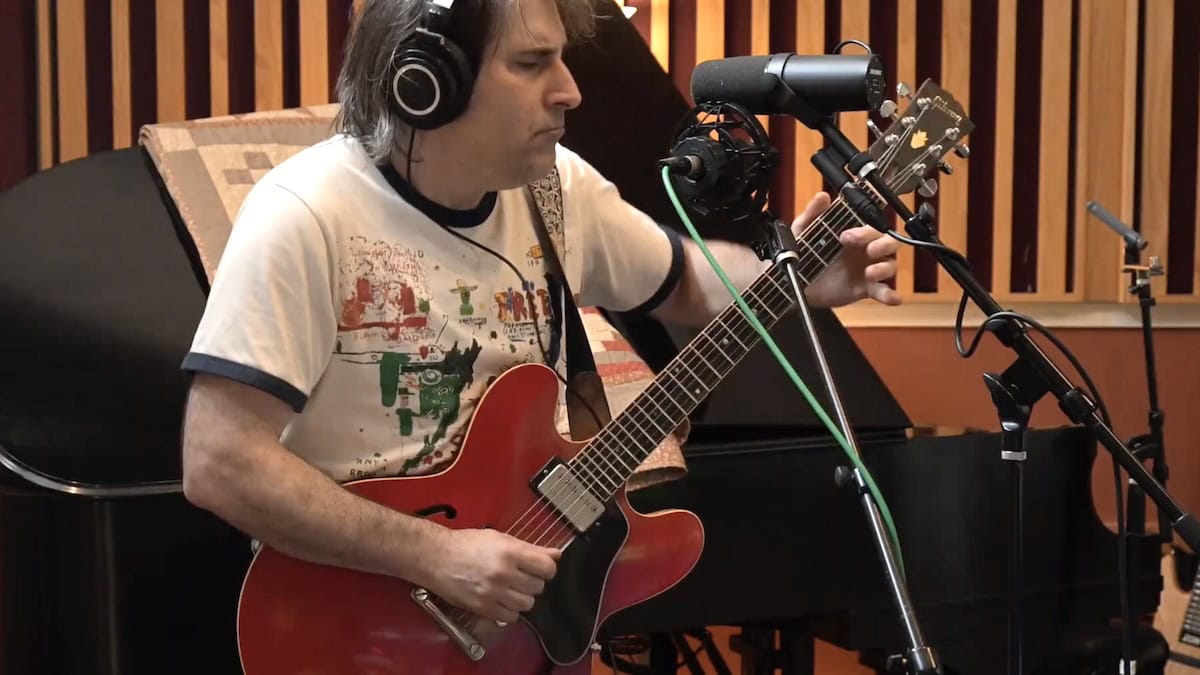
Guitarist Chris Bergson shares his three most influential jazz guitar albums and why.
Keeping busy gigging around New York and elsewhere, Chris Bergson was born in NYC but raised in Boston. Chris has studied with Jim Hall, Rodney Jones, and Jack Wilkins. Chris was inducted into the New York Blues Hall of Fame in 2015. I talk with Chris about his approach to playing.
JB: Growing up in Boston, talk about when you started to play guitar and what inspired you to play jazz and blues guitar.
CB: I was drawn to the guitar from a very young age and started taking lessons when I was seven years old. My parents introduced me to jazz and blues. I spent many happy hours playing along and learning licks. A little later on, I got B.B. King’s Live in Cook County Jail and learned many of B.B.’s solos note for note. It’s so important to hear the music live and I’m very grateful my parents took me to hear so many jazz and blues masters in concert including Miles Davis, Dizzy Gillespie, Herbie Hancock (with Buster Williams & Al Foster), McCoy Tyner, Joe Henderson, Freddie Hubbard, Milt Jackson, Kenny Burrell Joe Pass, Jim Hall and Ron Carter.
JB: What did you appreciate most about studying with Jim Hall?
CB: We talked a lot about time-feel and developing your ideas motivically when you improvise. He told me: “Time is a constant ever-flowing river, and I never worry about it, ever. It’s always there. You create the time collectively with the people you’re playing with.” He showed me chord voicings he’d learned from Bill Evans (rootless and containing minor seconds) as well as some of his own signature open-string voicings. Playing standards like “The Days of Wine and Roses” and “How Deep is the Ocean” with him was just magical. Jim was such a deep listener and an amazing accompanist playing rhythm guitar like a modern-day Freddie Green. He was also a kind, sweet man with a great sense of humor.
JB: Your college experience was at the Manhattan School of Music with Rodney Jones and Jack Wilkins and talk about that era of your development.
CB: I was excited to be in NYC and was practicing, learning tunes and trying to play as much as possible. I’d go to jam sessions at Smalls or sit in late-night at Augie’s (now Smoke.) I played at Birdland and recorded an album with the late great Annie Ross (of Lambert, Hendricks, and Ross) and a young singer who’d just moved to town from Texas named Norah Jones. A bass player friend of mine recommended Norah, who was just 18 years old at the time and sounded incredible.
JB: To you, in shaping your sound and approach, what are three of the most influential jazz guitar albums and why?
CB: Wes Montgomery – The Incredible Jazz Guitar (Riverside)
(It’s hard to pick just one Wes Montgomery album (!), so this was a close tie between Smokin’ at the Half Note and Boss Guitar.)
When I was a freshman in high school, I purchased The Incredible Jazz Guitar of Wes Montgomery. This album really set the bar for me as to what jazz guitar should sound like. It’s one perfectly crafted Wes solo after another. I teach in the Guitar Department at Berklee College of Music in Boston, and I often have my students learn Wes’ masterpiece of a solo on “D Natural Blues.” I work with a lot of up-and-coming blues guitarists who haven’t necessarily played jazz before, and it’s a great solo to learn because on one hand, you have the familiarity of the blues form but then Wes is playing all of this other sophisticated stuff harmonically and none of his phrases begin on the downbeat and all the while Wes retains an earthy blues vibe. I also remind my students that a great solo is really a team effort, and pianist Tommy Flanagan’s comping on this record is so perfect, along with superb accompaniment from bassist Percy Heath and drummer Albert “Tootie” Heath.
Grant Green – Feelin’ the Spirit (Blue Note)
Grant Green is another one of my favorite jazz guitarists. He got such a beautiful, clear, and singing tone from the instrument and played more like a horn player. The grooves on this album are deep and soulful with incredible accompaniment from Herbie Hancock, Butch Warren and Billy Higgins. I also love the albums Grant made with Larry Young and Elvin Jones, like Talkin’ About and Street of Dreams, and also his playing on Big John Patton’s Let ‘Em Roll. I love the combination of Charlie Parker-inspired bebop and greasy country blues in Grant Green’s playing. He was a groove-master.
John Scofield – Time On My Hands (Blue Note)
John Scofield has long been one of my favorite jazz guitarists. I love his gritty blend of jazz, blues and funk. His playing and his writing on this album are just fantastic. Was just revisiting this album after the great drummer Jack DeJohnette passed, and the rhythm section of bassist Charlie Haden and Jack DeJohnette is sublime. The ballads “Since You Asked” “Let’s Say We Did” and “Flower Power” have such haunting and moving melodies. I love the blend Scofield and Joe Lovano got together, and I really dig Sco’s comping – he always gets right in there! I remember hearing Scofield’s quartet with Joe Lovano in 1990 and then hearing him a few years later with Joe Henderson, Dave Holland and Al Foster, after they made that tribute to Miles record, which was one of the greatest concerts I’ve ever seen.
JB: What do you find most rewarding and challenging about working as both a singer-songwriter and a guitarist?
CB: I’m very grateful for all of the places music has taken me – from Arkhangelsk, Russia to Benin to Budapest…Playing in different countries and seeing the audience sing along to my original songs is one of the most heartwarming, gratifying feelings in the world!
JB: Tell me about two of your most memorable performance or recording experiences.
CB: Last year, I celebrated 30 years of living in New York City, and I wanted to commemorate the occasion by recording a special album. Back in 2002, I played a weekend with master drummer Al Foster and bassist Doug Weiss at the Fat Cat on Christopher Street, and this experience was life-changing. Playing with Al was the closest I’ve ever come to flying. It felt like diving off a high dive and letting go completely. On those trio gigs, I sang a blues in each set—then a new development for me after years of being a guitarist only— and Al was really encouraging of my singing. It meant a lot to me. I reached out to Al Foster and bassist Larry Grenadier, knowing that the two had a history going back more than three decades to their time in saxophonist Joe Henderson’s quartet. A date was set for June at NRS Recording in Catskill, NY. Then fate intervened. On May 28, three weeks before the session, Foster passed away at the age of 82. It was a devastating blow that called everything into question. Larry was still up for recording, but who else could take the drum throne on short notice? I called one of New Orleans’ finest, Herlin Riley. Three months earlier, we’d shared the stage as part of a Jazz at Lincoln Center blues jam weekend. That was the first time I’d played with him and he’s another absolute master. Amazingly, Riley had a gig in nearby Connecticut the night before the session date—a gig for which the bass player was none other than Larry Grenadier. So, he and Larry could both make the session, and they ended up playing together for the first time the night before. I was like, ‘Well, this seems like it was meant to be.’ My longtime sax player Jay Collins joined us on three tunes, and you can now hear the happy results on East River Blues – my new album coming out this May, which will be my first vinyl release (as well as CD and digital.)
JB: Is your newest album Comforts of Home, and if so, tell us about it?
CB: Comforts of Home came out in June 2024 and marked the 20th anniversary of the Chris Bergson Band with Jay Collins, Moses Patrou, Matt Clohesy, and Diego Voglino. It was a treat to record with master drummer Bernard “Pretty” Purdie on two songs, along with the great pianist Dave Keyes and two guest powerhouse singers, Ellis Hooks and Alexis P. Suter. This collection of songs about family – both given and chosen family – is probably the most intensely personal I’ve ever recorded.
JB: What do you appreciate most about the guitars that you use?
CB: The main guitars I play these days are a Thinline Tele made by NYC luthier Ric McCurdy, which is super light and resonant. That’s the main guitar I tour with, as it’s so versatile and seems to work for everything. I also played my 1987 Gibson ES 335 on my new album, East River Blues. I played this guitar with Al Foster, Levon Helm, and Hubert Sumlin, and it’s definitely got some mojo! I also play a lot of slide on my Gibson SG Standard. As well as the guitar I moved to NYC with in 1995, my Gibson Wes Montgomery L-5 will always have a special place in my heart.
JB: New York is home to scores of good guitarists. You’ve been there for many years, so what’s the best piece of advice you’d give younger guitarists for building a career in music?
CB: Take the time to develop your own voice. Strive to be a good accompanist and a team player who makes everyone in the group sound better, and be a nice, good person as well as a good guitarist.
Thank you for reading this post, don't forget to subscribe!


Gypsy Jazz Master Stephane Wrembel

Creating the Right Emotional Temperature for the Room

New Album From Tom Lippincott, Ode To The Possible

Colombian Jazz Guitarist Daniel Pinilla

Jazz Guitar Today Pays Tribute To Guitarist Joe Negri

Video Podcast With Giuseppe Continenza
Italian Guitar Master, Giuseppe Continenza

Nexus From Guitarist Jordi Farres

Jazz Guitar Today Lesson: Variations On Standard Jazz Blues Chord Changes – Part 2
Jazz Guitar Today Lesson: Variations On Standard Jazz Blues Chord Changes – Part 1
Jazz Guitar Today Lesson: “Pensative”

New Vince Lewis Guitar Arrangement, “What The World Needs Now”
New Vince Lewis Guitar Arrangement, “Anything Goes”

Guitar Great Ron Eschete’ Dies at age 77

British Smooth-Jazz Guitar Master, Chris Standring

Guitarist Greg Ruggiero Talks To Jazz Guitar Today
-
 Jazz Guitar Lessons2 weeks ago
Jazz Guitar Today Lesson: Variations On Standard Jazz Blues Chord Changes – Part 2
-
Jazz Guitar Lessons4 weeks ago
Jazz Guitar Today Lesson: Variations On Standard Jazz Blues Chord Changes – Part 1
-

 Jazz Guitar Lessons2 weeks ago
New Vince Lewis Guitar Arrangement, “What The World Needs Now”
-
Artist News4 weeks ago
Guitar Great Ron Eschete’ Dies at age 77

