
Artist Features
Seattle’s Fingerstyle Brazilian Guitarist, Marco Antonio de Carvalho

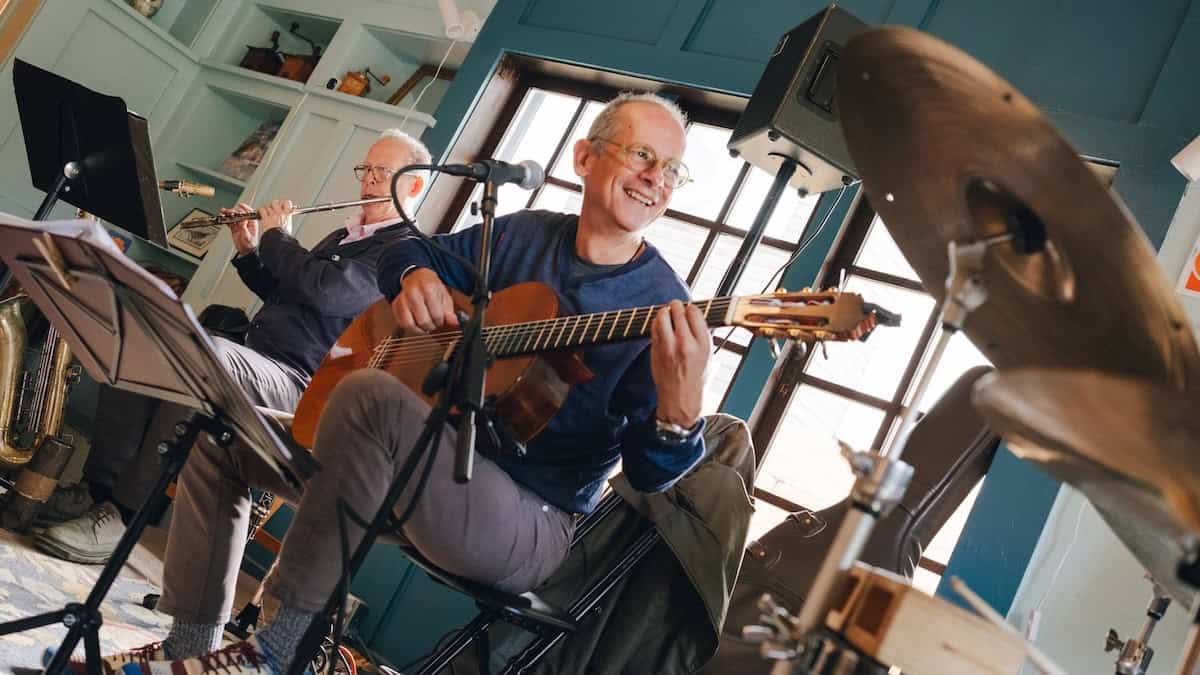
JGT contributor Joe Barth talks to one of the finest Brazilian musicians around the Seattle area, Marco Antonio de Carvalho.
Born in Rio de Janeiro, Brazil, his first music-making experience was playing percussion on the streets of his hometown. As an adult, he moved first to the East Coast of the U.S. before settling on the other side of the country in Seattle.
JB: Growing up in Rio de Janeiro and playing by ear did you start with Brazilian folk music or rock, and what inspired you to play Brazilian jazz guitar?
MC: I started out playing percussion with friends on the streets of my hometown. The guitar was ever-present in those days, so I developed my musical ability by “street learning,” playing by ear on the street, and listening to friends and others with more experience. A favorite way to play was using the guitar as a percussion instrument and playing samba rhythms by tapping on tables and doors with my brother and friends. I fondly remember warm days playing with friends under a tree on a sidewalk or at the beach where food and music merged. Music was all continually playing as a teenager on my family’s home stereo and in the homes of relatives and friends. Of course, there was also live music at numerous street parties in Brazil throughout the year. At those parties, many people would play instruments, sing, and dance. My experiences at Carnaval parades, matinee clubs, samba events, Tambores, and ritual rooms of Candomblé – the musical culture of my country – greatly influenced my musical development and style.
JB: You studied at the Conservatório Brasileiro de Musica and later at the Villa-Lobos Institute in Rio, what did you appreciate most about those educational experiences?
MC: I really enjoyed meeting other students and sharing what we were learning and playing. We talked about the music art form in general and not just about the Guitar but the whole universe of sounds, instruments, harmonies, and melodic structures from different eras of history. I also liked the homework and learning how to study, focus, and conclude our compositions.
JB: To you, what are three of the most influential guitar albums in your development, whether they be classical, jazz, or Brazilian, and why?
MC: So many albums and compilations. Hearing people playing guitar right before my eyes, influenced me more than any album initially. My passion came from live music. They were playing on the guitar and singing songs from the albums recorded with big ensembles. Keep in mind that Brazilian music is mostly about singing, about lyrics with great melodies and rhythm. My family had straight, beautiful, popular samba albums, and the guitar was always featured as a very important instrument in the ensemble. All great guitarists accompanying. Later on, I got to know who they were. They all influenced me.
Of course, we always had the virtuosos like Baden Powell. I love everything Baden recorded. I love every album by João Gilberto. Antonio Carlos Jobim was a great guitarist too. There is an album called Samambaiaby Cesar Camargo with Mariano (Piano) and Helio Delmiro (Guitar) that I love. Turíbio Santos valsas and choros album is also beautiful. Geraldo Ribeiro is great. His album playing Garoto’s songs is just wonderful. It goes on and on. Luiz Bonfá.
JB: What brought you to the United States and then to Seattle from Brazil?
MC: Eventually, I had the opportunity to play and tour with the bandolim player, Paulo Sá, as a duo playing choros and bossas. We performed first in Rio and then later on the East Coast of the United States. When an opportunity arose to play on the West Coast, I took it, eventually establishing my residence in Seattle, Washington.
JB: Talk about your album For the Moment.
MC: It was released in 2003 and recorded in 2001. It’s a big ensemble playing all my original songs as instrumentals. It features the flutist Lucas Robatto. Lucas was in Seattle doing his Doctoral in music, and we met and performed, often playing great Brazilian music repertoire as a duo or trio. or quartet formats. I wrote the songs “Novela” and “No past tense” for flute. So, for the moment, the album brings great musicians and portrays the songs I was writing and playing back then. Tad Britton is playing drums, and Daniel Carvalho (no relation) on drums. Magno Lins is playing timba and many others. I love that album. “Out on the Street” is a song that I really enjoyed playing on the album.
JB: Is Coreografia your newest CD? Tell us about it.
MC: All the music and lyrics are written by Angenor de Oliveira, who is known as Cartola. A wonderful composer and a poet. I always loved Cartola. I always played his beautiful Sambas. So, on this album I am playing solo Guitar with an adaptation of his songs recorded as I learned to listen and adapt the ensembles harmonies and singing melodies on the Guitar. I love very much this album. It is the second solo guitar album I recorded. The first one was Paisagens with mostly my own compositions. To me, solo albums are huge “projects”.
JB: If a guitarist who has worked hard to play bebop wants to play in a Brazilian style, what are two or three musical things to be mindful of?
MC: I think the very same things the guitarist has to be mindful of in playing bebop. The language of it, the groove, and the feeling of the music. Listen to how João Gilberto and many others accent the rhythms. Be sensitive to the lyrics. It is not about soloing or fast technique. I think Bebop is very melodic. When I hear Charlie Parker, I think he was a romantic player.
JB: You specialize in Brazilian music, you live in Seattle, Washington, talk about the kind of gigs you play and how you make a living in music.
MC: I am a professional musician. I am a performer. I came to the U.S. to do exactly what I was doing in Rio, Brazil. I want to perform everywhere, all public and private events, studio recordings, and collaborations, regardless of the style. I think music is music. Styles blends. If a musician is born and raised in the U.S., it doesn’t mean they can only play Swing. Certainly, you can find rewards in performing samba, funk, rock, soul, as well as jazz ballads. It is just that I will feel the music in my own way and my timing paste.

Subscribe to Jazz Guitar Today – it’s FREE!
Thank you for reading this post, don't forget to subscribe!


New Album From Tom Lippincott, Ode To The Possible

Colombian Jazz Guitarist Daniel Pinilla

Jazz Guitar Today Pays Tribute To Guitarist Joe Negri

Video Podcast With Giuseppe Continenza
Italian Guitar Master, Giuseppe Continenza

Nexus From Guitarist Jordi Farres

New Vince Lewis Guitar Arrangement, “What The World Needs Now”

Veda & The String Machine’s New Album, Rise And Shine

Jazz Guitar Today Lesson: Variations On Standard Jazz Blues Chord Changes – Part 2
Jazz Guitar Today Lesson: Variations On Standard Jazz Blues Chord Changes – Part 1
Jazz Guitar Today Lesson: “Pensative”
New Vince Lewis Guitar Arrangement, “What The World Needs Now”
New Vince Lewis Guitar Arrangement, “Anything Goes”

Saying Goodbye To An Atlanta Jazz Musician, Sal Gentile

Guitar Great Ron Eschete’ Dies at age 77

British Smooth-Jazz Guitar Master, Chris Standring
-
 Jazz Guitar Lessons2 weeks ago
Jazz Guitar Today Lesson: Variations On Standard Jazz Blues Chord Changes – Part 2
-
Jazz Guitar Lessons4 weeks ago
Jazz Guitar Today Lesson: Variations On Standard Jazz Blues Chord Changes – Part 1
-
 Jazz Guitar Lessons1 week ago
New Vince Lewis Guitar Arrangement, “What The World Needs Now”
-
 Artist News3 weeks ago
Guitar Great Ron Eschete’ Dies at age 77