
Artist Features
Guitarist Paul Ricci Provides Some Perspective On The Brazilian “Scene”

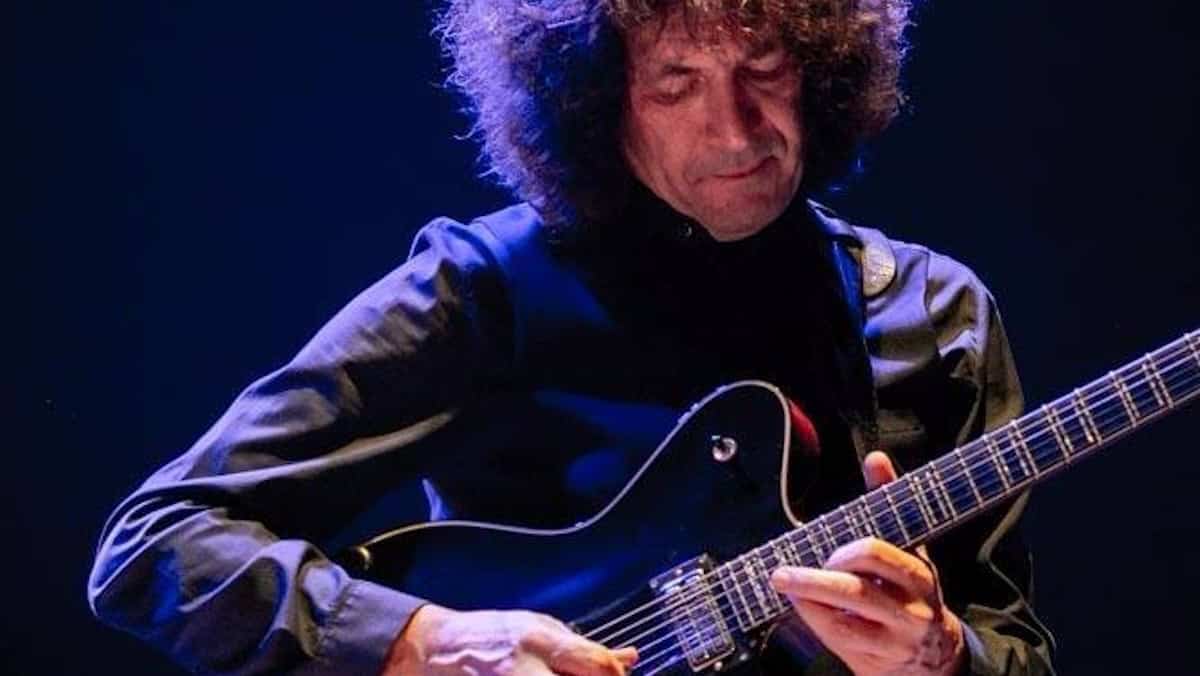
In Paul Ricci’s almost 30 years in Rio and Sao Paulo, he has seen considerable evolution on the Brazilian ‘Scene”.
Paul Ricci: Better equipment is available to those who have the funds to acquire it. The same goes for players who have been able to come north to American music schools. In a way the scene has passed over the borders via the internet but the cultural fingerprint continues to be something elusive.
Just as NY has classic swing, beboppers, post bop, fusion and world music influenced players. Brazil has guitarists who are referencing the Chorinho and Samba and Northeastern Forro influences into the modern jazz we all know about.
By now, players worldwide have some Jobim, maybe Toninho Horta or even Hermeto Pascoal or Egberto Gismonti in their ears, but what about the feel? I was lucky to play with Edison Machado and Dom Um Romao, the founding fathers of Samba Jazz drums, with Astrud Gilberto and Bebel Gilberto and as producer, arranger for Mafalda Minnozzi, my paths have crossed with fine musicians these many years across Brazil.
What can I contribute here from this experience?
I think the secret to making the music work is the same for a Samba that it is for a shuffle …. Being able to get inside the groove until it’s in your body, playing with elders and listening, For the Brazilian thing to emerge from your guitar, it’s imperative to start with the percussion.
Simply learning a pattern in the right hand will not get you all the way there.
The classic Bossa beat (there’s more than one of course) relies on the right hand thumb to lay down the groove on the beat while the fingers play off it. When it really works, the thumb becomes the “Surdo” bass drum and the fingers become the “tamborim” from the Samba school.
The deeper the groove the more the thumb can lay back and the fingers can push ahead. That’s what makes it seductive. Until you have the sound of those percussion instruments in your ears and body, you’re only halfway there.
A great example of the thumb’s role of the surdo can be found with the bassist Luizao Maia. Check out this video. Everyone is anticipating, creating a push to the energy while the bass is fat, relaxed and laid back.
ELIS REGINA | Águas de Março (Montreux Jazz Festival 1979)
Also, as a soloist you can drive the band with some knowledge of the percussive “turnarounds” from the Samba school. Those phrases will go a long way to really allowing you to lock in with the great players.
Here is a taste from RIOFONIC by Mafalda Minnozzi. The band has no keyboards and two guitars, myself and Bossa legend Roberto Menescal. I was able to find my place in the dialogue by referencing the drum and percussion language that I have lived with for 40 years now beginning as a student in NY.
Of course Menescal’s beat is a study book of where to put the ever-dancing beat. Start surrendering to that beat !!!
Thank you for reading this post, don't forget to subscribe!


Nexus From Guitarist Jordi Farres

New Vince Lewis Guitar Arrangement, “What The World Needs Now”

Veda & The String Machine’s New Album, Rise And Shine

New Recording From Guitarist Doug MacDonald, Tribute To South Central

Joe Negri Dies Just 10 Days before His 100th Birthday

Jazz Guitar Today Lesson: Variations On Standard Jazz Blues Chord Changes – Part 2

Guitar Great Ron Eschete’ Dies at age 77

One of Chile’s Finest Fingerstyle Guitarists, German Herlein
Jazz Guitar Today Lesson: Variations On Standard Jazz Blues Chord Changes – Part 2
Jazz Guitar Today Lesson: Variations On Standard Jazz Blues Chord Changes – Part 1
Jazz Guitar Today Lesson: “Pensative”
Jazz Guitar Today Lesson: “Central Park West”
New Vince Lewis Guitar Arrangement, “What The World Needs Now”
New Vince Lewis Guitar Arrangement, “Anything Goes”

Saying Goodbye To An Atlanta Jazz Musician, Sal Gentile

Jazz Guitarist Eleonora Strino Talks To JGT
-

 Jazz Guitar Lessons1 day ago
Jazz Guitar Today Lesson: Variations On Standard Jazz Blues Chord Changes – Part 2
-
Jazz Guitar Lessons2 weeks ago
Jazz Guitar Today Lesson: Variations On Standard Jazz Blues Chord Changes – Part 1
-
Jazz Guitar Lessons1 day ago
New Vince Lewis Guitar Arrangement, “What The World Needs Now”
-
Artist News2 weeks ago
Guitar Great Ron Eschete’ Dies at age 77


