
Artist Features
Madre Vaca Releases New Album With Guitarist Jarrett Carter

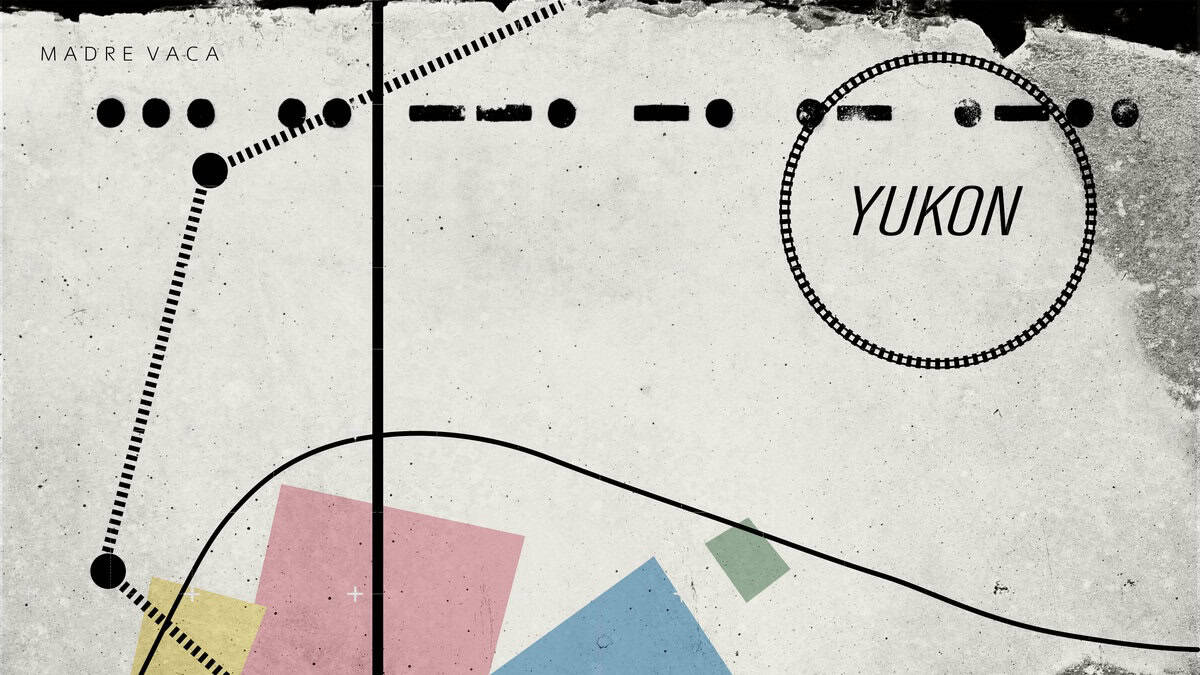
JGT contributor Joe Barth talks to accomplished classical guitarist Jarrett Carter about the new Madre Vaca release “Yukon”.
A busy guitarist in northern Florida is Jarrett Carter. A graduate of The Oberlin Conservatory of Music and guitar student of Cleveland’s Bob Ferrazza. Jarrett is an accomplished classical guitarist as well as a master of many popular styles. Always longing for musical adventure, he is part of the Musical Collective Madre Vaca. They have just released a new CD, Yukon.
JB: So, before I ask about the new album, tell me about yourself. When did you start to play jazz guitar in Florida, and in those early years, what was most helpful in your personal development as a guitarist?
JC: I’ve been playing guitar for about 25 years now. I started playing guitar at the age of 10, first playing classic rock, trying to mimic the tunes my Dad used to listen to. I played only by ear those first few years, but became absolutely obsessed with the guitar. I couldn’t put it down back then; I was very absorbed. Around age 13, I took some lessons with a great guitarist based out of Gainesville, FL by the name of Richy Stano. I was taking lessons to learn how to read music so that I could pass an audition to get into Douglas Anderson School of the Arts (DA) in Jacksonville, FL. He taught me how to read basic chord charts and standard music notation. In those few lessons, he gave me an album that at the time made absolutely no sense to my ears, but I couldn’t stop listening to it. It was an album by Pat Martino, called “Consciousness/Live!”. Looking back, I don’t know why he gave that album to me at a time when I didn’t have any interest in or knowledge of Jazz. I’m now very thankful that he did. After that, I was able to pass my audition and got into DA, where I soon met lifelong close friends and collaborators, Ben Shorstein and Jonah Pierre. There, I studied classical guitar with Don Casper, who played jazz too. He was an early mentor and pushed me in both directions, classical and Jazz. It’s primarily the reason I don’t use a pick very often. I’m mostly a fingerstyle guitar player. I developed so much of my jazz playing and interest after school and during summers with Ben and Jonah, as well as many other amazing musicians who attended DA. Practicing classical guitar technique was very beneficial in my development and style of playing jazz guitar. The biggest thing for my development in the early years was playing with great musicians who were my peers and learning from each other.
JB: To you and your personal development as a guitarist, what are three of the most influential jazz guitar albums and why?
JC: As I mentioned above, the Pat Martino album “Consciousness/Live!” was a catalyst for getting my ears attuned to jazz language. Although in my development as a guitarist, there are three guitar albums that really shaped my sensibilities.
Wes Montgomery’s album entitled “Smokin’ at the Half Note” – There is nothing like Wes’s playing, and particularly the way he plays on this live album is so raw and full of energy. It was an important album to me. It really showed me the power you can have with a guitar. His use of octave lines were amazing, and the tone and rhythmic accents he could get by using only his thumb were very influential. But I still can’t get over his lines. They are the very best for guitarists to check out. I still can’t play lines like that, but I find myself always coming back to him. He’s the source for me when it comes to quintessential swing and jazz language and thematic playing. It’s also a great album to show how guitar and piano can get along!
Lenny Breau/Dave Young album entitled “Live on Bourbon Street” – When I first heard Lenny Breau, it was shocking to hear the voicings he was implementing, the extensive use of artificial harmonics, dynamic control, and how he could comp behind his own lines like a piano player. Since I’m a fingerstyle player, his playing was very intriguing. It was later that I found out he played a seven-string, but the reason it was hard to tell is because he used a high A string instead of a low B string like most seven-string guitarists. So most of the time it sounded like a standard guitar, but it helped him play voicings underneath a melodic range that was otherwise unobtainable.
Jim Hall & Pat Metheny album entitled “Jim Hall & Pat Metheny” – This album was on repeat for a very long time when I discovered it in college. It was pivotal for me. At the time, I had heard more of Pat Metheny than I had of Jim Hall, but hearing the way they played together was so mesmerizing. I could go on and on about why I like the way both of them play, but more importantly, it helped me realize what it meant to be a jazz musician, not just a jazz guitarist. It really informed my playing style. This album showcases two very different styles of playing but highlights how important it is to play and react to each other, to be open and receptive to true musical dialogue, to have a conversation with each other through music and not just play solos back and forth over changes.
JB: What did you appreciate most about studying with Bob Ferrazza at Oberlin in Ohio?
JC: Bobby was one of a kind! From day one, in lessons we would always play with a metronome on 2 and 4; even if it was a really slow ballad. It was difficult, but it really helps with keeping time, something I still struggle with. What I appreciate most about him is that he really listened to what my interests were. In my latter half years at Oberlin, I was beginning to explore avant-garde players, which was definitely not his area of expertise. What was great though is that he would listen to these players with me in lessons and explore them and talk in depth about what we were experiencing together. In some of those later lessons, we played free improv together. Another big thing I appreciated was his encouragement to transcribe, but not whole solos. He thought that it was more important to find things that stuck out to you and to see how it worked theoretically over its corresponding chord changes. Then we’d take that transcribed lick or segment and try playing it in different positions on the guitar. Once we were familiar enough with it he’d make us manipulate it to explore it; octave displacement, invert it, change it to fit over a different chord, etc. Those were some of the things I appreciated about Bobby. He was so open and accepting.
JB: Tell us about Madre Vaca and how it came together.
JC: Madre Vaca was originally a trio made up of Ben Shorstein, Jonah Pierre, and me exploring and playing together back in high school. Ben’s parents had a music room isolated to one side of the house, and his parents were gracious enough to just let us play at all hours. Many summers and weekends during the school year, we would play and listen to music together. Eventually, our friend JeanCarlo Mendez ( a very important piece of the Madre Vaca puzzle) would hang out with us while we jammed. He went to the same arts high school with a focus on film and audio, so he would record us in those early years. Now he has recorded/co-produced all of the current Madre Vaca records. If my memory serves correctly, he named us the Madre Vaca trio way back then. I’m not sure the reason for the name, but obviously it stuck.
JB: The album, Yukon, is all originals. It appears the songs were all composed by the bass player and you. Talk a little about that process.
JC: Actually, two tunes were written by Jonah Pierre (piano), three by Thomas Milovac (bass), and three by myself. Honestly, Ben asked us to bring some tunes to the session, and I think he wanted it to be more of a tunes album instead of a concept album like the preceding Madre Vaca records we’ve made. We really just took a chance, showed up with our tunes, and hoped they would complement each other. I think it worked out in this case. Ben had two or three tunes as well, but decided he liked how it was with the eight tunes we brought in. I’m sure we’ll get to hear his on a later record!
JB: Why title the album Yukon?
JC: We didn’t really know what we wanted to call the album, but Yukon was really the best sounding title to all of us. It stood out more than the other tune names as a title track. It has ties to some of the origins of Thomas’s family in the old coal mining town of Yukon, Pennsylvania.
JB: Talk more about the musical relationship you have with pianist Jonah Pierre and how you complement each other and musically stay out of each other’s way.
JC: It can be challenging to play with piano players since the guitar is also a chordal instrument. Voicings can clash, or we can overpower each other by accident. Jonah and I have played so long together that I think we deeply know each other’s playing so well that we anticipate each other’s movements at times. It goes back to that ability to be open and try your best to listen to each other and have a musical dialogue. It’s also important to know when to lay out and let the other person say something. When Jonah or I are trying to play certain chord substitutions, or if in the midst of my solo, I go from single note lines to some chord melody playing, Jonah would just lay out for a little bit until it felt right to come back in. That just comes with experience. Guitarists and pianists are often taught to trade off comping behind soloists, but it doesn’t have to be that way. Jonah and I have often had some interplay, even when just comping behind someone. It doesn’t have to be so cut and dry.
JB: What do you appreciate most about your rhythm section on the album, bassist Thomas Milovac and drummer Ben Shorstein?
JC: I’m still humbled by these guys every time I play with them, and I couldn’t say I appreciate one over the other. This is quite a unit. Everybody has something to offer, and their offerings are equally important to the whole. Thomas is the youngest and newest addition to Madre Vaca, but definitely an old soul. He is a very developed player. He and Ben are very prolific composers. Everyone in the group possesses that openness I keep speaking about, and listens to everything very intently. For me, there is nothing like the level of comfort, trust, and camaraderie that we have with each other as players, collaborators, and close friends.
JB: What do you appreciate most about the guitar you play?
The only archtop I have now is a custom-made by Denny Kopp, an Ohio-based guitar maker. (not to be confused with Kopp guitars, the acoustic guitar maker based out of Montana). I play his “Baby Bellaneu” archtop with a 2” wide nut!! Very wide neck, classical guitar spec. On tracks where it sounds like I have a light or heavy drive, I use a custom Telecaster-style guitar. The neck was custom-made on that as well, also with a 2” nut width. What I appreciate most about these guitars is the customization I had in both of them to meet my needs. I used to always practice everything on a classical guitar in Oberlin, but would have to switch to an archtop for gigs to be amplified, which had a standard nut width. I played a Jay Turser archtop back then. I really got tired of the switch and the classical width always felt like home to me. My Kopp archtop can really sound old school if I need it to, but it has the ability to brighten up enough for other situations. Also, for having a smaller body, it doesn’t strain on my right shoulder as much as some of the larger archtops do and it somehow still has a loud acoustic presence.
JB: Talk about the gigs you do in northeast Florida and how you make a career in music work for you.
JC: In Jacksonville, I make a career in music work by playing mostly non-jazz gigs. Some people might not enjoy that, but I find a lot of value in playing all genres of music. The guitar is one of those instruments that finds its way into almost every genre you can think of. I believe playing different genres is important and can be very informative. It’s amazing how many incredible jazz musicians are concentrated here in Jax. The corporate/event band I play in is entirely made up of jazz musicians. Even the band’s manager is a jazz musician. I’m fortunate to be the main guitarist for the group, and currently I’m the music director. As a jazz musician, I still find a way to weave my jazz roots into everything that I play. True jazz gigs still come up, and that’s always a real treat to get to play what you really love, but at the moment, jazz clubs are lacking in Jacksonville. I really have to give my love and gratitude to Ben for continuing to keep Madre Vaca alive and supporting the recording projects. If it wasn’t for Madre Vaca I wouldn’t have an outlet to compose and have the freedom to explore and grow in my own musical imaginings.
Thank you for reading this post, don't forget to subscribe!


Video Podcast With Giuseppe Continenza
Italian Guitar Master, Giuseppe Continenza

Nexus From Guitarist Jordi Farres

New Vince Lewis Guitar Arrangement, “What The World Needs Now”

Veda & The String Machine’s New Album, Rise And Shine

New Recording From Guitarist Doug MacDonald, Tribute To South Central

Joe Negri Dies Just 10 Days before His 100th Birthday

Jazz Guitar Today Lesson: Variations On Standard Jazz Blues Chord Changes – Part 2
Jazz Guitar Today Lesson: Variations On Standard Jazz Blues Chord Changes – Part 2
Jazz Guitar Today Lesson: Variations On Standard Jazz Blues Chord Changes – Part 1
Jazz Guitar Today Lesson: “Pensative”
Jazz Guitar Today Lesson: “Central Park West”
New Vince Lewis Guitar Arrangement, “What The World Needs Now”
New Vince Lewis Guitar Arrangement, “Anything Goes”

Saying Goodbye To An Atlanta Jazz Musician, Sal Gentile

Jazz Guitarist Eleonora Strino Talks To JGT
-

 Jazz Guitar Lessons4 days ago
Jazz Guitar Today Lesson: Variations On Standard Jazz Blues Chord Changes – Part 2
-
Jazz Guitar Lessons3 weeks ago
Jazz Guitar Today Lesson: Variations On Standard Jazz Blues Chord Changes – Part 1
-
Jazz Guitar Lessons4 days ago
New Vince Lewis Guitar Arrangement, “What The World Needs Now”
-
Artist News2 weeks ago
Guitar Great Ron Eschete’ Dies at age 77


