
Artist Features
A One Man Steely Dan

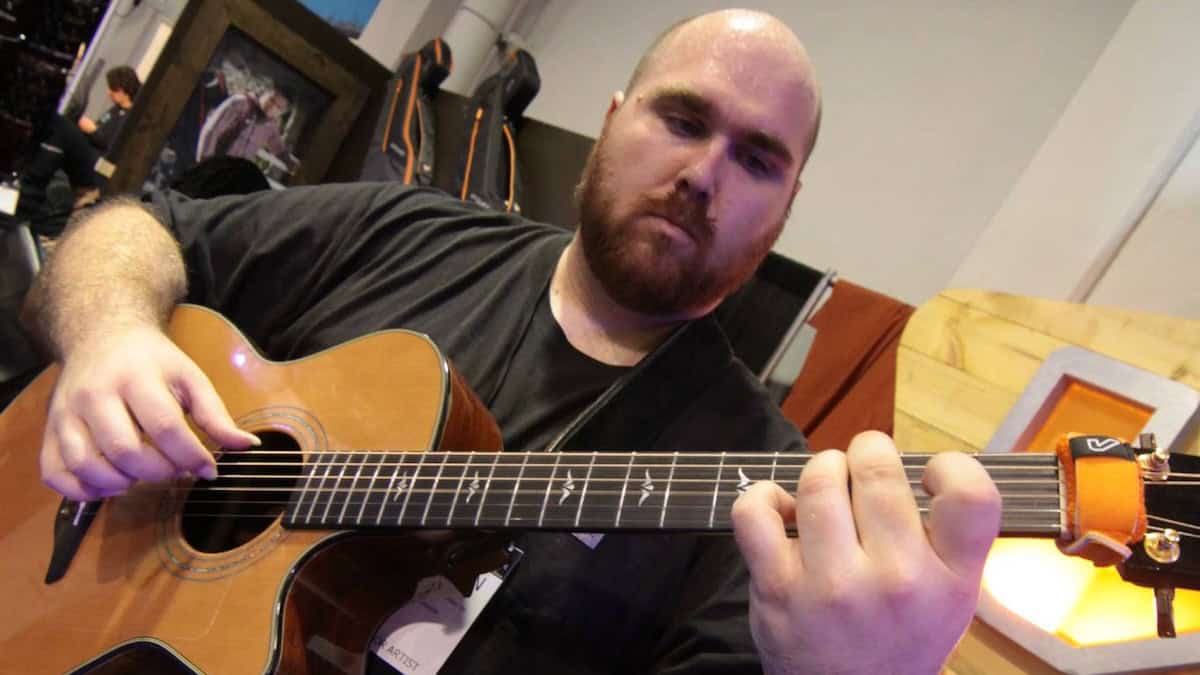
Southern California guitarist Donovan Raitt arranges and records an album’s worth of Steely Dan’s greatest songs.
Everybody loves the music of Steely Dan and musicians love recreating those songs. There are numerous “Steely Dan cover” bands all over the world. Southern California guitarist Donovan Raitt is one such lover of the music of Walter Becker and Donald Fagen. For his Doctoral project for an DMA from the Thornton School of Music at USC he arranged and recorded an album’s worth of Steely Dan’s greatest songs. He has recorded this music for his new album One Man, Steely Dan. I sat down with Donovan to talk with him about how he came up with these new arrangements.
JB: Talk about how you became familiar with the music of Steely Dan.
DR: My Dad was a huge Steely Dan fan. When he would drive us to school as kids, there would be classic rock radio playing constantly, which was my first real exposure to rock and roll. He had one cassette tape in his car, which was Steely Dan’s greatest hits, so I grew up listening to their music, not really knowing what it was, only later as I learned more about music was I able to appreciate the sophistication of it all. I just enjoyed the music; it always reminds me of my Dad.
JB: Tell me how you started this project. Did you buy the sheet music of these songs and then work the arrangements, or did you figure them out completely by ear? It was a combination of both.
DR: I would reference the music only when I couldn’t figure out an exact voicing of a chord by ear or needed some context as to the structure of the harmony. I already knew a lot of these songs from playing the electric parts in various cover bands, so it was more about arranging them for solo guitar and using the scores as references.
JB: Why use a flat-top acoustic rather than an archtop guitar?
DR: A lot of the arrangements use percussive performance techniques, which require a soundboard transducer on the guitar to amplify them correctly. At the time, I didn’t have an archtop guitar that would allow me to pick up the percussive elements of the arrangements on the record or live, so I used a guitar by Canadian luthier Sheldon Shwartz for the recording.
After the recording was completed, I worked closely with Tad Brown, who builds amazing archtop guitars, and designed his “Acoustic Archtop” guitars with a soundboard and magnetic pickup so I could play these arrangements on an archtop guitar and still have the sound of the percussive techniques come through live.
JB: On “Do It Again,” you start with a rhythmic tapping of the soundboard, then go into the song. You use the tapping throughout the album as well. Is the tapping live as you are playing, or was it added later?
DR: Actually, that’s my right hand strumming the strings and hitting the low E string with my thumb at the same time with the left hand muting the strings to emulate the percussion intro on the original record. It’s largely based on some flamenco rasqueado techniques with the percussion added. It was all done live. There are no overdubs or multitracks anywhere on the record.
JB: “Reeling in the Years” has the two guitar lines at the end of the song. How did you approach this?
DR: Very carefully! That’s probably the trickiest arrangement on the record to perform. Those harmony guitars are very hard to play together with the percussion and bass line, so once I transcribed them, it was about finding a fingering that worked for everything. It requires a lot of quick, awkward right-hand finger movements with the index and pinky fingers simultaneously and is still the part of the record I have the most trouble with pulling off live! I think it came out really cool though. People have heard it and assumed it was an overdub, but it’s all live.
JB: “Rikki, Don’t Lose that Number” has that iconic guitar solo of Jeff “Skunk” Baxter. What you do there with solo guitar is very tasteful.
DR: Talk about it. For the recording, I’m mostly trying to play a version of the rhythm guitar and piano lines there, which allows me to loop it and then play the solo on top of it live. My goal for the recording was to create a part that sounded like a solo break without playing the actual solos note for note, which allowed me to improvise on it in a live setting.
JB: “Kid Charlemagne” has another iconic solo, this time by Larry Carlton. Again, you are tasteful at that point of the song.
DR: Thank you for saying that. Again, it allows for live flexibly with that section. I do a lot of live looping of solo sections in my live shows, so this allows for the opportunity to engage the listener when playing the solo section accompaniment and the actual solo proves to be impossible to play on one guitar simultaneously.
JB: It is so nice how you comp through the changes on “Deacon Blues” during Pete Christlieb’s sax solo.
DR: That’s one of the more surprising sections of the song in my opinion. The changes are very cool, and sometimes the harmonic complexity of Steely Dan’s music is at its best during the solo sections of their songs. It’s a double-edged sword in the sense that these great changes are lost on most listeners as there was always a phenomenal solo played over them. My goal with the recording part of this project was to highlight the changes and play something that was still melodic yet still focused on the harmonies of the music rather than the improvisation on top of it.
JB: “Peg,” another with an iconic guitar solo, this time by Jay Graydon but I especially like how you handle the groove bassist Chuck Rainey laid down during the chorus on the original.
DR: My goal with these arrangements was to focus on the groove of the records and create them as authentically as possible as if the full ensemble was playing. I wanted people to hear the original record in their heads when they listen to my arrangements, so the tempos and feels of the tracks strive to match the recordings as much as possible.
JB: “Josie,” again tastefully done.
DR: That one was a really tricky groove to play on one guitar. Fingerstyle solo guitar does not lend itself well to the funky guitar part on that record, so creating an arrangement that kept the groove and got the sound of the guitar part was very important to me.
JB: It’s a great rendition, why close out the album with “Hey Nineteen?”
DR: So, this whole project was performed as part of a lecture recital project on the music of Steely Dan as part of my DMA degree at the USC Studio Jazz Guitar program. I presented these arrangements along with a detailed lecture on the evolution of Donald Fagen and Walter Becker’s compositional and arranging approach, and each song was presented in chronological order. So, the record opens with tracks from Can’t Buy a Thrill from 1972 and ends with “Hey Nineteen” from 1980s’Gaucho as their last record before their hiatus. I wanted to show the evolution of their songwriting craft throughout the record, and as a listening experience, I always liked the mood that “Hey Nineteen” sets for ending a record.
Subscribe to Jazz Guitar Today – it’s FREE!
Thank you for reading this post, don't forget to subscribe!


Jazz Guitar Today Lesson: “Central Park West”

New Album From Eleonora Strino

Jazz Guitarist Eleonora Strino Talks To JGT

Alex Goodman Talks to Jazz Guitar Today

New Vince Lewis Guitar Arrangement, “Secret Love”

Playing Honest

Celebrating the Artistry and 75th Birthday of Bill Frisell

Chris Bergson Talks To JGT About His Approach To Playing
Jazz Guitar Today Lesson: “Central Park West”
Jazz Guitar Today Lesson: “All or Nothing at All”
Jazz Guitar Today Lesson: Jimmy Webb’s “Wichita Lineman”
New Vince Lewis Guitar Arrangement, “Secret Love”
New Vince Lewis Guitar Arrangement, “Cherokee”

Pasquale Grasso Joins Frank Vignola’s Birdland Guitar Nights
Jazz Guitarist Eleonora Strino Talks To JGT


