
Artist Features
Jazz Is Alive And Well In Slovenija

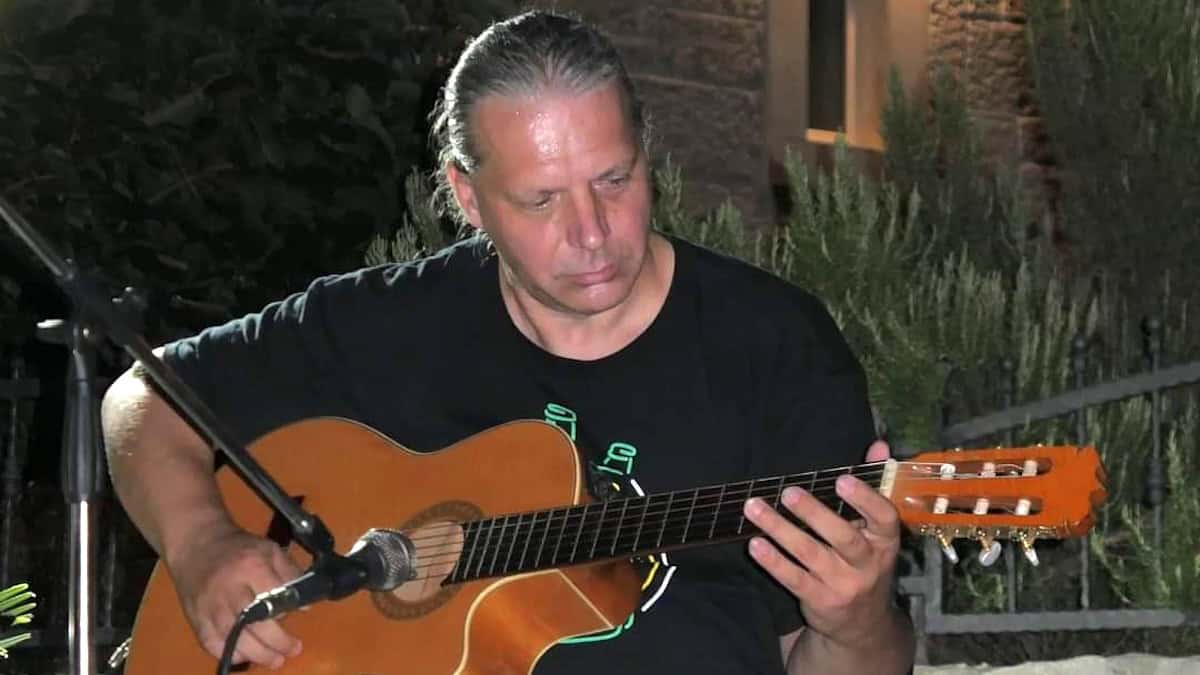
JGT contributor Joe Barth talks to Slovenian guitarist Igor Bezget.
Jazz is alive and well in the central European country of Slovenija and guitarist Igor Bezget is one of the prominent jazz musicians there. Born in Maribor in 1968 he began with rock guitar, then moved to jazz. In addition to jazz he is an outstanding musician playing world music and many of its instruments.
JB: Growing up in Slovenia what inspired you to play jazz guitar?
IB: I grew up in Maribor, Slovenija. When I got my first guitar I soon got serious about it. After starting with rock and blues at some point I heard in the eighties music of Miles Davis and that blew me away. I immediately knew that this is what I wanted to do with my life and I dug deeper and still keep digging.

JB: What did you appreciate most about your musical studies at Bruckner Conservatory in Linz, Austria?
IB: To get into the conservatory at that point for me was a massive step towards my goals in music. As a self-taught musician who couldn’t really read music or know music theory, it was what I really needed. At the conservatory, I learned a lot about various aspects of music from some amazing teachers. I will forever be grateful for that. I also realized that learning music is a lifetime process.
JB: What do you find helpful when studying East Indian music?
IB: I am a curious person. When I was at the conservatory, some friends from my hometown went to India and brought back instruments and some basic Indian music knowledge. I was impressed with the sound, and we started to play and make Indian music together. Later, I went to India myself to do a recording project, and I also started to study seriously north Indian or Hindustani music on the instrument called a sarod. This opened me to a perspective of another universe of music and how music can be created in other ways that I never thought existed. Indian music traditions, either from the north or south, have a lot in common with jazz because they all use improvisation as their foundation. But the approach and how music is organized melodically, harmonically, and rhythmically is totally different. When I connected all the styles together, it opened several new perspectives on how music can be created…
JB: You have worked with John Stowell. Talk about the musical relationship you have with John.
IB: John and I met around six years ago while he was on tour in Europe, and we did a concert and workshop together. Through time, we became good friends, and we met again on another of his European tours. Later last year, when I was touring in the States we performed together. This year, I was lucky to spend some more time with him during his European tour, and we played a couple of concerts and recorded some interesting guitar duos together. John is an amazing musician and a great friend as well as a personal inspiration. I love his unique contrapuntal approach to jazz guitar, and I am looking forward to playing and learning from him in the future.
JB: Talk about your album The Fusion Mantra.
IB: The Fusion Mantra is the Indian name for an album originally released under the name Pangea. This is my first big band album, and the idea was to connect the big band musical environment with the Indian, African, Balkan, and other musical styles that I am connected to. I composed and arranged the music with the idea of connecting different musical worlds together into one entity, and this is where the idea for the original name, Pangea, came from. When the album was released for the Indian market, the record company wanted to change the name of the album, and thus the name The Fusion Mantra comes from. Later on, I recorded one more big band album called Pangea – Free The World, which was recorded live and also features a big band in connection with musicians from India and Africa and some vocal soloists.
JB: Talk about the jazz scene where you live and how you are able to make a living playing music there.
IB: The Slovenian jazz scene has been vibrant in recent years, and there are a lot of great young musicians on the scene. Some have established themselves on the international music scene as well. Slovenia is situated between east and west, and that is why, in my opinion, it is a great place to connect music styles. But to make a living with music is not easy anywhere, I guess. The problem is that there are not enough places to play creative music or even live music in general. That has changed over the years, and I hope it will change again in favor of creative live music in the future. I personally never wanted to be dependent on a music scene to create music, but through the years, I have kind of developed my own music world.
JB: What advice would you give young American musicians who want to play gigs in southern Europe?
IB: First, I would say what I would advise to any creative musician anywhere. Be original and trust your own instincts while creating music because this is the only way one can truly express themselves. Jazz is also the music with American origins, so in any other part of the world, this for sure can be taken as an advantage. But nowadays, besides having good material to present, I would say the most important thing to play a lot of gigs anywhere is to be well connected and have a good management and booking team around you.
Subscribe to Jazz Guitar Today – it’s FREE!
Thank you for reading this post, don't forget to subscribe!


New Album From Tom Lippincott, Ode To The Possible

Colombian Jazz Guitarist Daniel Pinilla

Jazz Guitar Today Pays Tribute To Guitarist Joe Negri

Video Podcast With Giuseppe Continenza
Italian Guitar Master, Giuseppe Continenza

Nexus From Guitarist Jordi Farres

New Vince Lewis Guitar Arrangement, “What The World Needs Now”

Veda & The String Machine’s New Album, Rise And Shine

Jazz Guitar Today Lesson: Variations On Standard Jazz Blues Chord Changes – Part 2
Jazz Guitar Today Lesson: Variations On Standard Jazz Blues Chord Changes – Part 1
Jazz Guitar Today Lesson: “Pensative”
New Vince Lewis Guitar Arrangement, “What The World Needs Now”
New Vince Lewis Guitar Arrangement, “Anything Goes”

Saying Goodbye To An Atlanta Jazz Musician, Sal Gentile

Guitar Great Ron Eschete’ Dies at age 77

British Smooth-Jazz Guitar Master, Chris Standring
-
 Jazz Guitar Lessons1 week ago
Jazz Guitar Today Lesson: Variations On Standard Jazz Blues Chord Changes – Part 2
-
Jazz Guitar Lessons3 weeks ago
Jazz Guitar Today Lesson: Variations On Standard Jazz Blues Chord Changes – Part 1
-

 Jazz Guitar Lessons1 week ago
New Vince Lewis Guitar Arrangement, “What The World Needs Now”
-
 Artist News3 weeks ago
Guitar Great Ron Eschete’ Dies at age 77
