
Artist News
John Stowell Releases New Album and Book, The Collection

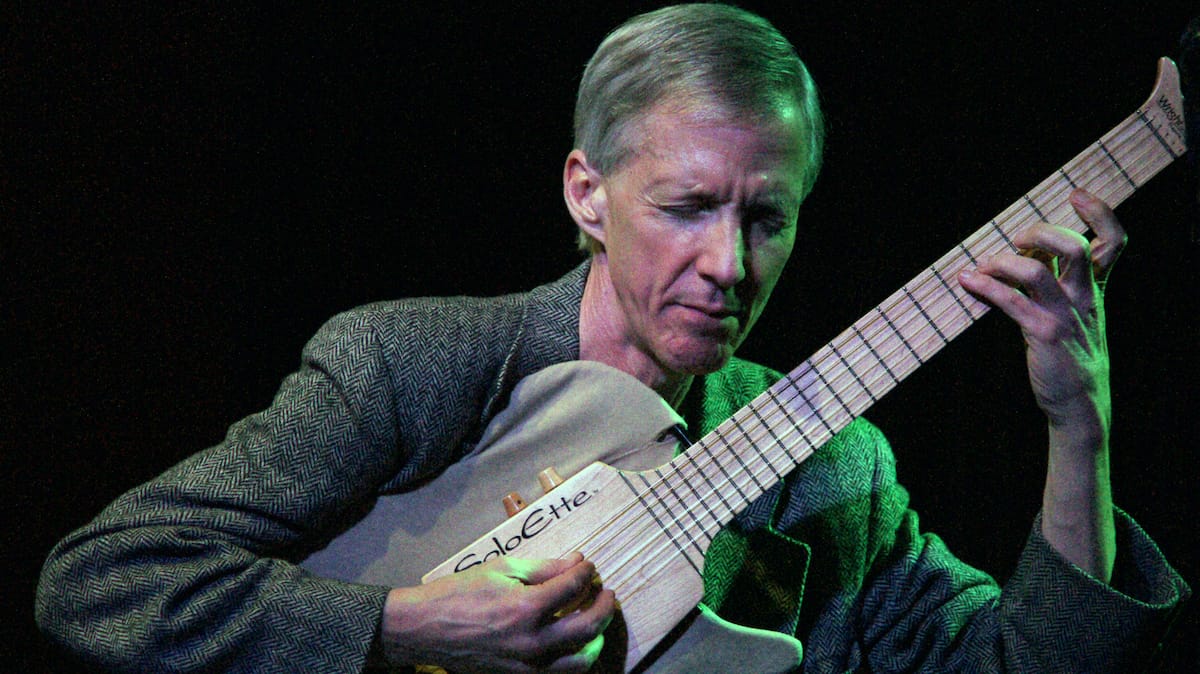
In this JGT interview, Portland guitarist John Stowell talks to Joe Barth about a new ebook of some of his original compositions.
In our conversation, we talk about the book The Collection as well as his approach to solo guitar playing.

JB: In your new book The Collection, are twenty-one of the tunes that you have written over the years. We can’t have you talk about all twenty-one, but talk about three and why you included them in this collection.
JS: Three of my favorite tunes in The Collection are “Tapioca Time”, “Nanti Glo” and “Welcome to Nice.” I think that the melodies for all three songs are “singable”, and each song contains some voicings that also can stand alone as interesting chords that can be applied more broadly in other contexts.
JB: Many of the songs in your collection book are on the record entitled Solo Guitar. Talk a little about the criteria you used for including the song in both the record and the book.
JS: On my solo guitar recording, I selected thirteen of my original tunes to play that were composed over a fifteen-year period. I hope that the music works for the listener strictly as performances. My other goal in sharing the material is to give guitarists some insights into my approach to chord melody, voice leading, open string voicings, and unusual chord inversions. The remaining four songs on the recording are improvisations based on songs from other composers that I like.
JB: I know you wanted to express your own voice as a solo guitarist, but can you tell us about a couple of solo guitar albums that have inspired you as a guitarist and why?
JS: I love Ted Greene’s solo guitar recording. I think that Ted chose to create arrangements and forgo improvising for this project, although he was a very capable improviser. His approach to harmony was orchestral and blended jazz and classical concepts together in a beautiful and seamless way. I’m not sure if Jimmy Wyble recorded a solo CD, but he was definitely my favorite solo guitarist. The etudes that he wrote in the 1970s (published as “The Art of Two Line Improvisation”) are masterclasses in voice leading, counterpoint, and diads/triads. He was also a wonderful improviser.
JB: As you compose a song, does the melody come first, then the harmony, or vice versa?
JS: When I compose, I hear the melody and the chords simultaneously, and a song seems to emerge in an organic way from an initial cadence like a simple II-V-I. I don’t have a plan for where the melody will take me, but I do have a few techniques that I use when writing. I’ll play a very simple melody as the top voice of a few chords and employ more dissonant harmony below the melody in the remaining notes of the chord. I’ll also use the same harmonic rhythm more than once with different harmonies.
JB: When did you first start composing the songs on the recording?
JS: As I mentioned, the original songs of mine on this recording were composed between 2008 and 2023.
JB: We know the challenges and fears of a solo guitar performance and how everything rests on you, the guitarist. But tell us about the unique joys and rewards you have discovered in your solo guitar performances.
JS: I certainly feel like my solo playing is a work in progress and still evolving, but I’ve been playing alone now in various settings since the late 1970s, so I feel comfortable playing in this setting. The rewards are feeling like I have the ability now to move back and forth between chords and single-line playing in both my chord melody arrangements and improvisations. Hopefully, I can engage the audience and bring them into my musical world for a set or two.
JB: Is there anything you can say about what is next for you as a solo guitarist?
JS: I would like to continue to play alone on occasion and perhaps do another live solo CD. My first live solo disc on the Origin Label, Solitary Tales, was recorded about fifteen years ago, and I have made some progress since then.
JB: Talk about what someone will discover from your new book Melodic Minor Scales & Modes?
JS: My new book from Guitar Vivo covers the modes of the melodic minor using the concept that my guitar teacher Linc Chamberland gave me in the 1970’s. Linc explained the modes as keys (ex, the 7th mode, or super locrian, can be applied using melodic minor chords, the harmonized melodic minor scale and melodic minor arpeggios a half step above a dominant chord, i.e, C# melodic minor chords scales, arpeggios combined with C dom7th as C7altered). In my Guitar Vivo book, I explain and demonstrate all seven modes as keys superimposed over major, dominant, minor, half diminished and diminished chords. My goal is to make these sounds and concepts easy to grasp and apply quickly as vocabulary for soloing and comping.
Subscribe to Jazz Guitar Today – it’s FREE!
Thank you for reading this post, don't forget to subscribe!


New Album From Tom Lippincott, Ode To The Possible

Colombian Jazz Guitarist Daniel Pinilla

Jazz Guitar Today Pays Tribute To Guitarist Joe Negri

Video Podcast With Giuseppe Continenza
Italian Guitar Master, Giuseppe Continenza

Nexus From Guitarist Jordi Farres

New Vince Lewis Guitar Arrangement, “What The World Needs Now”

Veda & The String Machine’s New Album, Rise And Shine

Jazz Guitar Today Lesson: Variations On Standard Jazz Blues Chord Changes – Part 2
Jazz Guitar Today Lesson: Variations On Standard Jazz Blues Chord Changes – Part 1
Jazz Guitar Today Lesson: “Pensative”
New Vince Lewis Guitar Arrangement, “What The World Needs Now”
New Vince Lewis Guitar Arrangement, “Anything Goes”

Saying Goodbye To An Atlanta Jazz Musician, Sal Gentile

Guitar Great Ron Eschete’ Dies at age 77

British Smooth-Jazz Guitar Master, Chris Standring
-
 Jazz Guitar Lessons1 week ago
Jazz Guitar Today Lesson: Variations On Standard Jazz Blues Chord Changes – Part 2
-
Jazz Guitar Lessons4 weeks ago
Jazz Guitar Today Lesson: Variations On Standard Jazz Blues Chord Changes – Part 1
-

 Jazz Guitar Lessons1 week ago
New Vince Lewis Guitar Arrangement, “What The World Needs Now”
-
 Artist News3 weeks ago
Guitar Great Ron Eschete’ Dies at age 77
