Artist Features
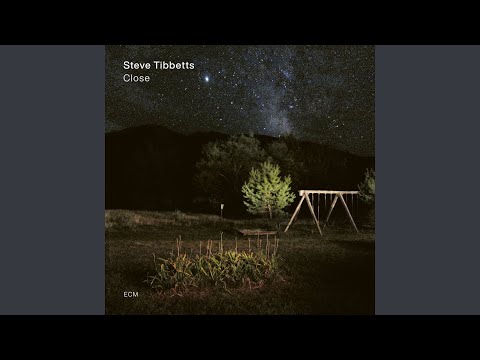
Steve Tibbetts Releases New ECM Album: Close

JGT contributor Joe Barth interviews guitarist Steve Tibbetts about his new ECM album, Close.
Above photo by Diane Waller
Steve Tibbetts is a composer and guitarist who views the recording studio as a tool for creating sounds as well as the guitar he holds in his hands. He was born in Madison, Wisconsin and has recorded many albums, primarily for ECM but also for the Frammia and Hannibal labels. His newest, Close, is his ninth for ECM.
JB: Before I ask about the new Close album, tell me about yourself. You grew up in Madison, Wisconsin. During your teenage years, what was musically most helpful in your personal development as a guitarist?
ST: Three things encouraged me to dig into the guitar as a teenager. When you’re a 12 or 13 year old boy, you probably wonder what you can do to get attention in the world, in high school, to be part of anything, part of a gang. At the frequent union hootenannies we had at my family’s home I noticed that when my father flipped the latches open on his black guitar case and pulled out his Martin 12-string, everyone would stop talking and look at him expectantly. All eyes to the guy with the guitar. I could do that.
Second, my parents let my band practice in our basement. We were very loud. It couldn’t have been easy for my parents and sisters. Years later I expressed my thanks to my father and he said, “Well, at least we knew where you were.”
Third, the guys in my band wanted to know why I couldn’t play the riffs and licks that my immediate, on-the-ground local guitar competition could. So, we’d go see them play, I’d study their hand movements, then I’d go home, head down to the basement, and see if I could figure out how they played that thing, that way.
JB: Steve, to learn more about what shaped your musical values on the guitar, to you, what are the three most influential guitar albums and why?
ST: First is Pete Seeger’s The Folksinger’s Guitar Guide was my friend. I played it over and over. Pete Seeger was a fatherly vinyl companion who never got tired of me playing the cut “How to Play the ‘Church Lick‘.”
Secondly, there was a band from Appleton, Wisconsin named Soup. Soup was led by an incredible guitar player named Doug Yankus. Soup was one of the first bands ever to put out an album completely on their own. It was a crude affair, just a vinyl disc, white label, stuck in a cardboard cover, a yellow mimeographed list of songs slipped inside. I spend a lot of time with that album spinning at 16 RPM in order to learn the solo to “I’m Just Not the Man to be Tied.”
Third is Jimi Hendrix’s solo in “Machine Gun.” It is a complete world. The story is that, between sets, Bill Graham challenged Hendrix to skip the theatrics and play what he was capable of, at the level of Coltrane or Parker. Hendrix stood stock-still for his second set and played that solo. No overdubs, just a Strat, Univibe, wah-wah, and a Fuzz Face. That solo is the gold standard for electric guitar solos. In 1981, visiting Ceaser Glebeek at his Hendrix Information Center in Amsterdam (his apartment, actually), Ceaser said, “Well, what do you want to hear?” I said, “Machine Gun,” and he said, “You’re in luck, I just received the video.”
JB: Your music has (for lack of better words) a very ethereal sound. How do you describe your music?
ST: I suppose it’s most accurate to say, “I would describe it as ‘mine’.” I know that sounds a little bit snarky, but I can’t think of any other accurate characterization. It’s definitely not jazz. Not folk. My old friend and Minneapolis icon Willie Murphy once smirked and said, “Maybe you can call it ‘Post-modern-neo-primitivism’ in your press releases.” That works, sort of.
JB: The album opens with “We Begin,” which has three movements to it. The album ends with the relatively short “We End.” Do you view the entire album as a kind of symphony or tone poem with multiple movements?
ST: I do now. It didn’t start that way. This is what is so weird and astonishing about creating things; there are long, long periods of confusion and aimlessness, and then gradually a story starts to cohere. If you want to, you can pretend that the music is telling you where to go. Why not pretend? I have always loved albums that are like books, albums like Jefferson Airplane’s After Bathing at Baxter’s, Hendrix’s Electric Ladyland, Coltrane’s A Love Supreme. I was especially taken by Laura Marling’s Once I Was an Eagle. It’s one long song. In my mind, the music began to coalesce at some point, tell its story, and ask for an ending. The album ends with a lullaby. After reading to my children every night, I’d try to sing a lullaby to make them sleepy. It never worked. But I can end my album with a lullaby. Goodnight, moon.
JB: The album is all originals. Were these songs all composed for this project? Talk a little about that process.
ST: Yes, all the songs were composed for this project. The process, towards the end, was one of being honest and deleting beginnings and ends and middles and entire songs that just didn’t work. There were sections that were just a bump in the road, that didn’t advance the narrative. I had 72 minutes of music at one point and was awfully proud of my 72 minutes. Very proud. Overly proud. Marc helped me edit it down. He told me that when he puts a CD in a player and the readout says 70+ minutes, he gets a headache.
JB: Percussionist Marc Anderson and drummer JT Bates play superbly. What do you appreciate most about these two musicians?
ST: Both Marc and JT are easy to work with. Marc is a good producer; he’ll say, “Sure, let’s try a groove your way, then let me try it my way.” We work for a while doing it my way. His way always wins the day. JT listened carefully and took the time to tune his drums to what he heard Marc playing. Sometimes he would lock in perfectly with a motif of Marc’s, making a sort of “super drum,” and then sometimes he’d break away. Then come back. When JT gets very involved in his playing, he starts to stand up from his drum stool. I like that.
JB: You have had a long musical relationship with percussionist Marc Anderson? I know he goes back to your college days.
ST: Actually, I met Marc in 1980, 4 years out of college. A percussionist friend of mine, Tim Weinhold called me up and said, “You have to come hear this guy play.” Marc was playing to a near-empty ballroom at the University of Minnesota St. Paul campus with his band “Clear”. He was playing like he was possessed. I thought, “If he can play like that to nobody, we’ll do fine in the studio. Let’s give it a try.”
JB: Were Marc and JT ever in the same room with you, or did you simply send your recorded files to them?
ST: Marc and I worked out some approaches ahead of time, playing live, and by listening and letting the music play our brains. (Yes, that’s what we do). Then he brought everything over. Everything. Drums, racks of bells and gongs, frame drums, handpans, a drum set. I spent a day putting my microphones around his setup, and then we spent a couple of weeks in his big sandbox of sound. Naturally, we ended up using only congas, three hand drums, one gong, and his handpan. I sent files to JT; he has his own studio.

JB: Do Marc and you, and others, perform this music in public?
ST: If the gig is weird enough and looks like it will be fun, we’re in. We got a message from a promoter producing a festival at the Esplanade Concert Hall a few years ago. Would we like to come play in Singapore? One look online at the concert hall was enough to convince us. We’re in.
JB: What do you appreciate about the long relationship you have had with producer Manfred Eicher and ECM Records?
ST: There’s a certain mystery and magic to the label that I’ve always loved. I’d bought and listened to “After the Rain,” “Cloud Dance,” and especially “Theme to the Gaurdian ” (No, I didn’t mis-spell that.) I read the credits on the album covers. Who is this “Manfred Eicher” guy? How do they get this sound? After I put out “Yr” and it did fairly well, Ricky Schultz, then at Warner Brothers, said to Manfred, “You should record this guy.” I got a letter from Steve Lake at ECM asking me if I’d be interested in doing a project for the company. Well…yes. Sort of like being a long-time reader of C.S. Lewis and getting a call one day from C.S. himself saying, “Hello, Steve? C.S. here. Would you be interested in going to Narnia?”
Thank you for reading this post, don't forget to subscribe!