
Artist Features
Guitarists Gene Torchia and John Stowell Release New Album, The Torchia-Stowell Duo

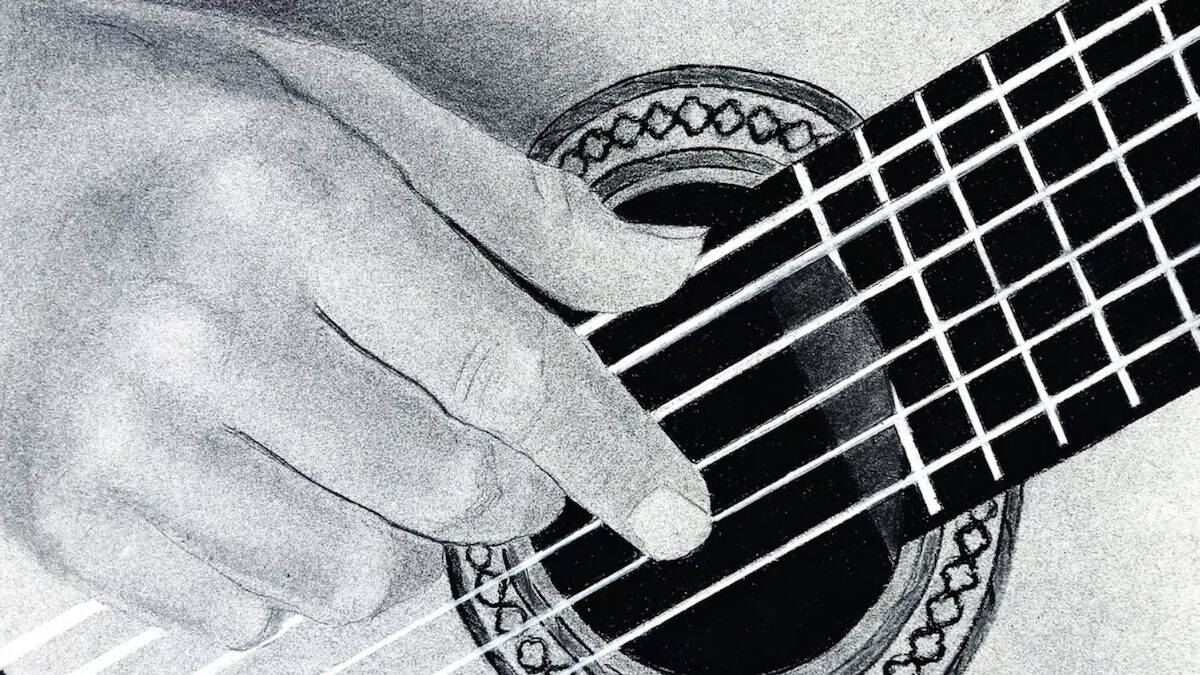
Guitarist Gene Torchia has recently recorded a double album with Portland guitarist John Stowell. Joe Barth talks to Gene about the album.
Gene Torchia is an illustrator, printmaker, and jazz and classical guitarist living in the San Francisco Bay Area.
JB: Gene, you haven’t been featured in JAZZ GUITAR TODAY. Before I ask John and you about the new Duo album, could you tell me a little about yourself? Are you from the Bay Area of California? What was musically most helpful in your personal development as a guitarist?
GT: I am originally from New York and moved to the Bay Area in 1979. I started out playing in blues and rock bands in the late 1960’s and 1970’s. I studied at Berklee College of Music for one semester in 1975. I decided to expand my finger-style guitar technique, so I transferred to Long Island University to complete my music degree. At LIU, I studied classical guitar with Dennis Koster for three years. He is a wonderful flamenco and classical guitarist. While living in New York, I attended jazz concerts every weekend in NYC and saw the finest jazz musicians in the world, including George Benson, Jim Hall, Pat Martino, John McLaughlin, Allan Holdsworth, and Joe Pass. I was also heavily influenced by saxophone players Sonny Rollins, George Coleman, Stan Getz, Rolland Kirk, George Adams, Sam Rivers, Joe Henderson, and many more. I listened and analyzed the music of Coltrane at LIU. I took Jazz history with Dr. Billy Taylor and hung on every word he said, and he ended each class by playing one of his arrangements on piano.
While studying classical guitar, I was influenced by Julian Bream, John Williams, Fredrick Hand, David Russell, Andrew York, and flamenco guitarist Sabicas, all of whom I saw perform in NYC. More recently, I studied classical guitar briefly with Marc Teicholz in CA. Marc is also an incredible classical guitarist and is professor at San Francisco Conservatory of Music.

JB: I cannot ask about every song, Gene. The album opens with “On Joe’s Deck.” How did you come across this?
GT: I saw Roland Dyans perform three times in California. He started each concert with an improvisation that was inspired by his audience. This improvisation sounded like a thoroughly composed piece. I was astounded by his compositional skill and virtuosity. I sought out his compositions and decided to include six of them on our duo CD. This blues-based song is a more easily-assessable start to my collaboration with John.
JB: Gene and John, next is a “Tribute to Dizzy.” Why include this song?
GT: Roland Dyans has echoed the harmony that DIzzy uses.
JB: Why include the Irish folk song “The Water is Wide?”
GT: My intent was to give John a through-composed piece of music to improvise on that would be a different format from what he has recorded in the past. In addition, I chose some of my favorite composers of modern classical guitar pieces and solo flute pieces. I chose pieces that are in different styles to make the unfolding of the album more interesting.
JB: Talk about what is rewarding as well as the challenges of performing a duo with the electric and classical guitar.
GT: I have known John for more than 25 years. I have been listening to his music and following all of his recordings since the 1970’s. I took two lessons in the 1990’s with him at the Stanford Jazz Workshop, which began our friendship. As you know, John’s playing is unique. I am astounded by his ability to weave melodic lyrical lines onto almost any composition. We did five sessions over two years to create this CD. I prepared 15 pieces for each session. Our routine was for me to play the piece solo once for John. After he heard it, his comment would be, “I’ve got it.” We would proceed to record live, in my home studio, and most of the tracks were either the second or third take. I used an amplified classical guitar to match the volume with John. Recording with John is an honor and a dream. The challenge for me was to apply my recording skills to have each piece sound its best. I have details of my recording techniques and mixing tools if you would like that info.
Each mix was sent to John and he gave me feedback on the mix and whether he liked our performances. John approved everything on the CD before it was released.
JB: Why the Leo Brouwer Studies?
GT: I love almost everything Leo Brouwer has written. As with the other pieces, I chose compositions that allowed John space to react to. The Brouwer studies have interesting rhythmic and harmonic challenges.
JB: On Disc Two, you do a couple of Lou Harrison pieces. Tell me what drew you to these.
GT: I love Lou Harrison’s Eastern-inspired Gamelan compositions. I read his biography and was inspired by his life story and his unique compositions. I first heard these pieces recorded by David Tanenbaum.
JB: On Disc Two you do the one piece by Leopold Weiss. What drew you to this?
GT: This is a baroque piece that was written for the lute. I often play this in my weekly Church gig at communion.
JB: Why close the album with the interactive “Toccotina 3, Sieben Stucke for Guitar”?
GT: I chose this piece for its sound and variety. I have had access to the Stanford music library, where I found this. I browse the stacks to find guitar, flute, and solo violin music that would have themes that would be of interest for John to solo on.

Thank you for reading this post, don't forget to subscribe!


Nexus From Guitarist Jordi Farres

New Vince Lewis Guitar Arrangement, “What The World Needs Now”

Veda & The String Machine’s New Album, Rise And Shine

New Recording From Guitarist Doug MacDonald, Tribute To South Central

Joe Negri Dies Just 10 Days before His 100th Birthday

Jazz Guitar Today Lesson: Variations On Standard Jazz Blues Chord Changes – Part 2

Guitar Great Ron Eschete’ Dies at age 77

One of Chile’s Finest Fingerstyle Guitarists, German Herlein
Jazz Guitar Today Lesson: Variations On Standard Jazz Blues Chord Changes – Part 2
Jazz Guitar Today Lesson: Variations On Standard Jazz Blues Chord Changes – Part 1
Jazz Guitar Today Lesson: “Pensative”
Jazz Guitar Today Lesson: “Central Park West”
New Vince Lewis Guitar Arrangement, “What The World Needs Now”
New Vince Lewis Guitar Arrangement, “Anything Goes”

Saying Goodbye To An Atlanta Jazz Musician, Sal Gentile

Jazz Guitarist Eleonora Strino Talks To JGT
-

 Jazz Guitar Lessons11 hours ago
Jazz Guitar Today Lesson: Variations On Standard Jazz Blues Chord Changes – Part 2
-
Jazz Guitar Lessons2 weeks ago
Jazz Guitar Today Lesson: Variations On Standard Jazz Blues Chord Changes – Part 1
-
 Jazz Guitar Lessons8 hours ago
New Vince Lewis Guitar Arrangement, “What The World Needs Now”
-
Artist News2 weeks ago
Guitar Great Ron Eschete’ Dies at age 77

