
Jazz CD Releases
New York Guitarist Steve Cardenas Appears on Jung-Stratmann’s, “Confluence”

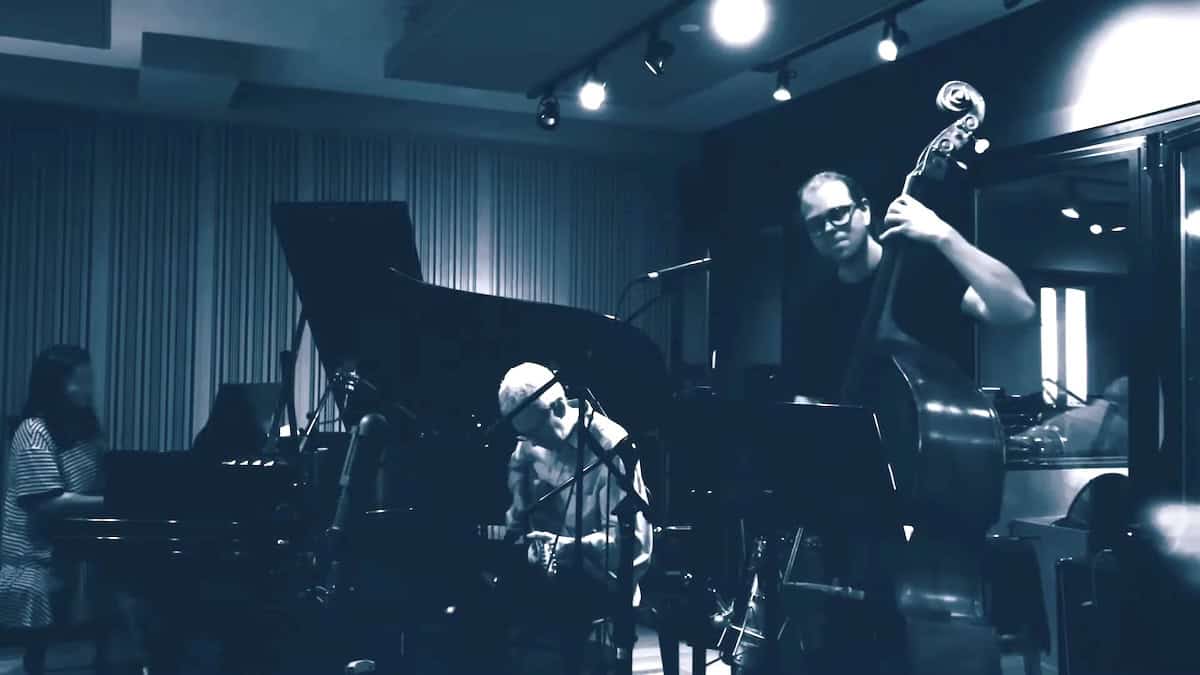
JGT contributor Joe Barth talks to guitarist Steve Cardenas about Confluence, a Jung-Stratmann EP that is filled with originals.
Originally from Kansas City, Steve Cardenas, has been an in-demand guitarist in New York City since 1995. He has worked with Paul Motian, Charlie Haden, Steve Swallow, John Patitucci, Norah Jones, and Madeleine Peyroux to name a few. He was just featured on pianist Sujae Jung and bassist Wolf Stratmann’s new CD Confluence.
JB: Before I ask about the new Confluence album, tell me about yourself. During your teenage years, what was musically most helpful in your personal development as a guitarist?
SC: I grew up in the Kansas City area, which had and still has a vibrant jazz scene. Like a lot of guitarists, I played in rock bands in the beginning, but my first year of high school, I signed up for the school big band, not really knowing what I was in for. Being in a situation where I had to learned lots of new and different chords was the push I needed to expand my guitar playing skills, let alone learning to play a completely different kind of music than I had ever done before then. My KC guitar mentors, Danny Embrey (who I took a year of lessons with) and Rod Fleeman helped me immensely in understanding a lot of the basics and then some. Rod turned me on to so many great records and players I hadn’t heard before. I also studied with the town guru, a pianist, John Elliott. About everyone in the KC jazz community took lessons with John. All of this along with being hired to play while learning on the gig kept me busy to say the least.
JB: Steve, to learn more about what shaped your musical values on the guitar, to you, what are the three most influential guitar albums and why?
SC: For me, it’s so difficult to narrow it down that far, or even down to ten or twenty, etc. Also, it hasn’t only been about music that features the guitar for me, or only jazz for that matter. All said, here are three that come to mind at this moment in which I love the music and musical sensibilities that are happening.
Jim Hall – Live! This album has some of the most beautiful and adventurous guitar playing and trio playing. There is so much listening and interplay between the musicians that you feel like you’re part of the story just listening to the music. Jim’s sense of freedom and exploration, with the extraordinary rhythm section of Don Thompson and Terry Clarke, never ceases to be astounding each time I listen to this album.
We’ll Be Together Again – Pat Martino I had been listening to other Pat Martino recordings at the time and always loved his playing, the fire and grace that he brings to the music. This record really hit me differently from the others of his. It was still Pat Martino, but in a setting where he was taking more time, using much more space, and with it being only a duo with pianist Gil Goldstein, all the nuance and articulation are up front. It’s such a beautiful record.
In Pas(s)ing – Mick Goodrick. I had first heard Mick Goodrick on the Gary Burton album of Carla Bley’s music “Dreams So Real” (which could easily be one of these three, as there’s also a young Pat Metheny playing great on that record). In particular, on this album, Mick’s solo on the tune “Vox Humana” is so epic and beautiful, it led me to look for other recordings of him. In Pas(s)ing, his only record as a leader on ECM, has all the melodicism and solo development I had heard and loved in his playing. Add to that a stellar band with John Surman (sax), Eddie Gomez (bass) and Jack DeJohnette (drums), the musical conversation between them all is nothing short of sublime.
JB: I believe the Confluence album consists of all original songs by Sujae Jung or Wolf Stratmann. Did they compose this music for this particular project, and what did you find so rewarding about playing and recording it?
SC: I’m not sure about the story with Sujae’s and Wolf’s original intentions with this music. My impression at the time was that they were just writing tunes and not necessarily with a project immediately in mind. They had asked me if I would be interested in playing some gigs with them, so we got together and played through some of their new music in addition to music they had already recorded before. I had only played a few dates with them the month before this recording happened, which although it was in a recording studio, there was no intention at the time of this becoming a record. It was only supposed to be a performance for a small audience. A few months later, after they had been listening to the music from that night, they wrote to me and said they were considering releasing it, and from that point on the wheels were set in motion for it to be an album.

JB: Bassist Wolf Stratmann and drummer Marko Djordjevic play superbly. What did you appreciate most about these two musicians as your rhythm section?
SC: Marko had already been playing with Sujae and Wolf for some time, so there was already some history there, which made it easy for me to join in with the band vibe they had already established. Both Wolf and Marko are open to trying new things and playing off of each other’s ideas while still serving the music. So, for me, and I’m sure for Sujae, that adds another layer of possibilities for a soloist to work with.
JB: Talk about your musical relationship with pianist Sujae Jung.
SC: I met Sujae and Wolf at the same time, so the only playing I’ve done with Sujae has been in the Jung Stratmann Quartet. However, it was apparent to me from the first time rehearsing with the band that Sujae’s intention and direction in the music was so clear and strong, I knew it was going to be great to play together.
JB: Tell me about your personal album, Healing Power – The Music of Carla Bley.
SC: I’ve been in a collective trio with bassist Ben Allison and saxophonist Ted Nash since 2012. We initially got together for fun and play a few gigs, exploring the music of Jim Hall and Jimmy Giuffre. Then Ben was offered to do a record on the all vinyl label, Newelle Records, in which we recorded the aforementioned music on our record Quiet Revolution. Next, at Ted’s suggestion, we recorded Somewhere Else: West Side Story Songs. For our third album, I suggested we record Carla Bley’s music. I was fortunate to be in two bands that Carla was also in, Charlie Haden’s Liberation Music Orchestra, in which Carla was the arranger and contributed compositions, and Steve Swallow’s Quintet, where Carla played B3 organ in the group. Healing Power is a mix of Carla’s compositions from her early writing days, as well as a couple of her tunes from the 1980s. She was a unique and important composer, a wonderful pianist and organist, as well as one of the most amazing and down-to-earth persons I’ve ever had the good fortune to know and play with.
JB: What do you appreciate most about the 335-style guitar you play?
SC: I have a 1982 Gibson 335, the first year they began producing reissues of the late 50s / early 60s versions. I’ve had the guitar for a long time; it’s a wonderful instrument. I particularly love the Tim Shaw humbuckers from this era. I’m very much at home playing a lot of different kinds of music with this guitar. I suppose 335s have that reputation for versatility; it sure works for me.
I also play a Valle Tele made by Chilean luthier, Pablo Valle. I wanted a lighter and smaller guitar for the road so I wouldn’t have to travel with my older 335 anymore. So the only thing “Tele” about my Valle is the body shape and the bolt on neck. Otherwise, the neck is mahogany with a rosewood fingerboard, Gibson scale. It has two old Gibson humbuckers. The body is made with alder and has a small chamber underneath the wood near the top that makes it a little more like a semi-hollow, as well as takes a little weight off. The guitar sounds amazing, warm and punchy, and plays great.
JB: Talk about how your history with Thelonious Monk’s music has benefited you as a musician.
SC: It’s been a long, circuitous, and amazing journey with Monk’s music. I was lucky to have some great musician friends who turned me onto Monk’s lesser-known tunes, which was an eye and ear opener to say the least. I lived in the San Francisco Bay Area for a few years in the late 80s / early 90s and was a part of a two guitar band called Evidence. Randy Vincent was the other guitarist with bassist Bill Douglass and Bob Kaufman on drums. Randy and I took it upon ourselves to transcribe as many Monk tunes as we could find. It was that band where I really learned the bulk of Monk’s music that I know. Fast forward to when I’d been in New York for a couple of years and had joined Paul Motian’s Electric Bebop Band. Paul loved Monk’s music and had several of his tunes in the band book. I brought a number of the lead sheets I had from Evidence to Paul, which we began playing in the band during a tour in the fall of 1998. That led to recording that music with some Bud Powell music on the record Paul Motian and the E.B.B.B. play Monk and Powell.
In 2001, trumpeter, arranger, editor, Don Sickler, and I met through a friend who had informed him that I had more than a few transcriptions of Monk’s tunes. Don was interested in seeing how I put the charts together, and after some discussions, he asked if I would help him put together a book of all of Monk’s compositions. Of course, I was happy to accept, and we began working on the book later that year. Don had also done a lot of transcribing of Monk’s music so while our transcriptions gave us a head start of sorts, we knew we’d need to dig deeper into each tune to make sure we weren’t missing anything. Don also provided photocopies of about 16 original charts in Monk’s hand, which, of course, added so much depth to our understanding of how Monk imagined his music on paper. I feel blessed to have been a part of putting together an important contribution to Monk’s legacy. I’m still, and always will be, working on playing these tunes. It’s never-ending in a most wonderful way.
JB: New York City has many wonderful guitarists. Tell us about you, keep busy with the gigs you do, and how you make a living there?
SC: It’s mostly a combination of tours, local gigs, and teaching. This seems to be a common thread with many of the musicians I know and play with. There are times when there’s a little more or less traveling, as well as local gigs. Groups I tour with these days are the aforementioned trio of Allison, Cardenas & Nash, as well as Jon Cowherd’s Mercy Project and Adam Nussbaum’s Lead Belly Project. I also do occasional tours where I’m hired to be part of an existing group. This description fits much of what I do locally in NYC as well. My teaching schedule is more of a consistent thing in that I’m on faculty at The New School of Jazz and Contemporary Music. I’m there a couple of days a week in both the fall and spring semesters. I lead a couple of ensembles and usually have several students for individual lessons each semester. It’s a great school, an open musical environment, which makes it a pleasure to teach there.
Thank you for reading this post, don't forget to subscribe!


Nexus From Guitarist Jordi Farres

New Vince Lewis Guitar Arrangement, “What The World Needs Now”

Veda & The String Machine’s New Album, Rise And Shine

New Recording From Guitarist Doug MacDonald, Tribute To South Central

Joe Negri Dies Just 10 Days before His 100th Birthday

Jazz Guitar Today Lesson: Variations On Standard Jazz Blues Chord Changes – Part 2

Guitar Great Ron Eschete’ Dies at age 77

One of Chile’s Finest Fingerstyle Guitarists, German Herlein
Jazz Guitar Today Lesson: Variations On Standard Jazz Blues Chord Changes – Part 2
Jazz Guitar Today Lesson: Variations On Standard Jazz Blues Chord Changes – Part 1
Jazz Guitar Today Lesson: “Pensative”
Jazz Guitar Today Lesson: “Central Park West”
New Vince Lewis Guitar Arrangement, “What The World Needs Now”
New Vince Lewis Guitar Arrangement, “Anything Goes”

Saying Goodbye To An Atlanta Jazz Musician, Sal Gentile

Jazz Guitarist Eleonora Strino Talks To JGT
-

 Jazz Guitar Lessons17 hours ago
Jazz Guitar Today Lesson: Variations On Standard Jazz Blues Chord Changes – Part 2
-
Jazz Guitar Lessons2 weeks ago
Jazz Guitar Today Lesson: Variations On Standard Jazz Blues Chord Changes – Part 1
-
Jazz Guitar Lessons14 hours ago
New Vince Lewis Guitar Arrangement, “What The World Needs Now”
-
Artist News2 weeks ago
Guitar Great Ron Eschete’ Dies at age 77


