
Artist Features
Jazz Without a Map: The Making of “Falling from Earth”

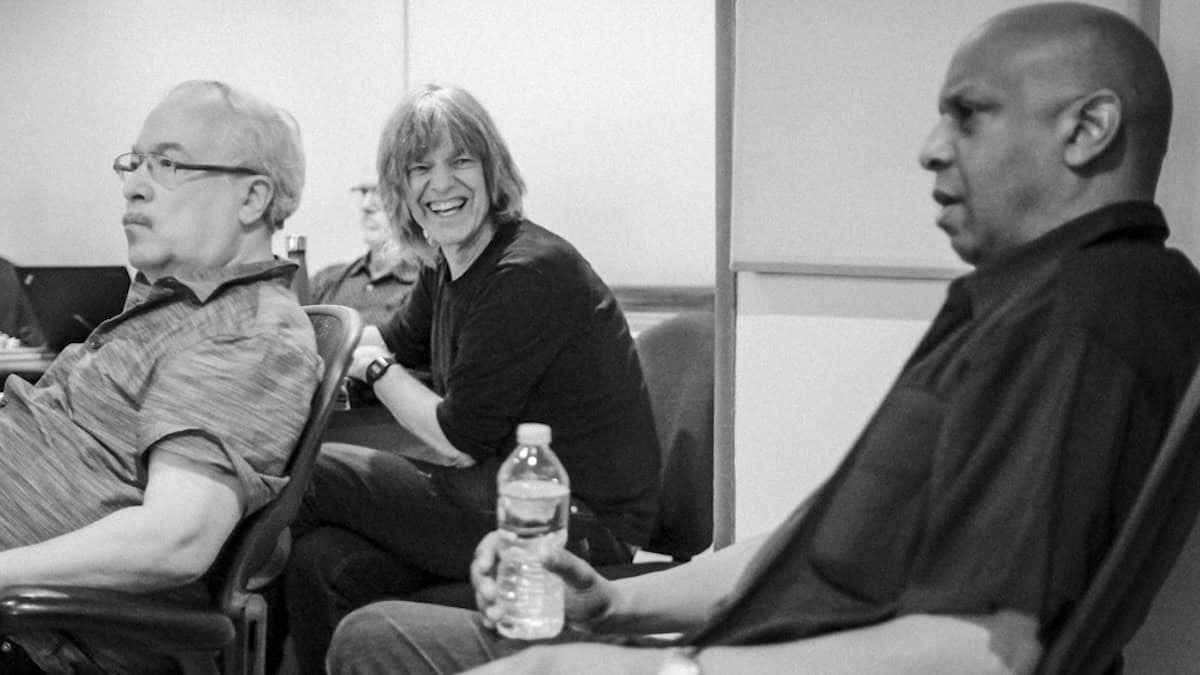
Producer John March provides a behind-the-scenes look at a new jazz project with guest artists Mike Stern, Eddie Gomez, Kevin Axt, Billy Drummond, Steve Hass, Karl Latham, and Dean Oldencott.
In the foothills of Boulder, Colorado, amidst pandemic disruptions and shifting studio landscapes, a bold jazz project took root. Falling from Earth is not just another jazz record—it’s a self-funded, independently produced labor of love between pianist/composer Bob Schlesinger and an elite roster of collaborators: Mike Stern (guitar), Eddie Gomez and Kevin Axt (bass), and drummers Billy Drummond, Steve Hass, Karl Latham, and Dean Oldencott.
As the project’s producer, co-arranger, mixer, and technical lead, I had the opportunity to help shape the music from many angles—creative, logistical, and sonic. It was a long, evolving process filled with unexpected challenges, from remote recording logistics to technical problem-solving and creative restructuring. But what made this project different from most was the way it unfolded over time—through trust, dialogue, and a shared commitment to making something honest. In a world where records are often built quickly and under pressure, Falling from Earth was the opposite: a slow, collaborative effort where every decision was made with care and every contributor helped shape the final sound.
The Spirit of Collaboration
Working with Bob Schlesinger on this project was a genuinely collaborative experience, built on a foundation we’d established years earlier. We’d played together in several Boulder-based bands and shared a long-standing musical friendship, so stepping into this project felt like a natural extension of that history. We had a strong creative connection and a shared commitment to making the music as good as it could be. It wasn’t just about putting tracks together—it was about staying curious, asking questions, and letting the music evolve organically through the process of exploration.
We often talked about artists like Miles Davis, Joe Zawinul, Herbie Hancock, and Steely Dan—not only for their musical brilliance but for how they approached structure, experimentation, and the iterative nature of the recording process. These conversations shaped our philosophy: to treat the studio not just as a place to capture performances, but as a creative instrument in its own right. We embraced complexity rather than avoiding it—welcoming the messiness of real improvisation, the layering of ideas, and the technical challenges that came with shaping them. That approach required time, patience, and a willingness to follow the music wherever it led.The studio became our improvisational workshop—a space where ideas evolved through dialogue, listening, and iteration. Technology wasn’t a replacement for live interaction, but during the constraints of the pandemic, it became a critical extension of the process. It allowed us to keep working, to stay connected, and to shape the music thoughtfully over time. Editing, layering, and restructuring weren’t about perfection—they were about honoring the spontaneity of the original performances while giving them a form that could stand on its own. That kind of hands-on, iterative process helped give the music its depth and cohesion. It wasn’t always easy, but it stayed grounded in the same spirit of exploration and responsiveness that defines jazz at its core.

For Bob, this project was very much a “third act” moment—a stage in his career where he wasn’t chasing industry milestones or commercial validation, but finally making the record he had always wanted to make, on his own terms, with the musicians he had long admired. That kind of choice—especially later in a career—carries real weight. It’s a decision to invest in the art itself, to prioritize creative honesty over external pressures. I recognized that immediately because I was in a similar place myself. We were both at a point where the work needed to mean something deeper, and that alignment is part of what made the collaboration work. Bob’s vision, paired with his humility and clarity of purpose, gave the project its direction. My role was to help carry that vision through—to support the process at every level, and to make sure he didn’t have to do it alone.
Throughout the process, I wore many hats: producer, arranger, editor, mixer, talent coordinator, Video editor/producer and remote session facilitator. Like many independent projects, this one presented a long series of logistical and technical challenges—especially given the remote nature of the sessions and the need to coordinate across multiple locations and time zones. When some of the early piano recordings didn’t meet our standards, I re-recorded them using a Disklavier and MIDI sync to retain the original feel while improving sound quality. It was one of several instances where we had to find creative, often nontraditional, solutions to keep the musical intent intact. Whether it was resolving communication dropouts during live overdubs, managing delays due to the pandemic, or reworking arrangements on the fly to fit new players and ideas, the process required patience, flexibility, and a constant willingness to adapt. In the end, those challenges didn’t just shape the workflow—they shaped the music itself and set the tone for how we approached the production that followed.

From Seed Grant to International Sessions
The project began for Bob with a seed grant from Colorado’s “Pathways to Jazz” initiative—a program designed to support jazz artists in creating and recording original work. Coincidentally, Bob and I were both recipients in that same grant cycle: he began developing Falling from Earth, while I recorded and produced a tribute album to the great Ted Greene. That modest but meaningful support allowed Bob to initiate the first sessions, laying the groundwork for what would eventually grow into a much larger and more ambitious endeavor. Falling from Earth ultimately unfolded over several years, across multiple studios and locations, with contributions from musicians around the country. Along the way, we encountered our share of delays—logistical, financial, and creative—as well as the unavoidable disruptions brought on by the global pandemic. Even after the album was completed, Bob made the decision to delay its release by a year, out of respect for Mike Stern’s concurrent solo release. It was a practical choice that also reflected the collaborative spirit behind the project. From there, the real work of pulling it all together—technically and musically—began.

From Jam to Composition
The album began in New York with exploratory sessions between Bob and Mike Stern, joined by Eddie Gomez and Billy Drummond. Originally envisioned as a standalone release, those sessions captured a raw, spontaneous energy that laid a strong foundation. But before we could move forward, the pandemic put everything on hold. Schedules shifted, studios closed, and momentum paused. But in that pause came inspiration.
When Mike later traveled to Colorado to continue working with Bob, the focus shifted toward longer-form improvisations—open, unfiltered sessions that echoed the spirit of Bitches Brewmore than traditional modern jazz recordings. These weren’t just takes—they were beautiful improvisational landscapes. My role at that point was to begin shaping them into compositions: identifying recurring themes, melodic fragments, rhythmic patterns, and emotional threads that could be developed into structured pieces. It was a process of listening deeply, pulling out the strongest ideas and transcribing them and then finding ways to connect them. In many cases, that meant building arrangements from improvisations, then going back and re-recording certain sections with intention—using those original moments as blueprints for more focused, developed musical statements.
What started as a free-flowing set of sessions gradually became something more defined—a collection of compositions that retained their spontaneity but were supported by structure, continuity, and intention. That editing and reconstruction phase was one of the most creatively demanding parts of the project, but also one of the most rewarding. It gave the music a sense of direction without losing the spirit of the improvisation that brought it to life.
One of the album’s centerpieces, the 13-minute “Easy Offramp,” began as hours of exploratory jamming between Bob and Mike Stern. From that raw material, I transcribed key moments—melodic phrases, rhythmic patterns, and harmonic gestures—and used them as building blocks to shape a more cohesive compositional framework. It wasn’t about smoothing things over; it was about finding the thread that connected the ideas, then creating space for those ideas to re-emerge with greater clarity. We re-recorded certain sections using this new structure as a guide, which gave the musicians more room to improvise with intention while preserving the energy and spontaneity of the original sessions.
To fully bring some of the more complex tracks to life, we cycled through several rhythm sections, ultimately landing on Steve Hass (drums) and Kevin Axt (bass). Their performances brought a sense of depth, groove, and personality that helped ground the piece, and despite being recorded remotely, their parts felt connected—responsive to each other, and to the rest of the track—as if the performance had unfolded in a single room.

From a technical perspective, making a piece like this sound like a cohesive, live performance is no small task. These weren’t traditional takes in a shared acoustic space—they were multi-stage, layered sessions, sometimes separated by months or continents. The challenge was to create a sonic environment where the interactions felt immediate and fluid, where the phrasing, dynamics, and transitions responded naturally across tracks that were recorded in isolation. That meant paying close attention to timing, feel, room tone, and microdynamics—not just in mixing, but in editing and arranging. The advantage of this way of working is flexibility: we could shape the composition with great precision, build on the strengths of each player, and fine-tune details that might have been lost in a more traditional live session. But the real goal was to make all of that invisible—to give the listener the experience of something alive and unfolding in the moment.
That sense of presence matters. It invites the listener into the room, into the music’s internal dialogue. When that connection happens—when it feels like the musicians are responding to each other in real time—the listening experience becomes more than just sound. It becomes participation. That, for me, was the real challenge in mixing this kind of iterative improvisational music, keeping the feel of spontaneity alive and immersive.
Remote Recording Challenges & Real-World Chaos
Much of the album was made under unpredictable and often less-than-ideal conditions. I directed overdubs remotely using Sessionwire, coordinated schedules across time zones, and on more than one occasion had to troubleshoot in real time—once producing a drum and bass session via iPhone speaker when our main communication software failed. During my relocation to Spain, I was still actively involved in the production—giving feedback to Mike Stern on guitar overdubs while standing at the back of a moving truck. It wasn’t elegant, but it kept the work moving.
Technology made this level of remote collaboration possible, but it wasn’t seamless. Managing file versions, maintaining audio quality across systems, aligning session formats, and ensuring musical continuity from one player to the next required constant oversight. There’s a different kind of discipline involved in producing a record this way—one that blends musical direction with technical coordination, session management, and post-session analysis. Producing Falling from Earth meant staying involved at every step: tracking progress, giving specific notes, adjusting arrangements to fit new contributions, and making sure everything stayed consistent with the larger artistic vision.
One of the more rewarding aspects of the process was working with Bob on keyboard overdubs. We spent a lot of time refining harmonic approaches, exploring voicings, shaping phrasing, and revisiting arrangement choices as the broader structure of each track came into focus. Even though much of it was done remotely, the back-and-forth nature of those sessions kept the creative process flexible and responsive. It wasn’t about chasing perfection—it was about staying in dialogue with the material as it evolved, and making sure the musical decisions served the bigger picture.
The Art and Science of Jazz Mixing
Jazz of this nature—spontaneous, layered, and deeply improvisational—requires a fundamentally different approach to mixing than other genres. My primary goal was to preserve the individual voice and tone of each musician. These weren’t just parts—they were performances by artists with well-defined sonic identities. These players have distinct tones and styles that are instantly recognizable, and it was critical to maintain that character throughout the mix. Mike Stern’s guitar carries a unique combination of warmth, clarity, and harmonic complexity that needed space to sit naturally in the ensemble without dominating it. Eddie Gomez’s upright bass—fluid, lyrical, and rhythmically articulate—had to feel grounded while still cutting through with definition and presence. Every decision in the mix was made to support those voices while preserving the dynamic interaction among all the players.
Kevin Axt, who played both upright and electric bass across different tracks, brought an extraordinary level of versatility to the sessions. His upright playing was grounded, dynamic, and harmonically sensitive—anchoring the compositions while still leaving room for movement and interaction. On electric bass, his approach shifted entirely: articulate, groove-driven, focused and texturally supportive, often helping define the rhythmic contour and overall structure of a piece or setting up transitions in the arrangements.
The same level of attention was needed for the drum performances, as each drummer brought something uniquely valuable to the project. Billy Drummond’s work on the trio-based recordings was subtle, detailed, and deeply responsive. His sense of timing, space, and tonal shading helped shape the music from the inside out—always listening, always engaged in conversation with the other players. His nuanced approach added depth and contour, especially in pieces where restraint and tension were critical.
Steve Hass contributed an assertive, compositionally driven rhythmic voice. His grooves weren’t just supportive—they were integral to the identity of the pieces he played on. Structured, inventive, and reactive, his parts brought shape and forward momentum to some of the most complex material in the project. His sensitivity to form and his ability to respond in real time were essential to making those compositions feel dynamic and alive.
Karl Latham brought a powerful emotional dimension to a particularly intimate ballad. His performance was sensitive and spacious, filled with subtle dynamic shifts and phrasing that elevated the atmosphere of the track without ever drawing attention to itself. It was a performance that required both vulnerability and control, and he delivered both with clarity.
Dean Oldencott contributed to a piece that called for precision and control within a tightly structured rhythmic framework. His focused, grounded playing added a strong sense of pulse and clarity to the composition, giving it both foundation and momentum without sacrificing musicality.
Each of these performances required a different approach in the mix—not just technically, but creatively. The goal wasn’t just to balance the drums—it was to make space for what each of these musicians brought to the session, and to integrate their voices fully into the architecture of the music.
Bringing all of these elements together—across time zones, studios, technologies, and temperaments—wasn’t just a technical task. It was an act of deep listening, ongoing adjustment, and trust in the process. Every musician who contributed to Falling from Earth helped shape its identity, and my role was to support that unfolding—through arrangement, production, editing, and mixing—so that the final work reflected not just a collection of parts, but a cohesive and personal statement. This wasn’t a typical album, and it wasn’t built under typical conditions. It came to life through shared commitment, problem-solving, and a genuine desire to make something lasting. If there’s a thread that runs through every stage of this project, it’s that: a belief that music made with care, patience, and respect for the players will carry that intention forward into the listening experience.
To support the depth and integrity of the work, we produced high-resolution digital files and a limited-edition 180g vinyl pressing—formats capable of preserving the wide dynamic range and nuanced detail in the recordings. Mastering was handled by my friend Robert Vosgien, a senior mastering engineer formerly at Capitol Studios in Hollywood. Robert’s discography spans a wide range of genres, including work with Frank Zappa, Quincy Jones, Christina Aguilera, The Smashing Pumpkins, No Doubt, Billy Idol, and Ozzy Osbourne. He also has deep roots in the jazz and fusion world, having mastered projects for Allan Holdsworth, Pat Martino, Lee Ritenour, and Victor Wooten. Having worked with Robert on a number of projects over the years, I knew I could trust his ears and technical instincts completely—especially on something as detailed and dynamic as this. His expertise was invaluable in bringing the final mixes across the finish line with clarity, warmth, and the sonic integrity we had all worked so hard to preserve. Mastering is often the invisible art that shapes how a record is felt as much as heard—especially in high-resolution formats and vinyl. Robert’s work didn’t just polish the sound; it deepened its impact. I’m genuinely grateful for how he helped my mixes and the music speak with even greater depth and dimension.
Beyond the Notes
Falling from Earth came together over several years through a collaborative process built on trust, patience, and shared creative purpose. I’m especially grateful to Bob Schlesinger for placing his trust in me to help produce, arrange, and mix this project—a responsibility I didn’t take lightly. That trust gave him the freedom to focus on being a creative artist and improviser, and gave me the opportunity to bring my best skills as a musician, mixer, and producer to the table.
I also feel deeply honored to have worked with such remarkable musicians, especially Mike Stern and Eddie Gomez—artists whose playing I’ve admired for most of my life. Their generosity, along with the commitment of everyone involved, shaped this music in ways I couldn’t have anticipated.
Mike later wrote to me, “Thank you bro and thank you for your great work on mixing the CD with Bob and me! It really sounds wonderful and you’re a badass! Both as a player and as a recording and mixing engineer! …I’m proud to be a part of it.”
That kind of response means the world—especially coming from someone whose work I’ve long respected. It was a reminder that all the effort, care, and late nights mattered.
If you’re someone who values thoughtful, collaborative music made with care and intention, I hope you’ll take the time to listen. I’m proud of what we created, and grateful for the opportunity to share it.
In many ways, it reaffirmed why I still need to make records—to serve the music, and the people who create it.
Falling from Earth will be available August 1st, 2025, available digitally in multiple resolutions, on CD, and as a high-fidelity double LP. To learn more or sign up for pre-release visit:BobSchlesingerJazz.com
For production or mixing inquiries: ZenGuitarGuy.com | ZenAVguy.com
About the author:
John March, one of our featured writers here at Jazz Guitar Today, is a Blues and Jazz guitarist currently living in northern Spain. John is known in the Guitar community for work he has done around performing and tribute recordings of works by Ted Greene, having been a student of his for more than 25 years. He also played and recorded with the Los Angeles project, the Zen, Blues Quartet, featuring renowned drummer Steve Ferrone, the late great Mike Finnigan and Jeff Young and other well known LA musicians. John is also a recording engineer/producer and mixer, having worked in studios like the Record plant in New York, Westlake Audio and Magnolia studios in Los Angeles. His technical experience goes back to working as a freelance Synclavier programmer in the late 80s and early 90s. He is currently working remotely for clients around the world. You can find more information about John here:
Subscribe to Jazz Guitar Today – it’s FREE!
Thank you for reading this post, don't forget to subscribe!


Guitar Great Ron Eschete’ Dies at age 77

One of Chile’s Finest Fingerstyle Guitarists, German Herlein

Jazz Guitar Today Lesson: Variations On Standard Jazz Blues Chord Changes – Part 1

Jazz Guitar in War-Torn Tel Aviv

Guitarist Tomas Janzon Releases New Album, Jazz Diary

Jazz Guitar Is Alive And Well In The Czech Republic

Guitarist Greg Ruggiero Talks To Jazz Guitar Today

Guitarist Russ Spiegel Releases New Album: TimePieces
Jazz Guitar Today Lesson: Variations On Standard Jazz Blues Chord Changes – Part 1
Jazz Guitar Today Lesson: “Pensative”
Jazz Guitar Today Lesson: “Central Park West”

New Vince Lewis Guitar Arrangement, “Anything Goes”

Jazz Guitarist Eleonora Strino Talks To JGT

Saying Goodbye To An Atlanta Jazz Musician, Sal Gentile

British Smooth-Jazz Guitar Master, Chris Standring
Guitar Great Ron Eschete’ Dies at age 77
-

 Jazz Guitar Lessons2 weeks ago
Jazz Guitar Today Lesson: Variations On Standard Jazz Blues Chord Changes – Part 1
-
Artist News1 week ago
Guitar Great Ron Eschete’ Dies at age 77
-
Artist Features3 weeks ago
Guitarist Greg Ruggiero Talks To Jazz Guitar Today
-
Artist Features3 weeks ago
Jazz Guitar Is Alive And Well In The Czech Republic


