
Artist Features
New Album “Very Early, Remembering Bill Evans”

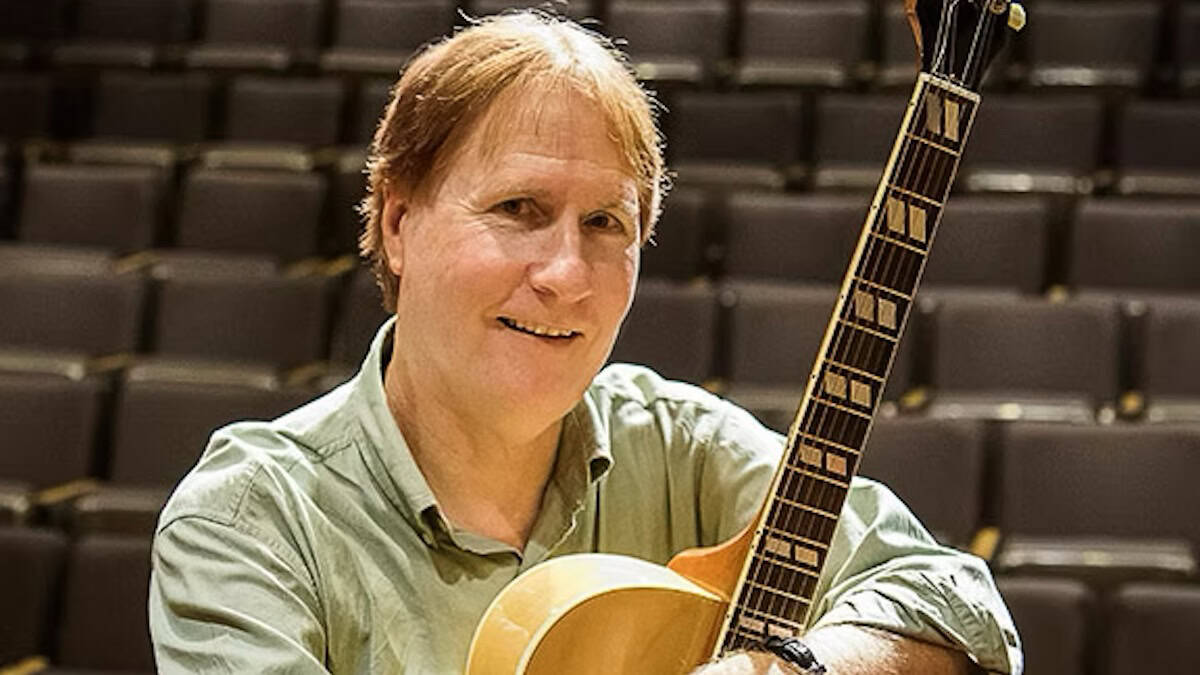
Joe Barth talks to Bay Area guitarist Jim Witzel about his new album – a homage to the great pianist Bill Evans.
Very Early: Remembering Bill Evans features a quartet with pianist Phil Aaron, bassist Dan Feiszli, and drummer Jason Lewis. Bay Area born, Jim has studied with Jack Wilkins in New York, Howard Roberts in Los Angeles, as well as others.
JB: Before I ask about the new album, could you tell me a little about yourself? When did you start to play jazz guitar in the Bay Area of California, and in those early years, what was most helpful in your personal development as a guitarist?
JW: I grew up in the San Francisco Bay and began playing guitar at age 12. It wasn’t until my Junior year in high school that I began to get serious about studying Jazz. I was referred to a player/teacher named Dave Smith who got me started learning standards, sight reading, and chord melodies. It was around the time the first Joe Pass Guitar Style book was released, and all of the examples in the book were notated (no tab).
JB: What are three of the most influential jazz guitar albums to you and your personal development as a guitarist, and why?
JW: I’d have to start off with Wes Montgomery’s Boss Guitar. Wes recorded many great albums, but I feel this one incorporates all of the factors of his playing that make him so special. To this day, when I listen to it track-to-track, it’s hard to imagine a more perfect recording. I met drummer Jimmy Cobb and asked him about the session, and he told me it was done in “one six-hour session, that’s how we did it in those days…”
Jim Hall/Ron Carter: Alone Together (Live at the Playboy Club) was another recording I listened to extensively. Around that time, I was playing a lot with an upright bass player who happened to love Ron Carter. We learned most of the tunes from the album and would do our own little duo concerts in his basement. Jim Hall’s style is so unique: his harmonic sense, use of space, economy, and his understated way of swinging. This is a “how-to” guitar/bass duo album if there ever was one.
Lastly, I’ll go with Bright Size Life by Pat Metheny. I was driving in my car one day, and the title track came on the radio. Besides Pat’s unique tone and sound, I couldn’t figure out what was up with the bass. Of course, it was Jaco Pastorius playing fretless. I ran out and bought the album and later saw Pat’s first group when they came through San Francisco. Here was someone rooted and
well-versed in the “traditional” jazz guitar vocabulary, who had created a new sound and sensibility. His career and longevity pretty much speak for themselves.
JB: What did you appreciate most about studying with Jack Wilkins and John Abercrombie?
JW: I only met with Jack a couple of times at his place in New York. He was very cool, deep in the straight-ahead New York jazz scene. We mainly just played and talked about various approaches to improvising over standards. John had a very unique and individual approach to his playing. He was very much “in the
moment” and had obviously studied harmony, scales, arpeggios, etc., but was striving for a ‘non-cliche’ sound, very much interactive with the other musicians he was playing with. Later on, I recorded some duet tracks with him and used one of the songs (“Young One” by Jim Hall) on my first album, Give and Take,which came out very nicely.
JB: How long did you live in Los Angeles, and what did you appreciate about your years there? Is that where you studied with Howard Roberts and Joe Diorio?
JW: The summer between high school and college, I spent a week in LA attending the Howard Roberts Guitar Seminar. There were players (all older than me) from all over the country, and classes were held every day at the hotel I was staying in. One of the highlights was Joe Pass coming in one day to take questions and play a few tunes with Howard Roberts. I didn’t move to LA until almost ten years later. Coming to LA was new and exciting, and more like “the big city” with lots of musicians everywhere. Looking back at the time I spent there, meeting and forming a group with pianist Phil Aaron was probably the most beneficial occurrence that happened to me musically. After about 10 years in LA it felt like it was time to return to the Bay Area. I only met with Joe Diorio a couple of times for lessons.
JB: You moved back to the Bay Area. Was it because of a music opportunity?
JW: After moving back north, I was able to land teaching positions at a Community Music and Art School, along with two universities, and build up a private teaching studio. Rather than return to San Francisco, I lived closer to San Jose, where there was a nice scene with good players and a fair amount of work.
JB: On your new album, Very Early: Remembering Bill Evans, I love your renditions of Bill’s tunes “Very Early” and “Peri’s Scope.” Briefly reflect upon the other material selections for the recording.
JW: Pianist and co-producer Phil Aaron and I had several conversations about the tune selection for this project. Phil has studied Bill’s music for decades and has suggested many possible tunes to choose from. I was looking for pieces we had played back in our “LA days,” along with some others that would provide certain playing challenges and balance things out by creating some variety in
approach, reharmonization, tempos, etc.
JB: What is it about Bill Evans’ playing that inspired you to do this album?
JW: Prior to recording this album, the same group of players released an album, Breaking Through Gently,again, a quartet, a year earlier, of all original material, composed by Phil and myself. The entire process of recording and producing that album led Phil and me to want to try a second project. We both love Bill Evans and thought it would be interesting to record a tribute album that was not a piano trio, but a quartet with guitar.
JB: Back in the early 1990s, John McLaughlin did a four-guitar homage to Bill Evans entitled Time Remembered. Any inspiration from this record?
JW: I’m familiar with that recording (and love the “string arrangements” and John’s solos), but we were going for more of an interactive, modern acoustic jazz quartet sound, which I think we got.
JB: What do you appreciate most about your rhythm section on the album, bassist Dan Feiszli and drummer Jason Lewis?
JW: I met Jason when I first moved back to the Bay Area and have worked with him ever since. His musical instincts are uncanny: he plays beyond the drum set (seemingly ‘hearing’ the entire group/ensemble), swings like crazy, and always plays with taste and control. I’ve only known Dan for a couple of years, and he’s a wonderful bass player with a huge sound, great feel, and a melodic sense to his lines and solos. Putting the two of them together is all I could ever hope for in a rhythm section.
JB: It sounds like you have had a long musical relationship with pianist Phil Aaron.
JW: Yes indeed. We met up in LA all those years ago. After Phil and family relocated to Minneapolis, I visited him a couple of times and we worked some gigs together. We were out of touch for a period of time and got back in touch around 2022. One day, I asked him, “How would you like to come out here and make a record with a great rhythm section?” and he responded, “Sure, why not?” We are planning to do another project next year as well.
JB: It looks like your main guitar is a Gibson ES-175?
JW: It’s actually the ES-165/Herb Ellis model, which is a single pickup 175. I own two of them (a 1997 and a 1996), and they play and sound almost identical. They have been called ‘the perfect working man’s jazz guitar.’
JB: Talk about the gigs you do in the Bay Area and how you make a career in music work for you.
JW: For quite some time, I was teaching private lessons and on faculty at three schools with a steady Saturday night organ trio gig plus the occasional casual and jazz gigs. As my family has gotten older, I’ve been able to cut back on the teaching, release my own recordings, and play more concerts and ‘listening gigs’.
Thank you for reading this post, don't forget to subscribe!


Jazz Guitar Today Lesson: “Central Park West”

New Album From Eleonora Strino

Jazz Guitarist Eleonora Strino Talks To JGT

Alex Goodman Talks to Jazz Guitar Today

New Vince Lewis Guitar Arrangement, “Secret Love”

Playing Honest

Celebrating the Artistry and 75th Birthday of Bill Frisell

Chris Bergson Talks To JGT About His Approach To Playing
Jazz Guitar Today Lesson: “Central Park West”
Jazz Guitar Today Lesson: “All or Nothing at All”
Jazz Guitar Today Lesson: Jimmy Webb’s “Wichita Lineman”
New Vince Lewis Guitar Arrangement, “Secret Love”
New Vince Lewis Guitar Arrangement, “Cherokee”

Pasquale Grasso Joins Frank Vignola’s Birdland Guitar Nights
Jazz Guitarist Eleonora Strino Talks To JGT


