Artist Features
Alex Skolnick, Both Jazz And Metal Chops

Alex Skolnick is well known among the metal circles – but it’s evident he has jazz chops too. Jazz Guitar Today talks to Alex in this podcast – and JGT’s Joe Barth goes in-depth in this interview.
Alex Skolnick is well known among thrash metal circles for his astonishing technique on the guitar and songwriting skills. The Bay Area native is also a fluid jazz guitarist. His jazz chops are well evident on his newest CD, Prove You’re Not a Robot. I asked Alex about his new record as well as about his approach to playing.


JB: Before I ask about the new Prove You’re Not a Robot album, tell me about yourself. You grew up in Berkeley, California. During your teenage years, what was musically most helpful in your personal development as a guitarist?
AS: It helped that Berkeley, California, was a bit of an epicenter in terms of music, at least at that time. There was a venue in town that hosted both local and touring acts, the Keystone Berkeley. I saw many famous groups on their way up, including Metallica, and also some great instrumental musicians, like Eric Johnson before he was well known, and Jeff Berlin with Scott Henderson on guitar. I was constantly being inspired. I always dreamed of playing on that stage, which had sadly closed down by the time I was gigging. But it certainly helped that so much good music was happening in town. This included two great local guitarists I studied with, Danny Gill and Bob Coons, who were considered among the top players in Berkeley and were often playing out. Soon, I found out they’d both studied with the same teacher, a mysterious Italian fellows who’d relocated from the East Coast and would become my own teacher: Joe Satriani. So, I was certainly in a good place to develop musically as a teen.
JB: Alex, to learn more about what shaped your musical values on the guitar, to you, what are the three most influential guitar albums and why?
AS: My picks for most Influential guitar albums are very different. The first one is, without a doubt, Van Halen’s eponymous debut album. I understand that for listeners of more straight-ahead jazz guitar, Eddie Van Halen’s playing might come across as a bit bombastic or over the top. But beyond the technical wizardry, there is incredible emotion, a strong sense of swing, and sensitive interaction with the other instruments. He also had a unique style of phrasing and a tone all his own in defiance of all that came before, forever changing the guitar landscape. This is the album that inspired me to aim to become a virtuoso guitarist.
The second one is an album I discovered years later, in the 1990s, yet dates back to the mid 1960’s: The George Benson Cookbook. I remember hearing the opening track, “The Cooker,” on a local jazz radio station and calling in to find out what the song was and who was doing such incredible playing. I was pleasantly surprised to find out this artist, who by then was better known as a pop vocalist with current hits on mainstream radio stations, had this much earlier period of hard-hitting soul jazz with organ, sax, and upright bass. George’s guitar playing here is fiercely burning, on a level Van Halen fans could appreciate. Yet it’s also elegant, playful, and building off the templates set by Wes Montgomery, Grant Green, and Charlie Christian. It’s what got me
Interested in playing hollow-body guitars.
My third most important guitar album that is actually not led by the guitarist. So Near So Far: Musings for Miles. This is a quartet led by Joe Henderson, featuring alumni from different periods of Miles Davis’s career, including Al Foster on drums, Dave Holland on bass, and John Scofield on guitar. As much as I appreciate Scofield’s own albums, and there are many that are quite influential, I’m most inspired by his playing on this disc. The way he functions as a team player, both in terms of textures and comping, is a masterclass. Of course, his solos, especially on the rhythm changes tune “Swing Spring” and “Joshua,” are next level and continued sources of inspiration.
JB: Talk about the title track, “Prove You’re Not a Robot” that opens the album. There are some interesting time things going on in that.
AS: The title track is, of course, a silly phrase that we often encounter online. Somehow, the idea of having to prove that you’re a human, especially to a computer, is something I found amazing. As far as the music, I wanted to blend a couple of different inspirations. I’d been revisiting some of the music of John McLaughlin, with his clever use of odd time signatures, especially 9 and 11, and practicing my playing over those meters. Then I started playing around with one of the grooves off of the George Benson Cookbook album, “Return of the Prodigal Son,” and thought, “What if that groove was in 9/8? What we have is a little different, of course, but the combination of those elements with the original inspiration. So, the main vamp is in 9/8. The melody is mostly 4/4 but also has a 6/4 and 7/4measure thrown in. The drum solo goes between five and seven. So, it’s a little wild meter-wise, yet feels natural somehow.
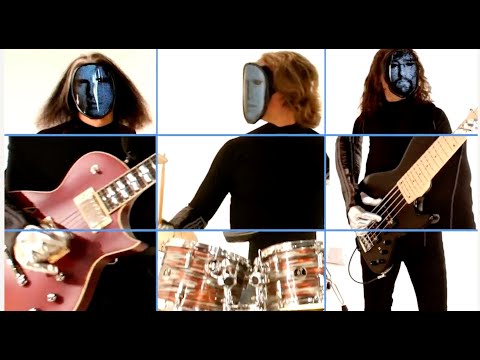
JB: Except for a couple of songs, the album consists of all original songs by you. Did you compose this music for this particular project?
AS: Yes, I composed all the original pieces on this album, and the guys certainly added their own flavors to the recording. But the songs originated for the most part with me at the piano. I’m certainly not a performance-level pianist and wouldn’t hire myself! But I know my way around the keyboard and love to play. A few ideas were originally played on guitar and captured on Voice Memo. But most originated from the piano.
JB: What drew you to “Breakdown” by Tom Petty?
When Tom Petty passed away, the news was just breaking as we were minutes from going on stage at the Iridium in New York. It affected all of us. We announced it to the crowd, then threw out a minute or so of the “Breakdown” intro. It was rough and unrehearsed, but felt good to play and was appreciated by the crowd. I’d long thought about revisiting this tune but giving it a different treatment. On the one hand, Tom Petty was not a musician I was influenced by in the same sense of the virtuoso musicians I’ve transcribed. On the other hand, his songs were heard often on the radio while I was growing up,
reached listeners across demographics, and were hard not to appreciate in terms of melody, structure, and pop/rock songwriting. That’s always been one of my favorites of his. With this arrangement, I tried to capture the emotion of the song and his passing, while also exploring the piece as a vehicle for improvisation.

JB: Talk about putting together your rendition of “Armando’s Mood.”
AS: “Armando’s Mood” came about totally by accident. In recent years, I’ve been doing the first part of my daily practice regimen on acoustic guitar. The original “Armando’s Rhumba” is a great piece to play along to and quite challenging. At one point, I was brushing up on it and playing it much slower than the recorded tempo. I also liked how it sounded slow and thought that at this reduced tempo, it slightly reminded me of “Mood for a Day” by Yes’s Steve Howe. Then I had the crazy idea to try combining these two great tunes. We added the band to differentiate from Steve Howe’s unaccompanied parts. It’s a spice up the Chick Corea section, the time signature is 11/8. I’m not going to pretend this piece is easy, but let’s just say I like a challenge, and pulling it off is quite rewarding.

JB: Talk about your experience with heavy metal music and what you find rewarding about mixing it with jazz as a point of improvising.
AS: When I was a preteen and a teen, heavy metal music spoke to me the most. It was a perfect outlet for my teen angst, but also had a lot of great innovative guitar playing, not just by Van Halen but also Ozzy Osbourne’s original guitar guitarist, the great Randy Rhoads, Gary Moore (before his blues period), Uli Roth and others. Then, in my later teens, almost overnight, the music of John Coltrane, Chick Corea, Miles Davis, and so many others got through to me, largely via jazz rock, such as Al DiMeola (whose music introduced me to Chick Corea) and Miles’s electric bands. I know it’s highly unusual to be fluent in both these areas, but for me it makes perfect sense. Metal is very direct music, and I should be able to speak with that type of directness on an instrument, which can be useful when communicating to audiences, even if I’m playing jazz guitar, which is quite different dynamically, not to mention harmonically, rhythmically, and sonically. There are also technical skills one develops that can be quite useful in jazz. The reverse is true as well. Being influenced in jazz vocabulary gives won many more melodic ideas to work with and constructing riffs or solos for heavy metal.
JB: Bassist Nathan Peck and drummer Matt Zebroski play superbly. What do you appreciate most about these two musicians as your rhythm section?
I agree completely! Both Nathan and Matt are highly diverse and extremely open-minded musicians. Probably the best thing is that their references are far and wide, like my own. I can bring in any straight-ahead jazz, and they’ll nail it, but aren’t limited to that. Over the years, we have gone into tango, classic funk, roadhouse flavored blues, calypso, and even country. I can’t think of anything I could throw at them that they wouldn’t get, if not right away, then after a bit of woodshedding. They’re also up for trying anything, no matter how far out – and I have some pretty wild ideas at times. Case in point, “Armando’s Mood,” mashing up Steve Howe and Chick Corea.
JB: What do you appreciate most about the guitar you play?
AS: I would say the same thing about both main guitars I play for the clean, chord melody-based playing, or what some might describe as a “jazz guitar” sound. One is a 1990 Gibson 347 and the other a 2020 Sadowsky SS15. They both have sounds that inspire. The blend of acoustic resonance and semi-hollow tone makes it so that just a simple chord sounds very good. It is easy to come up with another chord or line that sounds quite musical. They are also easy to play fluidly on, despite being thick, full-sounding instruments.
JB: Why close the album with “Guiding Ethos?”
AS: Although the opening track and album title references dark subjects – the dominance of and human reliance on technology – I wanted to close with a sense of hope and possibility. Being an independent artist and creating music void of commercial consideration and resistant to the negative forces taking over the arts feels like an act of rebellion that also fits the title. Of course, listeners can do their own interpretation, but for me, “Guiding Ethos” represents staying focused and not being pulled in unhealthy, negative directions, whether by algorithms, AI, and robotics or by people who’ve succumbed to groupthink and who are behaving, whether they realize it or not, like robots.
Thank you for reading this post, don't forget to subscribe!